FootGolf World Championship team format explained ahead of Acapulco 2026
Acapulco’s team championship is built to do more than crown a winner, it is built to keep 64 national squads moving through a system fans can actually follow. The June 2-7 team event sits inside a 12-day FootGolf World Championship in Mexico, with the individual title decided May 27-June 1 and the team package taking over the courses on June 2, right after the June 1 welcome ceremony.
How the championship is structured
The 2026 FIFG FootGolf World Championship brings 1,240 players and 64 teams to Turtle Dunes and Tres Vidas in Acapulco, Mexico. Those 64 teams are split into 24 men’s teams, 24 senior men’s teams, and 16 women’s teams, which is why the official documents lean so hard on structure: the event has to keep multiple categories moving at once without losing clarity. FIFG says the World Cup is the highest level of international FootGolf competition and is staged every four years, so the team tournament is not a side event, it is one of the core tests of the sport.
The field is also genuinely global. More than 60 nations are represented across six continental regions, and the team competition is organized so those regional pathways feed into a final field that still feels balanced. That matters because FootGolf has grown from a niche gathering into a major international tournament, and the format now has to protect fairness as much as spectacle.
What the draw actually does
The Acapulco team draw was not random. FIFG used a four-pot system based on previous World Championship performance, host-nation status, and regional qualification results, a setup designed to spread the strongest teams and reduce the chance of lopsided groups. Men’s and senior men’s competitions were drawn into six groups of four, while the women’s competition was drawn into four groups of four.
That detail is more important than it sounds. A casual viewer may see a bracket and assume luck decided everything, but the draw is engineered so the championship opens with competitive balance and regional separation. If a group includes a recent powerhouse and a first-time qualifier, that is because the draw system made room for both, not because the field was left to chance.
How teams advance
FIFG’s 2026 team guidelines say the format covers the group phase, playoff format, overall ranking methodology, and tiebreaker criteria for every Team Country Competition. In practice, that means a team’s path is not just about winning one match, but about surviving a sequence of results that can be measured first within a group and then across groups if needed. The guidelines also set out ranking criteria, point distribution, and final classification, so the standings are meant to be readable from the first group-sheet result to the last playoff putt.
A simple hypothetical makes the system easier to read. Imagine two men’s teams finish level on points in a four-team group, with one head-to-head win each in different matches. The ranking methodology and tiebreaker criteria decide who advances before the playoff bracket begins, which is why every point, not just every victory, carries weight. In a women’s group, the same logic applies, except with four groups of four instead of six, which makes each match feel even heavier because there are fewer places to hide.
The rules behind the scenes
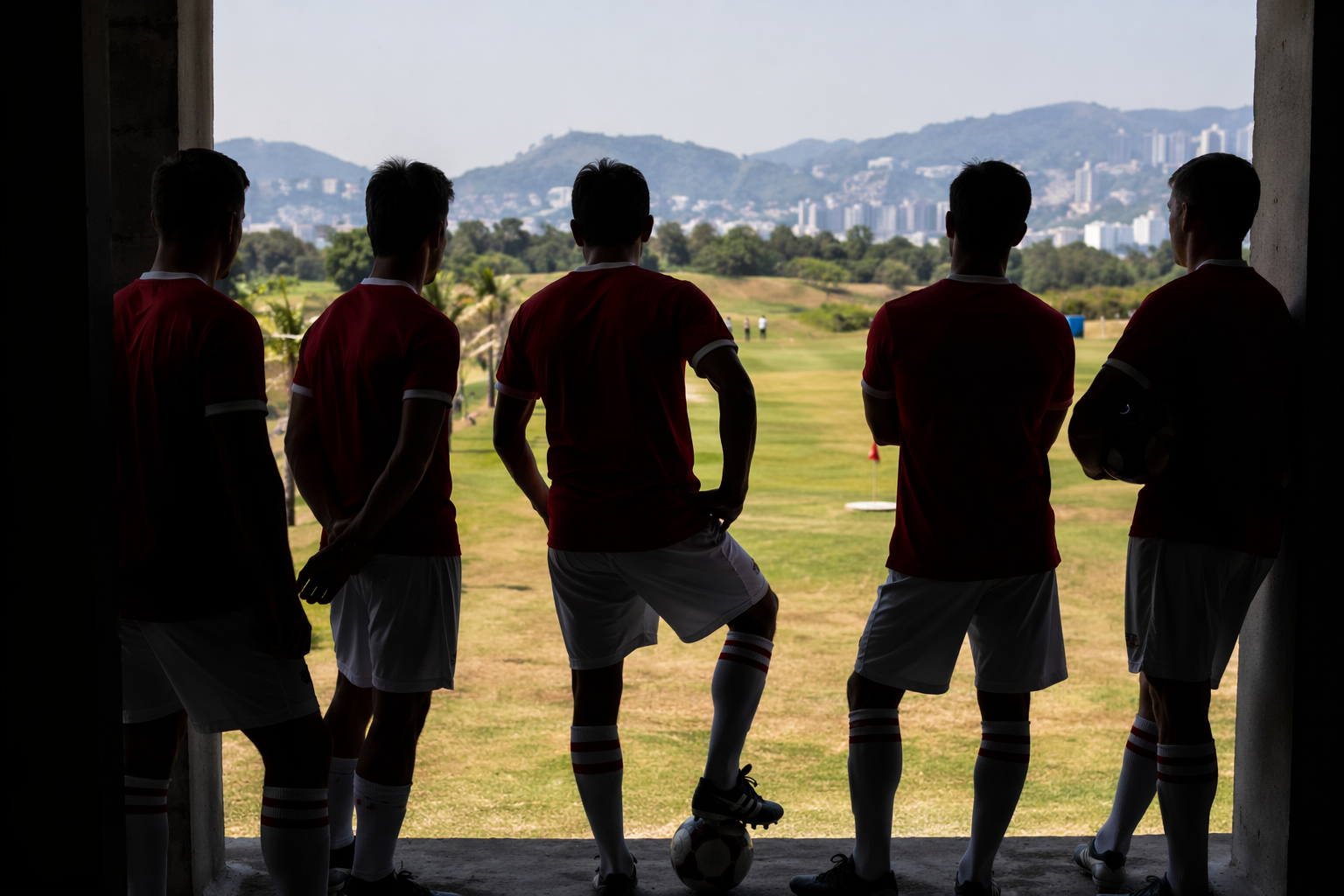
The official guidelines go far beyond scoring. They cover basic rules, match play rules, local rules, tournament registration, competition categories, team eligibility and composition, order of play, qualification and allocation of team spots, ranking criteria, point distribution, tiebreakers within the same group, tiebreakers between groups, playoff structure, and final classification. They also spell out practice rounds, caddies, captains, coach and president roles, roster sheets, game sheets, results sheets, the official scoring platform, player-arrival procedures, dress code, weather conditions, and the process for complaints or disputes.
That administrative machinery is what makes the championship watchable. A captain is not just a figurehead, because the roster sheets, the order of play, and the arrival procedure all affect whether a squad is properly set to compete. For fans, it means the result on the screen is backed by a formal system that keeps matches comparable across 64 teams and six regions.
Why the format matters to the sport
FootGolf’s team events are where soccer-style national identity meets golf-style precision. The group stage rewards consistency, the playoff stage rewards nerve, and the tiebreakers stop the event from becoming a fog of disputed margins. Add live scoring, standardized reporting, and the official platform that tracks results in real time, and the championship starts to look less like a loose festival of matches and more like a tightly controlled international broadcast product.
That broadcast push is part of the sport’s wider rise. The Acapulco championship is slated for live streaming from May 29-June 7, with free regional TV coverage of the finals, which gives the event a bigger audience than a closed club competition ever could. The structure is doing double duty here: it keeps the sport fair, and it makes it legible enough to sell on screen.
Acapulco’s place in the World Cup story
This is the fifth FIFG FootGolf World Championship, following host editions in Hungary in 2012, Argentina in 2016, Morocco in 2018, and the United States in 2023. The championship history also gives the current field some memory: USA women won the team title in 2016, France won the men’s title in 2018 and 2023, and Argentina won the senior team title in 2023. Those markers matter because they turn Acapulco into a continuation of a competitive lineage, not an isolated stop.
Mexico’s role adds its own layer. FootGolf began there in 2005 under the name Fut-Golf, the Mexican FootGolf Federation was founded in Monterrey in 2012, and the sport is officially recognized by CODEME with endorsement from the Mexican Football Federation and the Mexican Golf Federation. Mexico also has about 280 golf courses, with more than 50 used for official FootGolf tournaments, which helps explain why Acapulco can stage a championship of this size and why the host city is more than a backdrop.
The opening ceremony put that civic dimension on display. FIFG president Aleksander Kravanja praised the work of federations, organizers, volunteers, players, and the host city, while Acapulco Mayor Abelina López Rodríguez, Fernando Name, Simón Quiñones Orozco, Noé Peralta Herrera, and Héctor José Ruiz attended as the event was presented as a major sporting moment for Guerrero. That is the bigger picture behind the bracket: a growing international sport, a host city with infrastructure and ambition, and a team format designed to make every stage of the championship count.