FootGolf World Cup 2023 drew 1,000 players from 40 countries
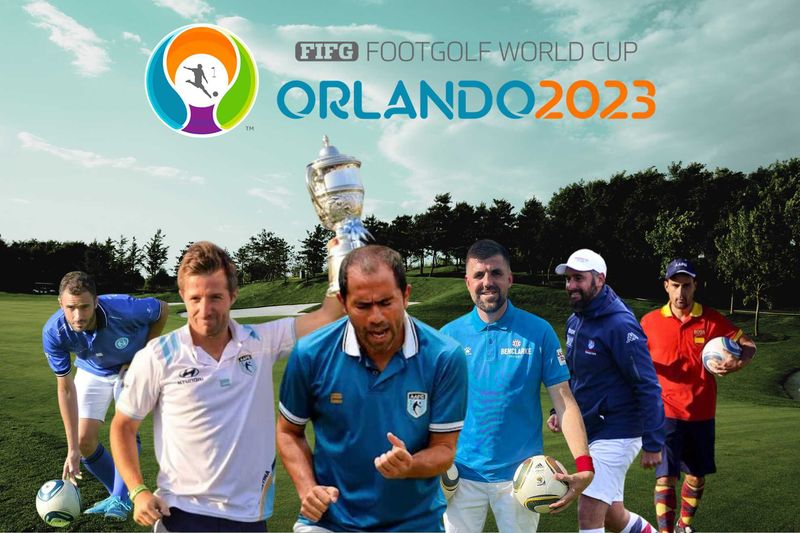
FootGolf’s best argument for legitimacy is not a viral clip or a quirky local event. It is the World Cup, where 1,000 players from 40 countries spent 11 days in a structure that looked less like a novelty and more like a real international championship. The 2023 edition was the sport’s fourth World Cup, and it gave FootGolf something every serious global sport needs: a national-team stage, a defined rulebook, and pressure that lasted long enough to separate one good round from real consistency.
The World Cup is the clearest measure of FootGolf’s scale
The 2023 FootGolf World Cup was built around both individual and team competition, which matters because it mirrors how mature international sports organize their biggest events. Players were not just showing up for a one-off exhibition; they were competing for medals in formats that rewarded repeat performance, team depth, and mental control over multiple days. That is the difference between a curiosity and a championship.
The field itself tells the story. Forty countries were represented, and Orlando 2023’s tournament guide said those players came from three categories: Men, Senior Men, and Women. That kind of spread is what turns FootGolf into a federation sport rather than a social pastime. It gives each nation a reason to build selection pathways, develop depth, and send players who can survive both stroke play and match play under World Cup pressure.
How the Orlando event was structured
The 4th FIFG FootGolf World Cup ran from May 27 through June 6, 2023, in Orlando, Florida, United States. The event used two formats, Individual Stroke Play and Team Match Play, and it was staged across five different 18-hole FootGolf courses at two resorts: Walt Disney World Golf in Lake Buena Vista and Evermore Orlando Resort. That footprint matters because it shows the event was not a simple weekend bracket. It was a large-scale championship with room for qualifying, team rounds, and individual runs that could change over time.
An 11-day tournament also changes the rhythm of the competition. In a short format, one bad hole can define everything. Over 11 days, the better players have to keep showing up, and the stronger programs have time to recover from mistakes, adjust pairings, and manage pressure. For FootGolf, that is the kind of competitive standard that signals a sport is building a serious international calendar.
Global reach was the point, not the byproduct
Orlando 2023 did not sell itself as a local festival with a few imported names. An April 20, 2023 post said the World Cup would feature players from FIFG’s four world regions: North America, South America, Europe, and Asia/Oceania. That geographic spread is a clean marker of legitimacy. FootGolf was not confined to one niche market or one continent’s curiosity; it was being presented as a sport with actual global lanes of development.
The tournament’s finish reinforced that point. On June 6, 2023, the event concluded at Planet Hollywood at Disney Springs, and a June 10 recap said trophies were won by six countries in individual and team competitions. That detail matters because it shows the World Cup produced distributed success rather than a monopoly by one dominant federation. In a maturing sport, recurring global stakes mean more countries can arrive believing they have a real path to the podium.

Roberto Balestrini described Orlando 2023 as FIFG’s “biggest and most successful FootGolf World Cup.” That line is more than promotional language when you set it beside the field size, the number of nations, and the multi-venue format. The scale backed up the claim.
The governance timeline shows how FootGolf got here
FootGolf’s World Cup did not appear out of nowhere. USA FootGolf says the sport has been regulated by FIFG since July 2012, the same year the first FootGolf World Cup took place in Budapest, Hungary, in June 2012. That timeline is important because it shows how quickly the sport moved from early experimentation into formal governance.
The rulebook tells the same story. FIFG created the FootGolf Rulebook in 2013, and a new rulebook was approved and used for the first time in December 2018 at the World Cup in Marrakesh, Morocco. That is a meaningful detail for any sport trying to prove it has standards. If the rules are being formalized, updated, and enforced at World Cup level, then the event is not merely ceremonial. It is the place where the sport defines itself.
The champions list gives the competition a real legacy
The clearest proof that the World Cup has become more than a novelty is that it already has a recognizable championship history. FIFG’s world champions page lists Bela Lengyel of Hungary as the men’s individual world champion in 2012, Christian Otero of Argentina in 2016, and Matias Perrone of Argentina in 2018. It also lists Sophie Brown of England as the women’s individual world champion in 2018.
That kind of names-and-years archive is how serious sports build memory. Fans can track eras, national programs can benchmark themselves, and new players know they are stepping into a lineage instead of a one-off event. By the time Orlando hosted the fourth World Cup, FootGolf had already produced repeat champions, multiple nations at the top, and a history that could be followed year to year.
What to take from Orlando 2023
The 2023 World Cup makes the sport easier to read. It had a 1,000-player field, 40 countries, three categories, two formats, five courses, two resorts, and a finish that crowned champions from six countries. That is not the profile of a passing fad. It is the profile of an international sport still growing, but already organized enough to demand national teams, standardized rules, and a World Cup that matters every time it comes around.
Sources
- [1]bluegolf.com
- [2]orlando2023.com
- [3]footgolf.sport
- [4]usafootgolf.org