FootGolf’s inclusive design opens the game to all abilities
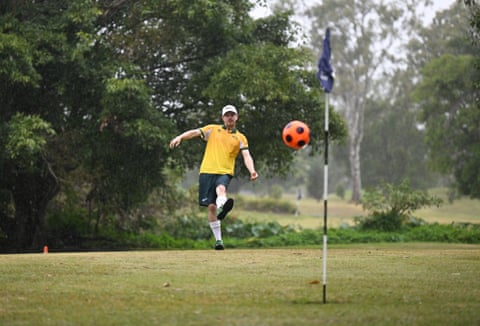
A size-5 soccer ball and oversized cups give FootGolf the bones of an inclusive sport. That simplicity gives clubs and course operators room to turn inclusion from a slogan into daily practice without changing the sport’s competitive core.
Start with access, not optics
The first test is whether a player can reach the first tee, move between holes, and finish a round without the course itself becoming the obstacle. FootGolf is meant to be accessible, enjoyable, and suitable for players of all ages and backgrounds, but that promise only holds if the route from parking lot to fairway is usable for wheelchair users, players with balance issues, athletes with prosthetics, and anyone who needs more time or space to move safely.
The practical checklist is straightforward. Keep entry points clear, provide firm and level pathways where possible, and map the round so players do not have to cross steep or uneven ground between every hole. If a club already manages golf traffic, the FootGolf version should be built around the same principle that makes the game appealing in the first place: minimal equipment, simple rules, and enough structure to let players focus on performance rather than logistics.
Place holes for participation, not just challenge
Oversized cups are part of the sport’s identity, and that matters for accessibility because the target is visible, generous, and easier to interpret than a standard golf hole. Clubs can build on that by placing cups where the approach is fair for a wider range of athletes, avoiding setups that force repeated long carries, severe slopes, or hazards that punish players who cannot generate the same kicking power as others.
You do not need to dilute the format to widen access. You do need thoughtful hole design, clear teeing areas, and pace control so a player with a mobility aid, a neurodivergent athlete, or someone using a sight guide can compete on a course that still rewards accuracy, touch, and decision-making. Every player is still trying to complete each hole in as few shots as possible.
Build pacing into the format
FootGolf can be played with minimal supervision and depends on player integrity and courtesy. That is a strength, but it also means pacing rules have to be explicit when players need more time, more assistance, or a different rhythm to complete a round comfortably.
Clubs can make immediate adjustments without touching the sport’s identity: • use staggered starts or smaller groups to reduce congestion • allow extra time windows for players who need slower movement between shots • brief marshals on when to pause traffic and when to let an adaptive group play through • mark waiting areas near tees and greens so support workers or companions do not block play
A player should not have to negotiate for every accommodation at the first tee. If pacing is built into the event plan, the round feels organized rather than improvised.
Treat support as part of the sport, not an exception
The living reality of adapted sport is that some players compete independently and others benefit from assistive support. That support can include a guide for a visually impaired player, a companion who helps with navigation, or staff trained to explain local course conditions in plain language. The sport’s minimal-supervision model makes this easier to implement, not harder, because the governing principle is player responsibility and courtesy rather than constant official intervention.
The most useful clubs will define support roles before play begins. They will tell players whether companions may help with ball placement, how verbal guidance is handled, and when a staff member can step in to resolve access issues. That kind of clarity protects the competition and avoids the awkwardness that comes when accommodation is treated as an exception instead of part of the event design.
Use rule flexibility with purpose
Local rules can apply within official FIFG tournaments, and that detail is central to inclusion. Local adaptation lets clubs adjust conditions for different bodies while preserving a recognizable international format.
The objective of a 2020 SOBAMA study titled Adapted FootGolf: The Process of Adapting a Sport for People with Disabilities was to present the adaptation of FootGolf for people with disabilities. The project was split in two: first, a conceptual presentation of FootGolf and the adapted-sport movement; second, the classes created for the adaptation process. Another version of the work frames the same process as the adaptation of the modality for people with disabilities and highlights the classes built for that purpose.
A separate Universidad Santo Tomás proposal focused on people with cerebral palsy and acquired brain damage. Adapted FootGolf was not yet among the modalities of the Spanish Sports Federation for People with Cerebral Palsy and Acquired Brain Damage, and the proposal set out to adapt regulations using the functional classification of soccer players. It also adapted materials, sports facilities, and technical-tactical aspects from the conventional rulebook.
Match inclusion to the sport’s global scale
The FIFG World Championship in Acapulco is scheduled from May 27 to June 7, 2026, as a 12-day celebration of the sport with 1,240 participating players and 64 teams. The event is split into an individual world championship from May 27 to June 1 and a team world championship from June 2 to 7, which shows how fully the sport now supports both solo performance and structured team competition.
FIFG’s main function is to promote worldwide recognition of FootGolf, and the rules system around licensing, local rules, and tournament organization gives clubs a ready-made framework.
Why the wider disability-sport context matters
The International Paralympic Committee has made access to safe, inclusive, affordable, accessible, and sustainable sport infrastructure a priority, and it has also described parasport as a powerful tool for advancing disability inclusion. FootGolf fits that logic well because it requires comparatively little equipment, uses a clear objective, and can be adapted without requiring a wholesale rewrite of the game.