FootGolf’s self-policing culture helps global governing body grow the sport
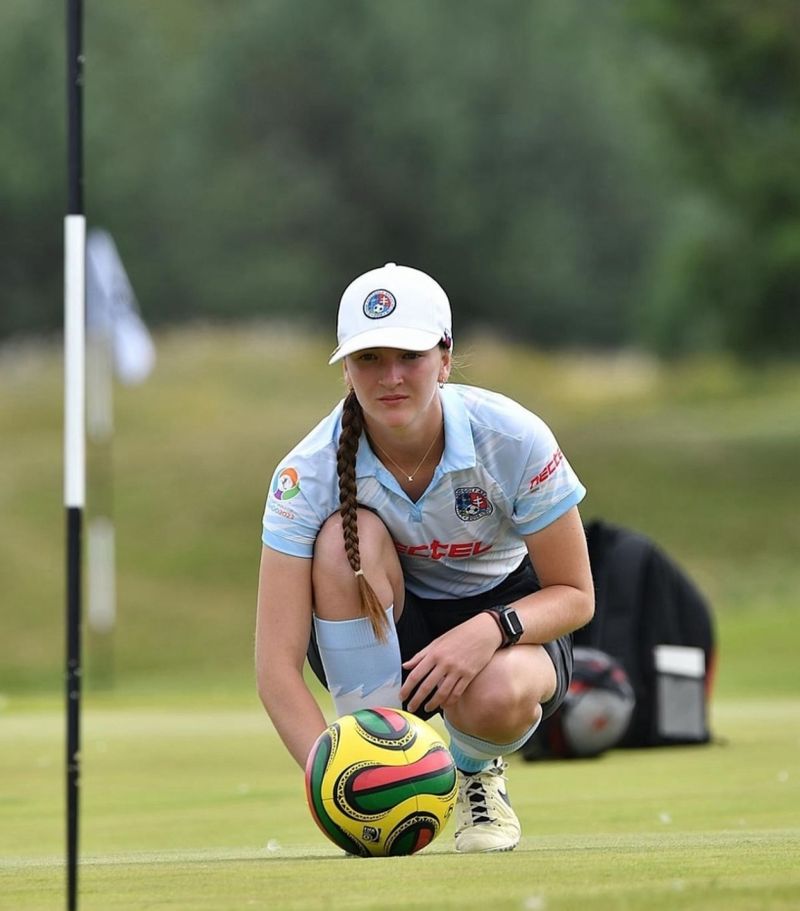
FootGolf works because players are expected to police themselves, and FIFG has turned that expectation into a governing model. The sport is still defined by the simplest of tasks, moving from the teeing zone to the green zone in the fewest kicks, but its real advantage is cultural: most rounds happen with minimal marshal supervision, so integrity, courtesy, and sportsmanship are not side notes, they are the operating system.
Legitimacy by design
That self-officiated structure is not loose or improvised. FIFG’s rulebook ties pace of play, priority on the course, bunker care, and avoiding unnecessary damage directly into the code of conduct, which means the etiquette is embedded in the rules, not left to vibes and goodwill. In practice, that is what keeps FootGolf recognizable across hundreds of courses and dozens of countries without turning every hole into a heavily managed event.
The tradeoff is obvious: a trust-based sport can move quickly and keep its identity intact, but it also asks a lot of the people inside it. FootGolf does not lean on a large referee presence the way traditional team sports do, so the sport’s legitimacy depends on whether players, clubs, and national federations honor the same standard when nobody is watching. That is a strength when the field is small and the culture is shared; it becomes a scaling challenge when competition sharpens and the margins get tighter.
How FIFG turns a casual format into a federation
FIFG has spent the past decade making FootGolf look like a real international sport, not a novelty with rules. The federation says it was founded on June 3, 2012 near Budapest, Hungary during the first FootGolf World Cup competition, and that origin matters because the sport’s first big stage and its governing body were born together. From day one, the point was not just to stage events, but to build a system around them.
That system now includes dedicated committees for Competitions, World Cup, Rules, and Women’s FootGolf. Member countries are expected to operate under principles of transparency, accountability, gender equity, non-discrimination, and fairness, which gives FIFG something many emerging sports lack: a governance standard that reaches beyond the course. FootGolf’s international credibility is being built as much in meeting rooms as on fairways.
The growth curve tells the story
The World Cup numbers show how fast the sport has moved. FIFG’s historical record lists the first World Cup in Hungary in June 2012 with 79 players from 8 countries. The next editions jumped to 227 players from 26 countries in Argentina in 2016, then 503 players from 33 countries in Morocco in 2018, and 972 players from 39 countries in the United States in 2023.
The next step is even larger. FIFG’s 2026 World Championship page says Acapulco will feature 1,240 players and 64 teams, including 24 men’s teams, 24 senior men’s teams, and 16 women’s teams. That is the clearest sign yet that FootGolf is no longer trying to prove it can attract a field. It is trying to prove it can manage one.

The rulebook is getting more formal, not less
The January 2025 board meetings, held on January 14 and January 20, are where the machinery got tighter. FIFG finalized the World Cup Qualification System, renamed and finalized the Tournament Rules, and approved Club Championship Rules. At the same time, the rules committee began developing a referee training plan, which is a notable move for a sport that still runs on self-policing. The message is clear: player integrity remains the base layer, but formal oversight is being built around it.
FIFG also launched an AIMS–SportAccord onboarding pilot with Zambia, Italy, Slovenia, and Australia. That may sound bureaucratic, but it is exactly the kind of process a sport needs if it wants national federations to function consistently across different regions. The point is not just to have more member countries. It is to make those members legible inside the same rule structure.
Integrity is expanding beyond etiquette
The trust model has also been pushed into anti-doping. In January 2025, FIFG announced a partnership with the International Testing Agency, framing it as a step toward integrity, fairness, and athlete safety. That is a serious marker for any sport, but especially for one that built its identity on self-regulation and sportsmanship.
The numbers behind that push are just as important. FIFG said more than 450 participants completed anti-doping education before a European championship pilot, and the 2026 Youth World Cup qualification rules require mandatory anti-doping education for participants. That is where FootGolf starts to look less like a grassroots hybrid and more like a mature competition structure, one that understands the difference between informal honesty and formal compliance. The sport is not abandoning its culture of trust; it is adding guardrails around it.
What the new structure means for players and national programs
The practical effect of all this is that FootGolf now asks players to operate in two worlds at once. On the course, they are still expected to protect pace of play, respect priority, avoid damage, and self-report with discipline and kindness. Off the course, they are entering a federation that uses committees, qualification systems, club rules, onboarding pilots, and anti-doping education to make sure a player in one country is competing under the same broad expectations as a player in another.
That balance is the sport’s identity and its test. If the self-policing culture holds, it keeps FootGolf fast, affordable, and distinct from the referee-heavy model of traditional sports. If it frays under bigger fields and higher stakes, FIFG will need the very structures it is now building to keep legitimacy from becoming an assumption instead of a practice. The sport’s next stage is already visible in Acapulco, in the committee structure, and in the youth and women’s pathways. The question is no longer whether FootGolf has a governing body. It is whether its trust-based culture can survive the pressure that comes with getting exactly what it wanted: scale.