Forgotten Lang Ball reveals kickball’s YMCA roots in Missouri
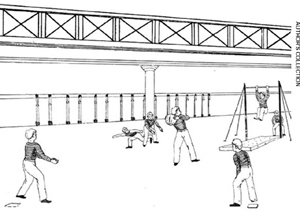
Lang Ball gives kickball a place to begin: Charles Gregory Lang, the director of the YMCA gym in St. Joseph, Missouri, was credited with a late-19th-century game that mixed baseball logic with kicking mechanics. The Society for American Baseball Research treats it as a forgotten nineteenth-century baseball derivative, and that is exactly why it matters now. It shows kickball did not appear out of nowhere in a schoolyard; it came out of YMCA recreation culture, physical education, and a long push to make bat-and-ball games easier to stage.
The St. Joseph origin story
Protoball credits Lang Ball to Charles Gregory Lang in the late 1800s, while a 2014 explainer placed the invention around 1892 and named Lang as a YMCA director in St. Joseph. That combination matters because it pins the game to a specific institution and city instead of a vague folk-memory of playground invention. The YMCA of St. Joseph Missouri still lists its home at 315 S Sixth St., St. Joseph, MO 64501-2291, which gives the story a real geographic anchor in the same civic world that produced the game.
The YMCA connection is more than decorative. The World YMCA says the organization’s mission is to strive for the spiritual, intellectual and physical well-being of individuals and communities, and it highlights the YMCA’s contributions to sports and physical education. That framework helps explain why a YMCA gym director would tinker with a new ball game in the first place: the institution was built to shape bodies as much as minds, and it treated recreation as a teaching tool.
How langball actually worked
The 2014 explainer on langball describes a game that feels almost tailor-made for a gym floor. The batter dangled from a horizontal bar or flying rings and kicked the pitched ball with the bottom of the feet, turning the act of hitting into a full-body exercise. That detail matters because it shows langball was not just a loose precursor in name; it was an explicitly gym-centered adaptation built around YMCA apparatus.
That setup also explains why langball belongs in the same family as kickball. Both games strip baseball down to a simpler action, replace hand-held batting with kicking, and make the sport easier to teach in a constrained space. Langball’s odd equipment, especially the bar or flying rings, is the clue that the sport grew from physical education rather than from a free-form playground scratch game.
Why accessibility has always been the point
Kickball’s appeal has always been tied to access. Unlike baseball, it does not require bats or gloves, and it lowers the skill barrier enough that a game can start quickly in a gym, on a playground, or in a community setting. Lang Ball helps explain how that design logic formed: simplify the equipment, keep the diamond-like structure, and make the game easier to organize for children and mixed-age groups.

That same logic runs through the broader history of baseball-like games adapted for schoolyards and youth instruction. These were not one-off curiosities; they were practical answers to the problem of how to teach game concepts in places where full baseball was awkward or impossible. Lang Ball belongs to that lineage, and its existence shows that kickball’s DNA was shaped by the same desire to preserve the basic flow of baseball while making the game more approachable.
From kicking baseball to the classroom
A school-based history of kickball says the game was originally called “kicking baseball” and was claimed to have been invented as early as 1910 by Dr. Emmett Dunn Angell in Play: Comprising Games for the Kindergarten, Playground, Schoolroom and College. That source says Angell’s version was meant to help children understand baseball while providing an accessible game. In other words, the educational purpose was explicit: teach the shape of baseball through a simpler, more playable form.
That makes Angell part of the same lineage as Lang, even if the mechanics differed. Lang Ball came out of a YMCA gym in St. Joseph with bars, rings, and a pitched ball; Angell’s “kicking baseball” was framed for kindergarten, playground, schoolroom, and college. Together, they show how American recreation repeatedly recycled the baseball idea into formats that fit different spaces, ages, and levels of instruction.
What modern kickball inherits
The adult kickball scene still lives off that same inheritance. It works because the sport is easy to stage, easy to learn, and easy to scale into leagues without a lot of specialized gear. The old YMCA impulse survives in that format: keep the structure familiar, remove the equipment burden, and let the game function as both competition and social recreation.
Seen through Lang Ball, kickball is not a random schoolyard invention at all. It is an evolved sport with a traceable line back to a YMCA gym in St. Joseph, Missouri, where Charles Gregory Lang was experimenting with how far baseball could be simplified without losing its shape. That is the real continuity in kickball’s history, from flying rings and kicking swings to the adult league diamonds that carry the same basic idea forward.
Sources
- [1]protoball.org
- [2]sabr.org
- [3]peputz.blogspot.com
- [4]ymca.int
- [5]ymca.org
- [6]fergusonhs.org