Franklin kickball tournament honors Eddie Grant and raises community funds
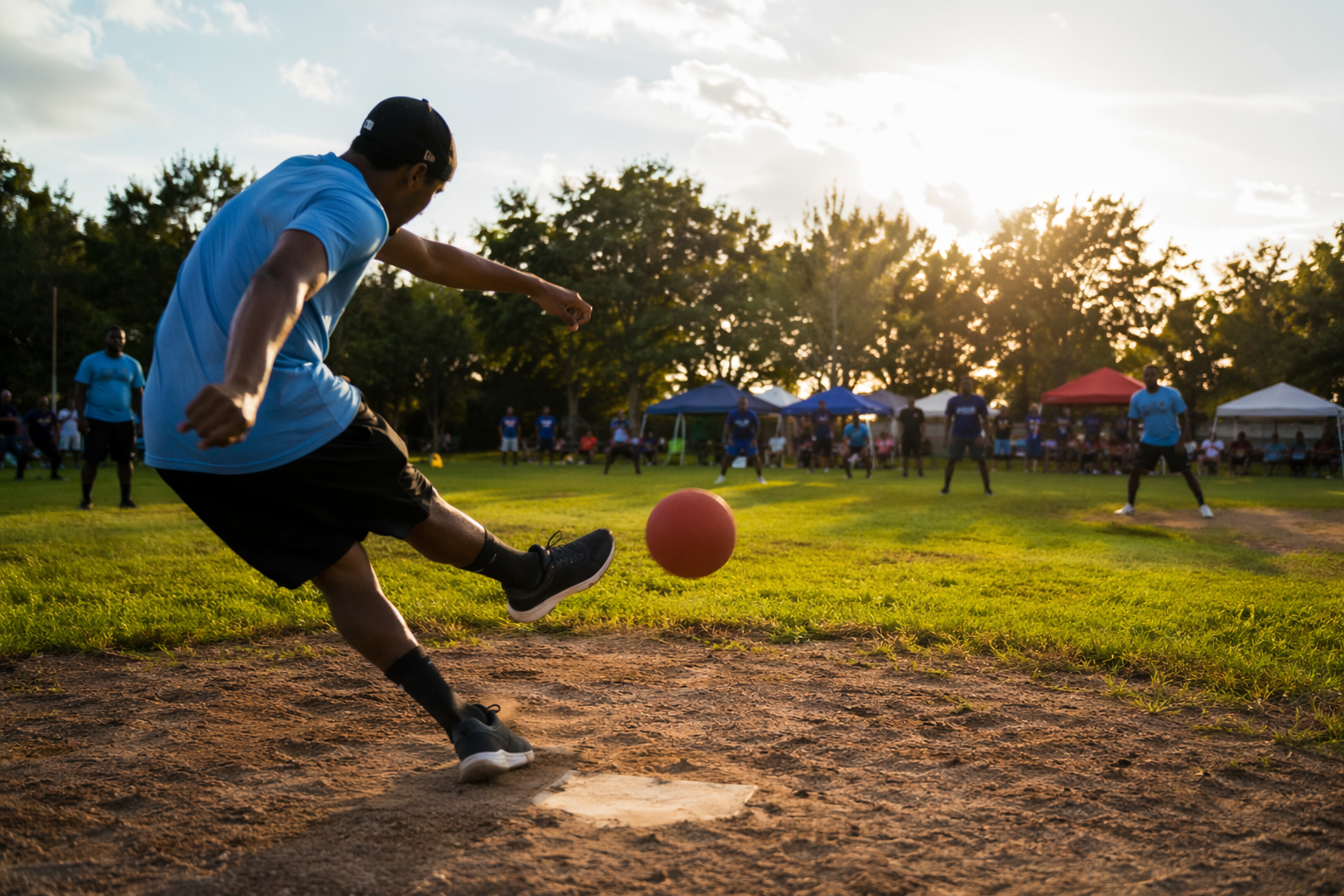
Franklin’s first Eddie Grant Memorial Kickball Tournament turned Beaver Pond into a daylong gathering of competition and remembrance, with families, local organizations and businesses packing the field for a double-elimination event built to do more than crown a winner. Franklin Fathers used the June 14 outing to raise money, teach younger residents who Eddie Grant was, and transform a hometown baseball figure into a living part of the town’s civic memory.
The format was set up to keep people on site and involved. Teams were built around 10 players, and the tournament came with food trucks, refreshments, games for kids and families, music and a raffle. Organizers also steered traffic to Grove Street because Beaver Street at the MBTA tracks was closed, a practical detail that underscored how much planning went into making the debut work smoothly at Beaver Pond and Chilson Beach.
That structure mattered because the event was carrying several missions at once. Proceeds were aimed at Franklin Fathers, the American Legion Post and the Franklin Food Pantry, tying the afternoon’s play to local needs that reach well beyond the diamond. Veterans also took part in honoring Grant’s memory, giving the tournament a ceremonial weight that made the day feel like both a fundraiser and a hometown history lesson.
Grant’s story gave the event its emotional center. Born Edward Leslie Grant in Franklin on May 21, 1883, he attended Dean Academy before Harvard and went on to play major league baseball from 1905 to 1915 for the Philadelphia Phillies, Cincinnati Reds and New York Giants. He enlisted for World War I in 1917 and was killed on October 5, 1918, during the Meuse-Argonne Offensive while helping in the effort to rescue the Lost Battalion. He is widely described as the first Major League Baseball player killed in action in World War I.
That legacy gave the tournament a reason to matter beyond the final out. By linking kickball, local fundraising and Grant’s wartime sacrifice, Franklin gave itself a format with clear staying power: a family event that also works as a history project, a civic fundraiser and a tribute to one of the town’s most distinguished native sons. The inaugural edition showed that memory can travel best when it has a field, a scoreboard and a crowd behind it.