Gene Bess legacy looms over NJCAA basketball coaching history
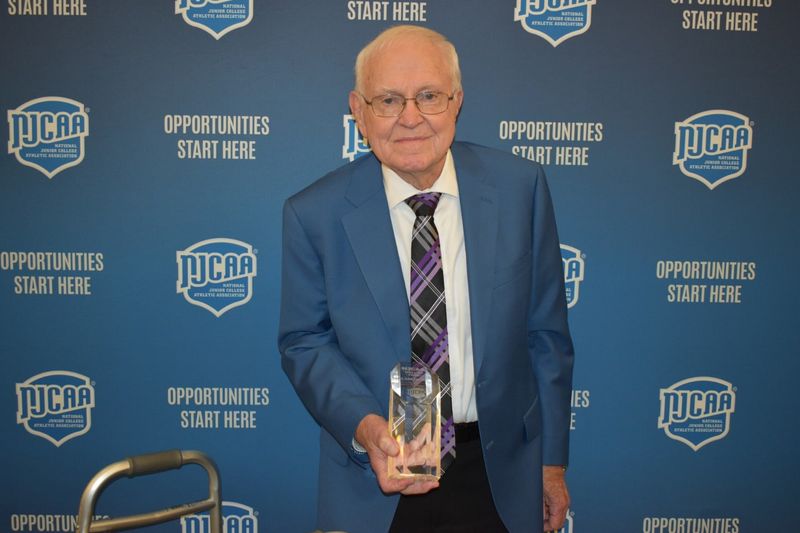
Gene Bess is still the standard because his numbers do more than fill a record book. He reached 1,300 wins, owns the NJCAA mark for Division I tournament appearances with 17, and left behind a coaching tree that stretched from Marvin McCrary and Latrell Sprewell to at least 42 former Three Rivers players who became coaches. That is the real footprint of NJCAA basketball: not just a place where players pass through, but a place where coaching habits, defensive language and program-building ideas get handed down.
Bess set the benchmark
Bess arrived at Three Rivers in 1969 after 12 years in high school coaching, and he spent the next five decades turning one junior college into a national reference point. An ESPN report from 2020 put his Three Rivers record at 1,300-416 over 50 seasons and listed national titles in 1979 and 1992, a résumé that explains why the NJCAA later called him the winningest coach in college basketball history. He was inducted into the NJCAA Hall of Fame in 2024, then had his passing and legacy formally recognized on June 24, 2026.
The part that matters for coaching history is not just the trophies. Bess also sits alone at the top of the NJCAA’s Division I men’s basketball tournament appearances chart with 17, ahead of Dan Sparks at 15, which says something about staying power in a sport where roster turnover is constant. If a coach can keep showing up in Hutchinson and survive the churn of two-year college basketball, the system is telling you that his methods travel.
How junior college basketball became the proving ground
The NJCAA’s championship history starts in 1948, when the first official men’s title game was played at the Southwest Missouri State Fieldhouse in Springfield, Missouri. The modern structure grew out of the 1945-47 Western States Basketball Tournament, a reminder that the league’s identity was built from competitive experiments before it became a national destination. That origin matters because NJCAA basketball has always rewarded coaches who can adapt quickly and teach faster than their opponents can recruit.
That environment is why Bess’s influence looks larger than Three Rivers. A coach who can win there is not only managing games, he is building a system that can survive roster changes, academic movement and the constant pressure to replace production. The NJCAA record book treats those 17 appearances as a clean statistic, but the deeper story is continuity: the same principles getting recycled from one era to the next.
Richardson connects the junior college lane to the national stage
Nolan Richardson is the clearest bridge from NJCAA floor to national coaching relevance. He played one season at Eastern Arizona Junior College before transferring to Texas Western College, then built a career that eventually put him in both the College Basketball Hall of Fame and the Naismith Memorial Basketball Hall of Fame. That path is exactly why junior college coaching history cannot be separated from the wider game: the two-year level helped form a coach whose voice later carried far beyond it.
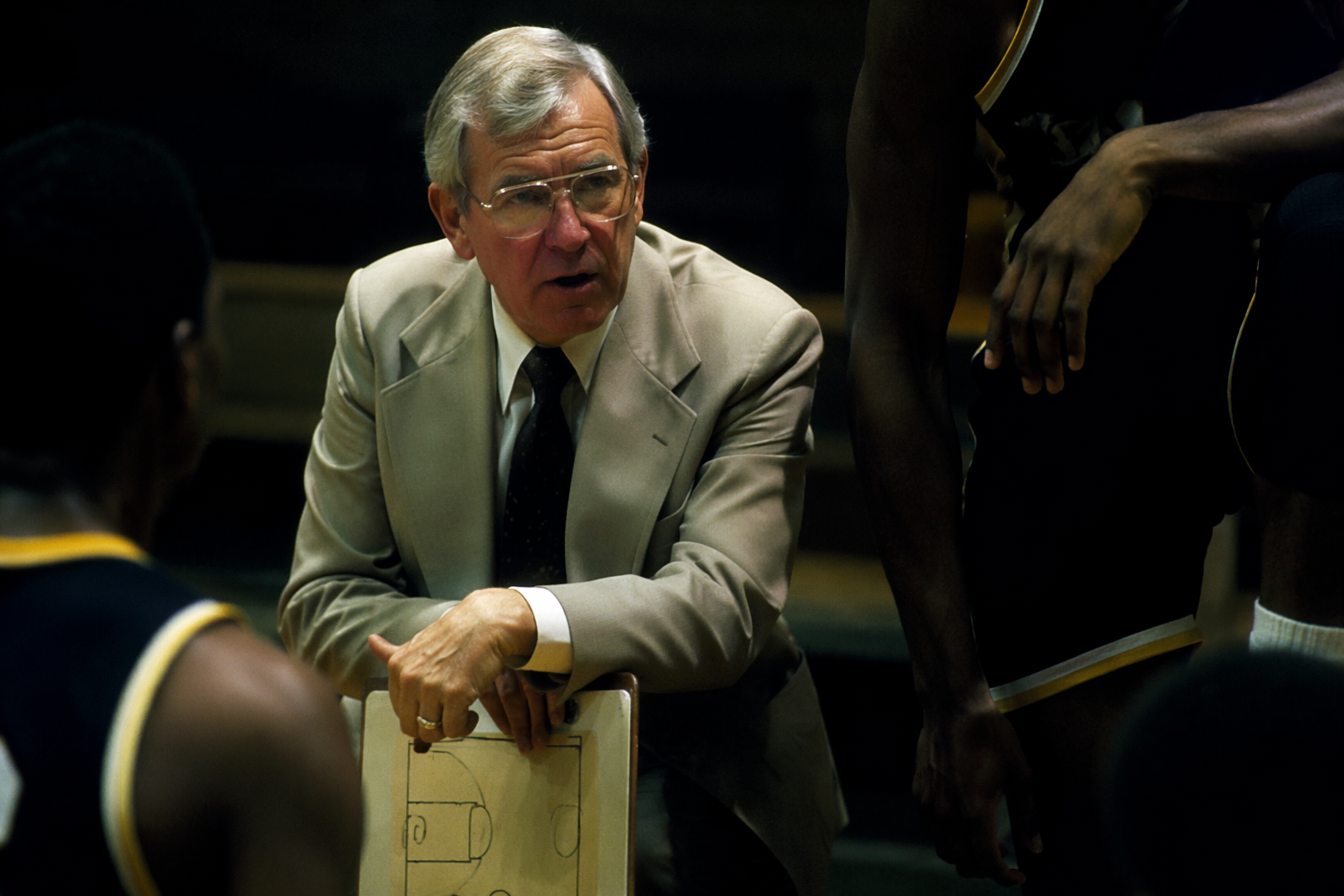
Richardson’s place in the 2026 NJCAA Men’s Basketball Coaches Association Hall of Fame class reinforces that connection. The five-person class included Richardson, Steve Forbes, Cleanthony Early, Dontae' Jones and Doug Wagemester, blending coaches and former players in the same ceremony because the NJCAA ecosystem does both jobs at once. Richardson is the reminder that the junior-college route is not a detour for coaches; for some, it is the launchpad.
Forbes, Early and Jones show how the pipeline keeps producing
Steve Forbes adds a more modern version of that same coaching chain. He was already prominent enough to serve as the keynote speaker at the 2020 NJCAA Convention while at East Tennessee State, which shows how deeply junior-college basketball is woven into the broader coaching profession. That kind of presence matters because the NJCAA is not just exporting players, it is circulating ideas among coaches who move from the two-year game into larger jobs.
The player side of the 2026 Hall of Fame class is just as revealing. Cleanthony Early was a two-time NJCAA Division III Player of the Year in 2011 and 2012 and also earned NJCAA All-American honors before his path carried him to Sullivan County, Wichita State and the NBA. Dontae' Jones posted the type of complete production that makes a junior-college résumé impossible to ignore, helping Northeast Mississippi compile a 51-14 record over two seasons, reaching the program’s seventh all-time NJCAA Division I national tournament appearance and averaging a double-double in both seasons.
Why Bess still frames the whole conversation
What ties all of this together is that Bess’s legacy is not confined to Three Rivers, Poplar Bluff or one record column. It sits next to the championship history that began in Springfield, the appearance totals that still have him first, and the Hall of Fame classes that keep threading junior-college coaching into the broader sport. When a program can produce future Hall of Fame coaches, NBA players and at least 42 former players who move into coaching, the junior-college level stops looking like a stopover.
That is the blueprint Bess leaves behind. NJCAA basketball has always been a place where a coach can teach a system, send players upward and, just as importantly, send ideas upward with them.