Germany's racquetball rise began with U.S. military courts

Germany’s racquetball story is not a tale of mass popularity. It is a case study in how a niche sport survives when courts, institutions, and a motivated local base line up at the same time. The first real spark came from U.S. military life, but the sport did not stay trapped there: Hamburg’s first 11 public courts in 1980 gave racquetball something more durable than novelty, and that mattered.
The military built the first pipeline
Racquetball reached Germany in the early 1980s through the U.S. military, which did more than introduce the game. It created a ready-made ecosystem of players, courts, and repeat play around bases and nearby cities, the kind of structure a fringe sport usually needs before it can breathe on its own. By the end of the decade, Germany had around 300 racquetball courts, most of them on U.S. military installations, a scale that shows how quickly the sport could spread when infrastructure was already in place.
That court count is the real headline. Racquetball does not grow the way soccer or tennis does, with broad public demand first and facilities later. It needs hard-surface courts, committed users, and somewhere for beginners to see the game being played. Germany had all three in a concentrated form, and the military base network supplied the first two before civilian clubs had fully taken over the third.
Hamburg gave the sport a civilian foothold
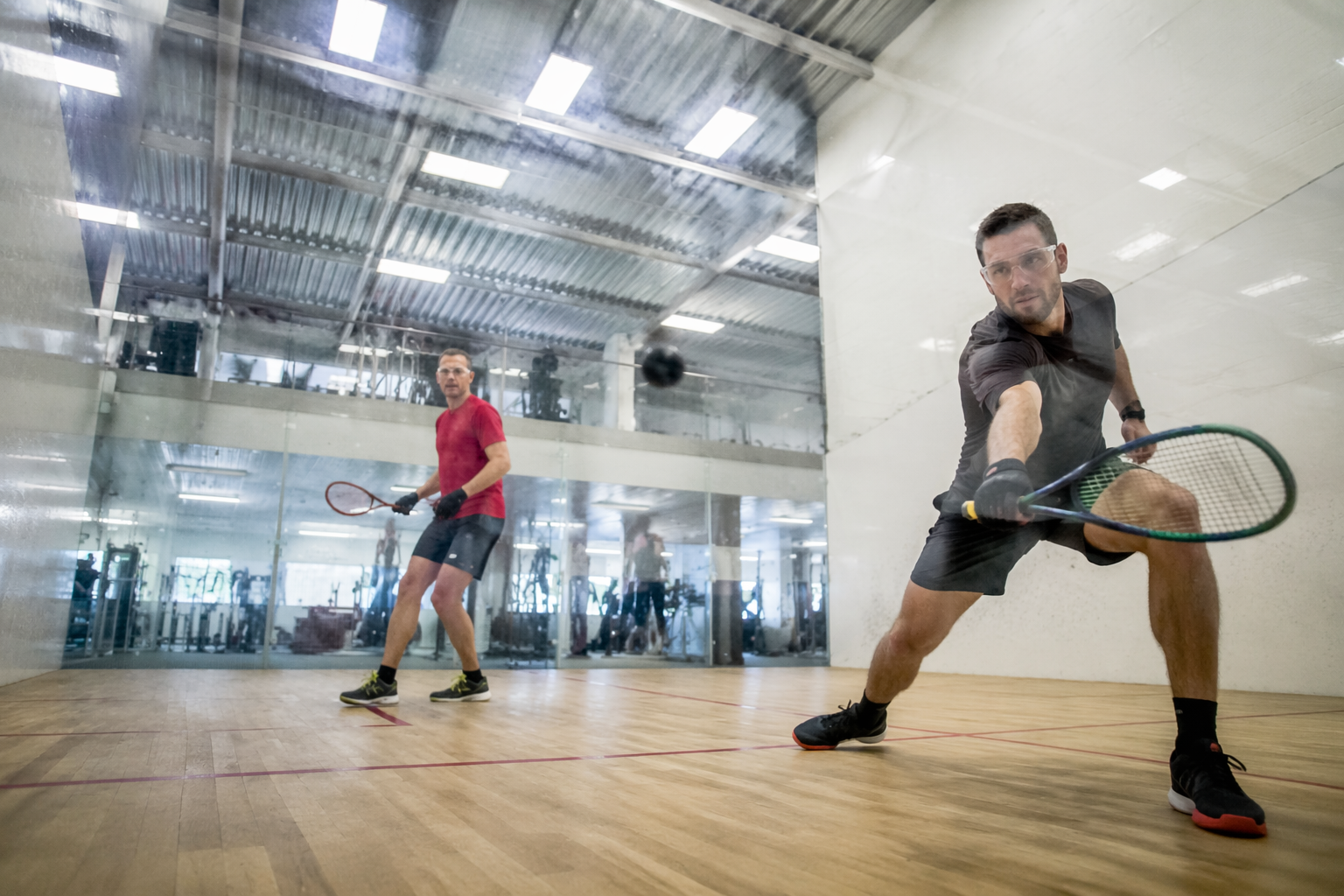
The opening of the first 11 public courts in Hamburg in 1980 was the key turning point. Public access changed the sport from a service-community pastime into something local players could actually adopt and sustain without needing a base pass. That matters in racquetball more than in many other sports, because a court is not just a venue, it is the entire distribution system.
Hamburg also shows why early growth in Europe depended on urban pockets instead of national saturation. One city could matter more than an entire country if it had enough courts to create habit, league play, and continuity. That is why Hamburg still appears in Germany’s racquetball map today, with Sport & Spa Jenfeld listed by the European Racquetball Federation as an active club site with two courts.
The federation structure kept Germany connected
Germany’s national federation, the Deutscher Racquetball Verband, was founded in 1980, the same year Hamburg opened those first public courts. That timing is no accident. Sports that grow outside their home markets need an organizing body early, not as a finishing touch, because someone has to schedule play, connect clubs, and keep the game visible when the novelty wears off.
The DRBV became a member of the European Racquetball Federation in 1985, the same year the International Racquetball Federation was recognized by the International Olympic Committee. That broader timeline matters because Germany was never an isolated outpost. The IRF had already been formed in 1979 with 13 national federations across four continents, and racquetball was one of the charter sports of the World Games, first held in 1981. Germany’s federation work plugged the country into that international framework instead of leaving it as a military-side curiosity.
Hosting in 1988 changed Germany’s status
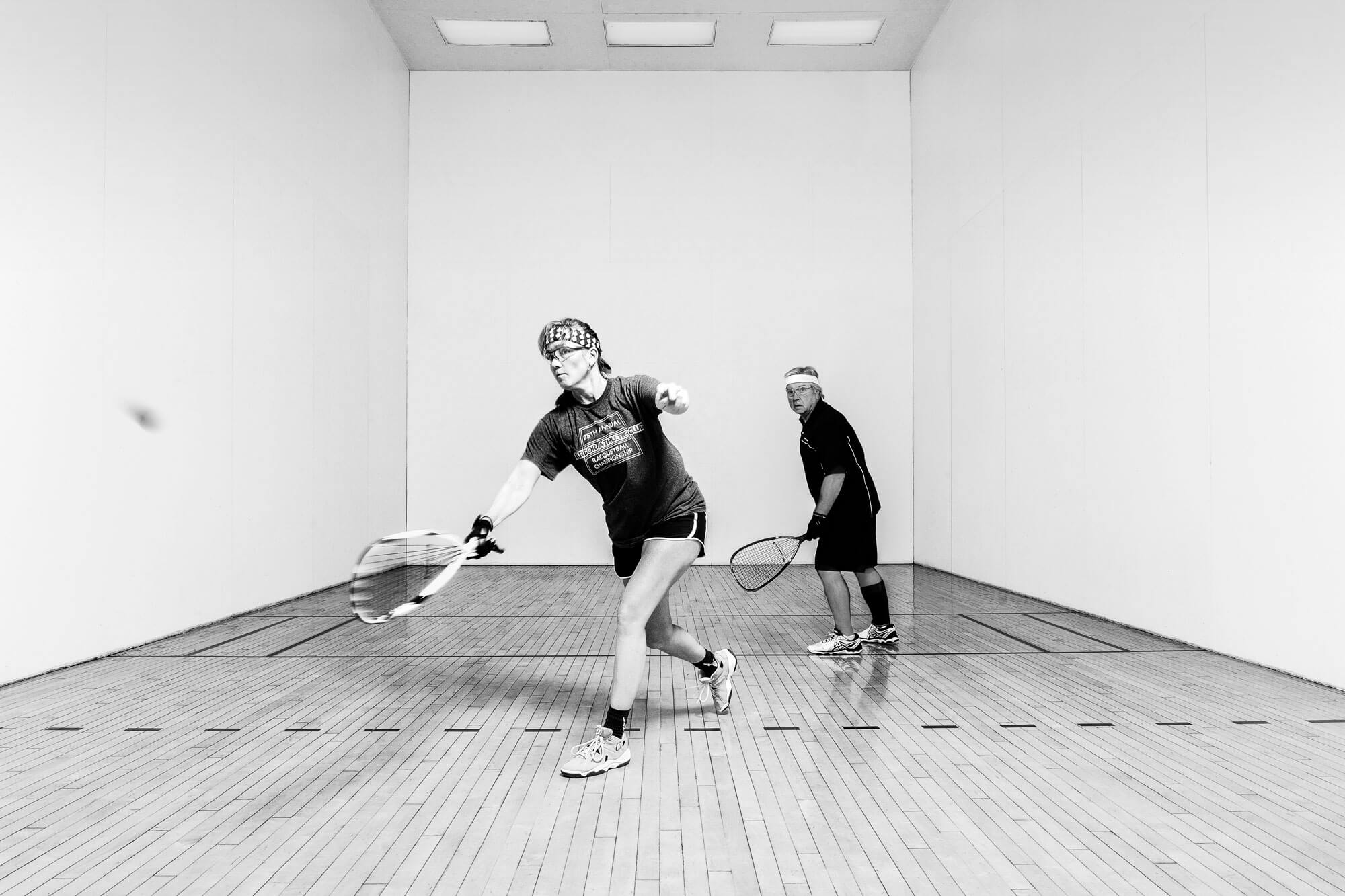
Germany’s biggest symbolic leap came when it hosted the 1988 IRF World Championships. That event pushed the country beyond its military connection and made it a legitimate stop on the global racquetball circuit. Hosting matters in sports like this because it signals that a country has enough infrastructure, organization, and local support to handle top-level competition, even if the sport is still small.
The timing also reinforced Germany’s role inside the European racquetball structure. The late 1980s were the sport’s high-water mark there, with a court network that was far larger than the current one and a national federation already embedded in the continental system. In a sport where visibility often depends on where the next match can actually be played, that kind of hosting credibility is not a sideshow. It is the proof of concept.
The sport shrank, but it did not vanish
The Cold War and the drawdown of U.S. bases cut racquetball’s footprint in Germany sharply, and the country never kept the same scale it had at its late-1980s peak. But the important fact is that the game did not disappear. It survived in places like Hamburg and Worms, and it kept a presence on U.S. military installations in nine other cities, preserving both a civilian and a service-community pathway for play.
That mix explains why Germany’s racquetball story still matters. The European Racquetball Federation lists active German clubs in Hamburg and Worms, with Worms Racquetball Club Worms e.V. listed as having one court. Those are small numbers, but they are not ornamental. They represent active, documented infrastructure, the kind that keeps leagues, practice, and tournament play from collapsing into memory.
Germany’s lesson for racquetball in Europe
If racquetball wants a durable European footprint, Germany shows the formula in plain view. First, there has to be court access that ordinary players can reach, like Hamburg’s 11 public courts in 1980. Second, there has to be an organizing body, like the DRBV, founded in 1980 and tied into the European federation by 1985. Third, there has to be a dependable venue network, whether that is a city club like Sport & Spa Jenfeld, a one-court holdout like Worms, or a military installation that keeps the game alive between generations of players.
Germany never became a racquetball giant, and that is exactly why its story is useful. It shows that the sport’s international growth has rarely depended on broad mainstream attention. It has depended on small pockets of infrastructure that outlast trends, and Germany remains one of the clearest examples of how that process works.