Gothenburg 1983 marked ultimate’s first true world championship
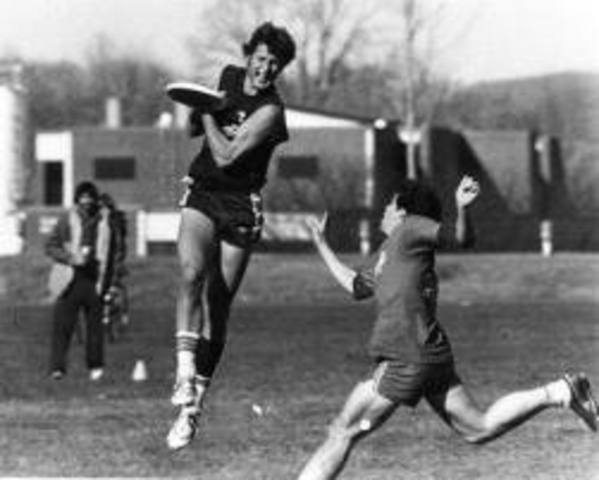
Gothenburg put ultimate on a world stage it had never really owned before. From August 29 to September 3, 1983, the first true World Ultimate Championship brought together U.S. club powers and European national teams in a format that made the sport look international, organized and legitimate all at once. The Rude Boys won the open division and Melting Pot won the women’s title, but the deeper breakthrough was structural: ultimate finally had a championship that could sit at the center of a global calendar.
The first real world title was built in Gothenburg
WFDF identifies the 1983 event in Gothenburg, Sweden, as the first true World Ultimate Championship, and the field showed why that label mattered. The open bracket included teams and national representation from the United States, Finland, Sweden, Austria, Great Britain, Switzerland, West Germany, Italy, France, Norway and Belgium. The women’s and juniors standings also included Finland, Sweden and Austria, giving the event a multinational footprint that went beyond a simple North American showcase.
That mix is what separates Gothenburg from the sport’s earlier showcases. Ultimate had already appeared in the World Frisbee Championships in 1975, but that was not the same as a standalone world championship built specifically for the sport. In Gothenburg, the championship was the point, and the presence of European national teams made it clear that ultimate was no longer confined to one country’s club scene.
Why the 1983 format changed the sport’s identity
The significance of Gothenburg is not nostalgia. It is that the event established the basic logic that modern ultimate still follows: world titles matter, national teams can represent a country, and the sport needs a shared stage where international results mean something. Once ultimate had its own world championship, it had a standard for comparison that could stretch across borders and generations.
WFDF’s timeline shows how quickly that structure hardened. The first WFDF-sponsored world championships arrived in 1986, and the first World Club Ultimate Championship followed in 1989 in Cologne, West Germany. Those milestones did not replace Gothenburg, they extended it. The 1983 event proved the concept, and the later championships turned it into a system that could support both national-team and club competition at the highest level.
The same logic is visible in the way USA Ultimate now frames its own history. On its Team USA records page, 1983 Gothenburg is the earliest men’s World Championships entry, listed as a first-place finish. That is more than a bookkeeping note. It shows that modern championship lineage begins there, with a result that still anchors the United States’ international record book.
The champions gave the event credibility
The Rude Boys and Melting Pot were not just winning names in a bracket. They were the teams that gave the first world championship immediate credibility because they were strong enough to set the standard. Jim Herrick’s USA Ultimate Hall of Fame profile says his career culminated with the 1982 national championship and the 1983 victory at the first-ever World Ultimate Championship with the Rude Boys of Boston. That connects the early club era directly to the sport’s first global crown.
The women’s title belonged to Melting Pot of the United States, another marker that the event was already establishing elite benchmarks across divisions. The fact that U.S. club teams won both open and women’s divisions while European national teams filled much of the rest of the standings tells the real story of 1983. The United States arrived with the deepest clubs, but Europe arrived as organized countries, and that national structure helped define the championship’s legitimacy.
How Gothenburg foreshadowed the modern World Championships
Today’s WFDF World Ultimate Championships are held every four years and are described as ultimate’s most prestigious multi-division international tournament. That cadence and prestige do not come from nowhere. They trace back to the moment in Gothenburg when the sport first had a dedicated world championship and a clear sense that national-team play could sit alongside club excellence.
The scale WFDF later cited helps show how that foundation expanded. By 2011, WFDF said ultimate was being played in more than 50 countries and had an estimated 100,000 players. The sport’s international machinery was already visible a year earlier, when the 2010 World Club Ultimate Championships in Prague drew more than 2,800 players and 136 teams from 36 countries. Those numbers are part of the same arc that began in 1983: a sport moving from isolated pockets of play to a recurring global championship structure.
Sweden’s role was more than hosting
Sweden did not just lend a city to the first true world championship. The country had been building disc-sport infrastructure before Gothenburg ever happened. Sweden’s disc-sport federation was formed in 1974, and 1983 was also the year it received recognition from the Swedish National Sports Confederation. That timing matters because Gothenburg landed inside a broader national acceptance of disc sports, not outside it.
WFDF’s 2024 anniversary note on the Swedish federation described Sweden as playing a pivotal role in disc sports development. That fits the historical record. The first Ultimate European Championship had already been held in Paris in 1980, with Finland, England and Sweden finishing first, second and third, but Gothenburg gave Europe a world title stage that matched the sport’s ambitions. It linked regional competition, national recognition and global legitimacy into one event.
What Gothenburg still tells the sport today
Gothenburg 1983 is the clearest starting point for understanding modern international ultimate because it established the three things the sport still depends on: national-team competition, WFDF’s authority to run a world championship, and a shared world-stage identity that gave results meaning beyond one league or one country. Those are the foundations that make today’s World Championships recognizable as the sport’s premier international event.
When the modern championship cycle rolls around, it is still operating on the template Gothenburg created. The teams are different, the scale is larger, and the calendar is now fully global, but the basic idea is unchanged: ultimate needs a world championship to define who stands at the top. In 1983, that championship finally existed.