Hartlepool’s Dodgeball Centre ends clubs’ dependence on shared venues
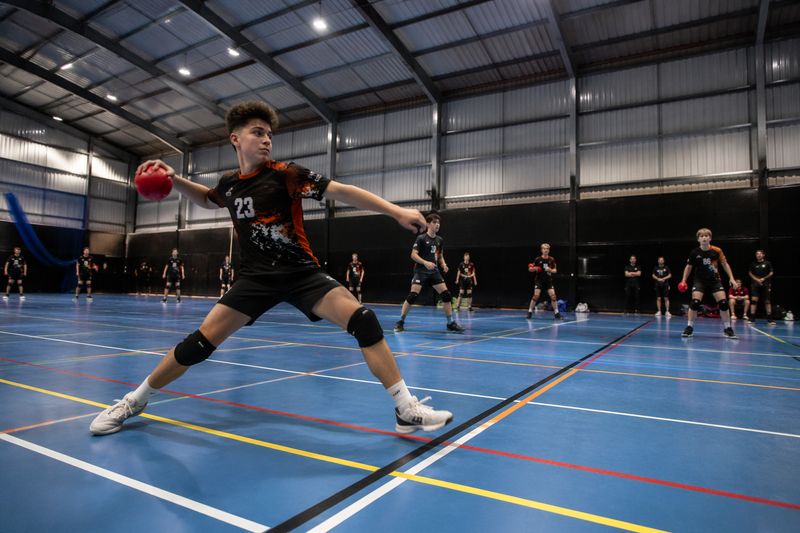
In April 2021, Hartlepool’s Dodgeball Centre opened after redevelopment of a unit that had stood unused for 10 years. By replacing borrowed school and leisure halls with a purpose-built base, it gave Hartlepool Mavericks room for more players, more age groups and a clearer route from junior sessions into adult competition. It solved the sport’s most basic bottleneck: nowhere reliable to train, host sessions or build a club identity year-round.
Why a dedicated home changed the equation
The centre emerged from a problem that was easy to see and hard to solve. In April 2019, planning documents showed Hartlepool Mavericks already had 120 local children registered and taking part each week, but the club was limited by the hall space it could rent and the number of weekly sessions it could secure. That meant growth was dictated not by demand, but by availability in shared venues.
The proposed answer was specific to the sport’s needs: one full-size dodgeball court, three smaller courts, a coaching area, an activity room and a waiting area for parents. The chosen site was an empty building next to Iceland on Oakesway Trading Estate off Skerne Road, in West View.
How the centre got built
The centre was founded by Lucinda Stott, Stephanie Robson and Paul Hewitson, who had started with Zumba, circuit training and boxercise classes aimed at tackling childhood obesity before dodgeball became the main draw. Their approach was practical from the start: build a fitness offer that could attract families, then create a sport-specific home once the demand was obvious. The keys were secured just as lockdown was announced.
The Mavericks brought in an experienced business developer to help secure leases, funding and grants, while the project also had to absorb pandemic-era complications and unexpected compliance costs, including a fresh-air system. Construction was carried out by Adam Readhead, and the venue operated through Stott Fitness CIC with Hartlepool Mavericks inside that wider community setup.
Sport England, PFC Trust, Impetus Environmental Trust, Sir James Knott Trust and later Utilita Energy all supported the project. PFC Trust funded the sprung on-court flooring, which affects training and injury risk in a fast, repetitive sport.
What the centre delivered on day one
It was the first dedicated dodgeball facility in England. The World Dodgeball Federation recognised it as the first of its kind anywhere in the world.
By September 2021, Hartlepool Mavericks had 180 members aged from three to adult. Their Under-11 and Under-14 teams were British champions that year, and the venue was already helping three other Teesside clubs with practice and squad sessions involving more than 200 members. PFC Trust put weekly use at 150 children and more than 20 adults.
On the first training session, Stephanie Robson said the children were “bouncing up and down and desperate to get in,” and parents were already sending messages saying how much the kids loved it. At the September 2021 open day, Ceremonial Mayor Brenda Loynes visited, and the centre’s operators said they hoped to bring England players there soon. The open day also marked the fifth anniversary of the Mavericks.
Why the model matters for dodgeball’s future
Hartlepool’s centre does not replace the sport’s wider club network. British Dodgeball’s club structure still stretches across community, university, youth and associate clubs, and in 2019 there were more than 85 affiliated clubs overall, with just three in the North East: Hartlepool Mavericks, Billingham Bulls and Middlesbrough Bombers. The centre gives one club a fixed base that can host repeat sessions, support other teams and build a visible pathway into the sport.
The centre later added inclusive sessions for people with learning and physical disabilities, women-only training, netball and other sports teams, plus a route from junior dodgeball into adult national leagues. The venue also includes a physio suite and a parents’ coffee area called the Dodgycaff.
By 2026, the venue was still the only dedicated dodgeball facility in the world, and the founders said the project had survived through Sport England grants, local fundraising, charitable backing and volunteer support, without council or government funding.