Hollie Scott and Stephanie Synhorst contrasted in LPRT tale of the tape
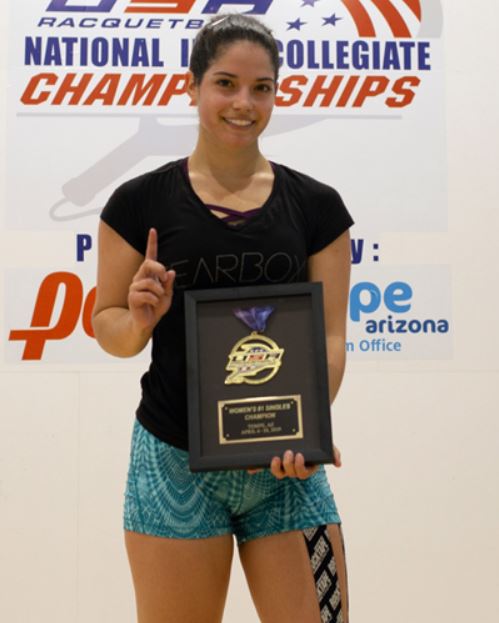
Hollie Scott’s 30-40 LPRT record and Stephanie Synhorst’s 6-29 line tell two different career stories in one stat box. Scott has logged 10 seasons with appearances; Synhorst has five, and the gap shows up in both volume and win rate. The Pro Racquetball Stats tale-of-the-tape page, printed on August 2, 2026 and current through June 7, is built to make those differences legible at a glance.
How to read the tale of the tape
The first numbers that matter are not titles or highlight clips, but the ones that measure how often a player has been in the room. Scott’s 30-40 mark means 70 recorded matches, while Synhorst’s 6-29 line comes from 35 matches, so Scott’s sample is twice as large. That matters on the LPRT because volume often tells you whether a player is still collecting reps or beginning to turn those reps into a steadier result.
Winning percentage adds the next layer. Scott sits at .429, which is not dominant but does reflect a much more competitive baseline than Synhorst’s .171. For a tour follower trying to separate résumé building from real traction, the winning rate is the cleanest quick read, while season count and match count explain how long each player has had to build that rate.
Scott’s longer runway on the tour
Scott’s profile is the easier one to place in the arc of a young professional. Born October 2, 1998, she is listed at 27 years old in the August 2 snapshot, and she made her tour debut at the 2016 Dare 2 Dream LPRT Racquetball Championships in Stockton, California, on May 15, 2016. She was 17 years and 225 days old that day, which means she entered the women’s tour as a teenager and has had a long runway to accumulate results.
That runway matters because Scott’s numbers are spread across 10 seasons with appearances, not a short burst of one or two events. A player who arrives that early often spends the first part of a career learning how to survive the schedule, and the second part trying to turn survival into more regular wins. Scott’s 30 wins show that she has built enough of a body of work to be measured across multiple seasons, not just a single breakout event.

Synhorst arrived later, but her profile is now well established
Synhorst’s career arc is shorter in LPRT terms, even though she is older. Born July 27, 1993, she is listed at 33 years old in the same snapshot, and her tour debut came at the 2021 25th UnitedHealthcare US Open in Minneapolis, Minnesota, on October 10, 2021. She was 28 years and 74 days old at debut, a much later entry point than Scott’s, which helps explain why she has fewer seasons and fewer matches on her record.
The same tale-of-the-tape frame shows Synhorst with 5 seasons with appearances, a 6-29 career record, and a .171 winning percentage. On the separate Synhorst comparison pages against Juliette Parent, Lucia Gonzalez, Erika Manilla and Ana Gabriela Martinez, those same core figures repeat, which gives her profile a clear and consistent shape across opponents. One of those auxiliary pages also shows zero titles and zero finals appearances, a reminder that the next step is not just playing more but converting those starts into deeper tournament runs.
The one result that sharpens the comparison
Synhorst’s most useful counterweight to that record came in the Pro Racquetball Stats Sweet Caroline wrap-up dated May 20, 2024, which noted that she beat Hollie Scott there. That result matters because it shows the kind of win that can change how a player is read inside the tour, especially when the opponent has the larger sample and longer history.
It also shows why raw record is only part of the picture. A single head-to-head win over a higher-seeded opponent can signal that a player is capable of stepping up against stronger opposition, but it does not erase the broader record that still needs to improve. In Synhorst’s case, the Sweet Caroline win is the clearest sign of upward pressure inside a career line that still reads as a search for consistency.

What these stats say about development on the LPRT
The best development markers are the ones that move together. Match volume tells you how much tour life a player has absorbed, seasons with appearances tell you how long that exposure has lasted, winning percentage tells you whether the exposure is producing results, and results against stronger opposition tell you whether a player can make the jump when the draw stiffens. Deep-run frequency, when it appears, is the next level of proof, because finals and titles show that a player is not just hanging around but finishing weekends.
That is why the Scott-Synhorst comparison works as a career-arc explainer. Scott’s 10 seasons and 70 matches point to a veteran body of work that has been assembled over time, while Synhorst’s later debut, 35-match sample and .171 mark show a player still trying to stabilize the week-to-week numbers. The one recent win over Scott gives Synhorst a meaningful data point, but the larger record still says she is chasing the kind of consistency that turns an individual result into a tour pattern.
The wider tour backdrop
These kinds of comparison pages matter because the LPRT is built on a steady circuit, and the schedule itself shapes the numbers. Daily Racquetball’s coverage of the March 3-5, 2023 Frontline Boston Open in Marlborough, Massachusetts, and the April 25-28, 2024 Battle at the Alamo in San Antonio, Texas, shows the kind of week-in, week-out tour environment that produces these records. The stat lines are not abstract, they are the accumulation of draws, travel, and repeated matchups across the season.
Synhorst’s official LPRT profile lists Lincoln, Nebraska, USA, which helps place her on the tour map as the numbers continue to evolve. For Scott, the broader arc is already clearer: a teenager who entered early and has spent years building volume. For Synhorst, the question is whether the occasional sharp result can grow into a steadier winning base. On this tale of the tape, that is the real divide.