Horizontal vs vertical stack remains ultimate frisbee's core offensive debate
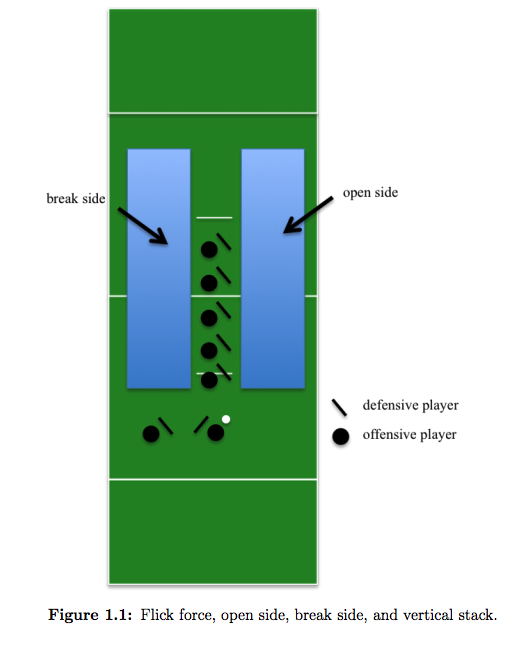
Seven players have a stall count to beat, and teams usually start from one of two shapes: vertical stack or horizontal stack. That geometry still decides how teams solve the same problem: how to move into space, give handlers a clean release, and keep cutters on time. USA Ultimate’s archived Huddle issue labeled Issue No. 1, “Horizontal or Vertical?,” dated Tuesday, May 20, 2008, shows how long that core offensive debate has shaped Ultimate.
Why the debate keeps returning
The choice persists because each system answers a different problem. A vertical stack lines cutters up downfield, usually through the middle of the field, which creates room for isolation cuts and deep shots. A horizontal stack spreads players across the width, which can open break-side access, give handlers more reset options, and let the offense move the disc across more of the field in a single possession.
Ultimate is self-officiated and framed through Spirit of the Game, and the 2024-2025 Official Rules of Ultimate keep the stall count at 10 seconds. With less time to improvise and fewer external stoppages to rescue a possession, spacing determines whether a team gets a throw off before the count catches up.
When vertical stack fits the roster
Vertical stack is the cleaner answer when the roster leans on explosive deep cutters and timed vertical movement. With cutters lined up along the middle of the field, the offense can clear space for unders, then punish defenders who overcommit with hucks over the top. It is also a strong fit when a team wants one primary matchup to attack at a time, because the isolation lanes are easier to read and the timing windows are more obvious.
That simplicity makes vertical a reliable teaching tool as well. A team built around younger players, or a roster still learning how to move as one unit, can use the vertical shape to keep roles clear: one cutter goes, the others clear, and the handler sees a cleaner picture. The tradeoff is that the offense can become predictable if the throwers do not have the poise or arm strength to punish help defense once the middle gets crowded.
When horizontal stack is the smarter call
Horizontal stack makes more sense when the roster has skilled throwers, active continuation cutters, and handlers who can reset quickly under pressure. In Ron Kubalanza’s May 20, 2008 piece, “Horizontal Stack in Windy Conditions,” he wrote that a horizontal stack gives a team more options, with cutters generally closer to the disc and all four cutters available almost simultaneously. He described the field as four cutting lanes instead of two, which helps explain why the system is less congested for handlers working against a force.
That extra width lets the offense create movement across the full field and attack the break side sooner, which is especially valuable when defenders are setting a hard mark or trying to dictate one sideline. For teams with multiple comfortable throwers, horizontal stack often turns the reset into an advantage rather than a bailout, because the disc stays within easier reach of several options.
Wind, pressure, and the reset structure
Wind is where the horizontal-versus-vertical choice becomes especially practical. Kubalanza’s windy-conditions analysis treated horizontal as a system that keeps more players closer to the disc, which shortens some throws and makes the offense less dependent on long, floating cuts. In rough conditions, that proximity can help a team keep the disc alive when a vertical stack starts to stretch too thin and the timing of deep cuts becomes harder to trust.

The same logic applies under defensive pressure. If a force is pinning the offense to one side, horizontal spacing can create quicker swing lanes and more immediate reset structure, while vertical spacing can leave handlers waiting for a cutter to clear before the disc can move again.
What the broader game has favored
By August 27, 2013, Ultiworld’s Shayne Flaherty was already describing horizontal offense as the go-to offensive set in the college game. The horizontal look did not replace vertical so much as become a default starting point for many teams that wanted more flexibility out of their handlers and more consistent motion from their cutters.
Flik Ultimate traces horizontal, or flat, stack to early 2000s dominance and still places it at the highest levels of the game, while Cedar Rapids Ultimate lists it as one of the more popular offenses used by both new and experienced teams.
How to choose between them in practice
In practice, the choice turns on the roster, the field conditions, and the defense in front of you.
• Choose vertical when your cutters win with timing, your deep game is a weapon, and you want one-on-one isolation.
• Choose horizontal when your handlers can move the disc quickly, your cutters stay active in continuation, and you want easier reset access.
• Lean horizontal when wind is making long throws and long cuts unreliable.
• Lean vertical when the roster is still learning timing and spacing, because the structure can simplify reads.
Most serious teams blend both. They switch looks by field position, by wind, and by personnel.