How adult kickball works: 10 fielders, 7 innings, no bouncies

Adult kickball feels closest to playground memory right up until the first league rule is enforced. The Canon City Area Metropolitan Recreation & Park District spells out the modern version in plain terms: two teams, bases, a big red ball, 10 fielders, 7 innings, and the safety rules that define the sport’s grown-up shape, including “no bouncies” and “no headshots.” That combination turns a familiar recess game into something sharper, safer, and more strategic without stripping away the social energy that keeps adults coming back.
The game starts with a baseball frame and a different rhythm
Adult kickball still borrows the bones of baseball, and that matters from the opening pitch. The object is simple: score more runs than the other team, but the field is organized around fewer moving parts than baseball and more open space than a playground pickup game. With 10 fielders instead of a full baseball defense, every player has a job, but no one can hide, and that creates constant decisions on where to place the ball and where to cut off a runner.
Seven innings also changes the feel. The game has enough length to reward adjustments, but not so much that a league night drags on. A team that starts slow still has time to recover, yet one clean inning can swing the whole result, which is why adult kickball often feels like a sequence of short, high-leverage moments rather than a long grind.
Why “no bouncies” changes everything
The rule casual players notice fastest is “no bouncies.” In a playground setting, a hard swing and a weird hop can turn into chaos, but in adult league play the cleaner standard forces a different kind of contact. A kicker cannot simply blast for distance and hope the ball takes a lucky hop; the action rewards timing, foot placement, and control more than raw power.
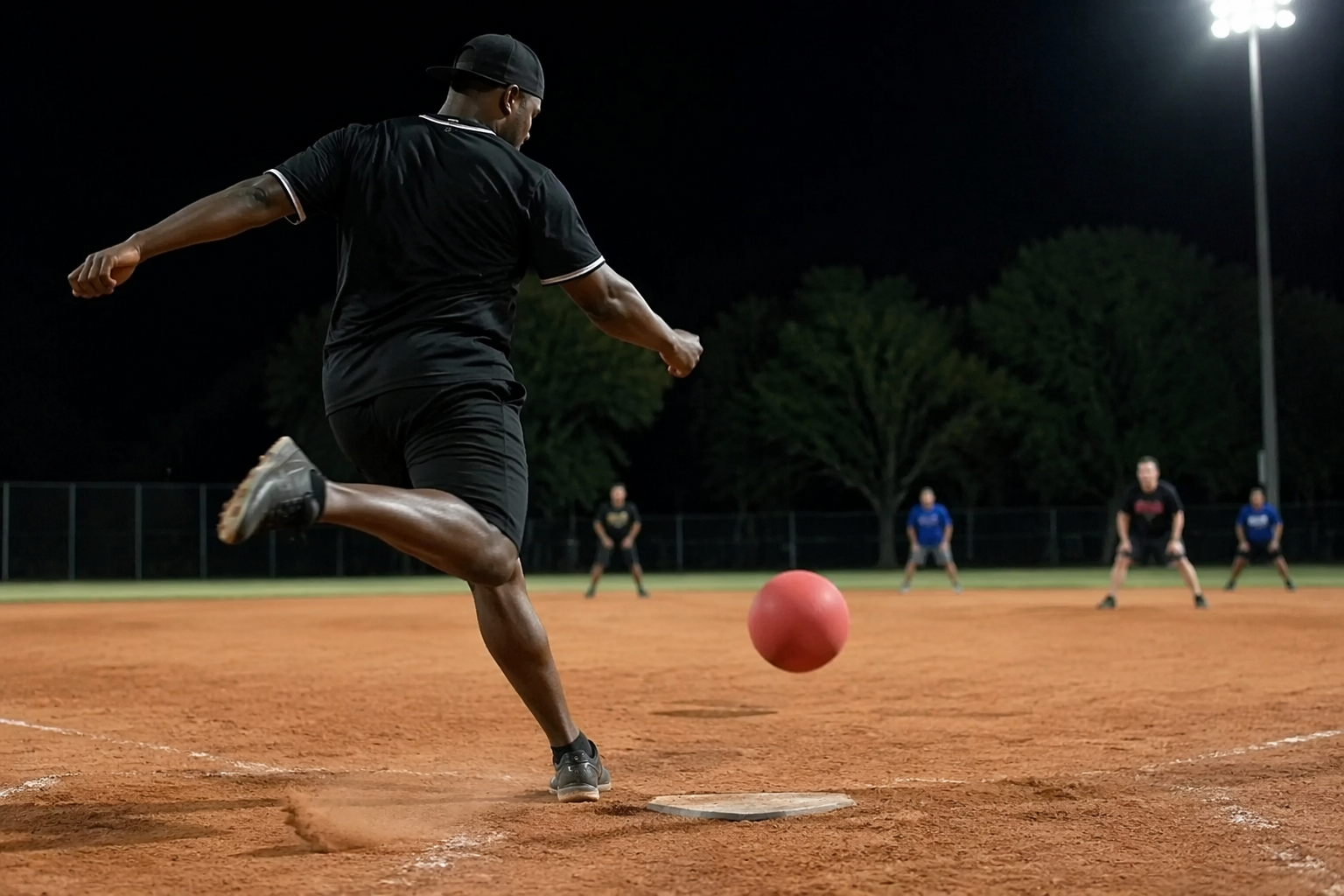
That changes strategy at the plate. A team facing a packed defense often gets more value from a well-placed kick into space than from a reckless smash straight at a fielder. A ball that stays low and true can split defenders and create an immediate run-scoring chance, while a rushed swing that sends the ball awkwardly can produce an easy out. The rule makes the game feel less like a free-for-all and more like a judgment test, which is exactly why it has held up as an organized rec-sports staple.
“No headshots” is more than a safety line
The other phrase that tells you adult kickball is not recess is “no headshots.” It is a blunt rule, but it speaks to the way social leagues protect competition from dangerous play. Players still run hard, field aggressively, and try to force outs, but the league’s expectation is that winning never comes at the cost of unsafe throws or reckless close-range contact.
That matters on defense and on the basepaths. A middle infielder charging a slow roller cannot treat a runner like a target, and a throw home has to be made with control. The rule changes pace because it removes some of the collision culture that can creep into informal games, and it changes fairness because it keeps the focus on execution instead of intimidation.
The gear rules tell you who the sport is for
The Canon City rules also make the sport’s accessibility clear. Athletic shoes are required, metal cleats are not allowed, and protective equipment is permitted as long as it does not create an unfair advantage. Those details look small, but they tell the whole story of adult kickball as a public-field game built for mixed athletic backgrounds.

In practice, that means the sport is meant for people who may come from softball, soccer, office leagues, or pure beginner status. A pair of athletic shoes is enough to step onto the field, and the ban on metal cleats keeps the surface safer for everyone else. Allowing protection without an unfair edge preserves the balance between comfort and competition, which is part of why the sport travels well from park district fields to campus intramurals and city leagues.
The national footprint behind the casual vibe
The adult version of kickball did not grow by accident. The World Adult Kickball Association, now branded on its website as the World Kickball Association, says it started in 1998. A separate description says the organization was founded that same year in Washington, D.C. by four friends seeking a casual outlet, and its online history says the sport “exploded across the nation” with the formation of ClubWAKA.
That history explains the tone of the game today. The World Kickball Association says kickball is easy to learn, easy to set up, and social, and that description matches how leagues sell the experience: competitive enough to matter, simple enough to start quickly, and social enough to keep teams together after the last out. Even the rules page frames the culture directly by saying the most important rule is to have fun and be social.
Local leagues adapt the same game in different ways
If the national organizations provide the identity, local rulebooks provide the fine print. BREC Athletics in Baton Rouge, Louisiana, issued an adult kickball rulebook dated August 2021 that covers coed and women’s play, showing how leagues often organize the sport around participation format as much as skill. Michigan State Recreational Sports plays its version with two teams of 10 players each, which lines up closely with the Canon City model and reinforces how common that 10-player structure has become.
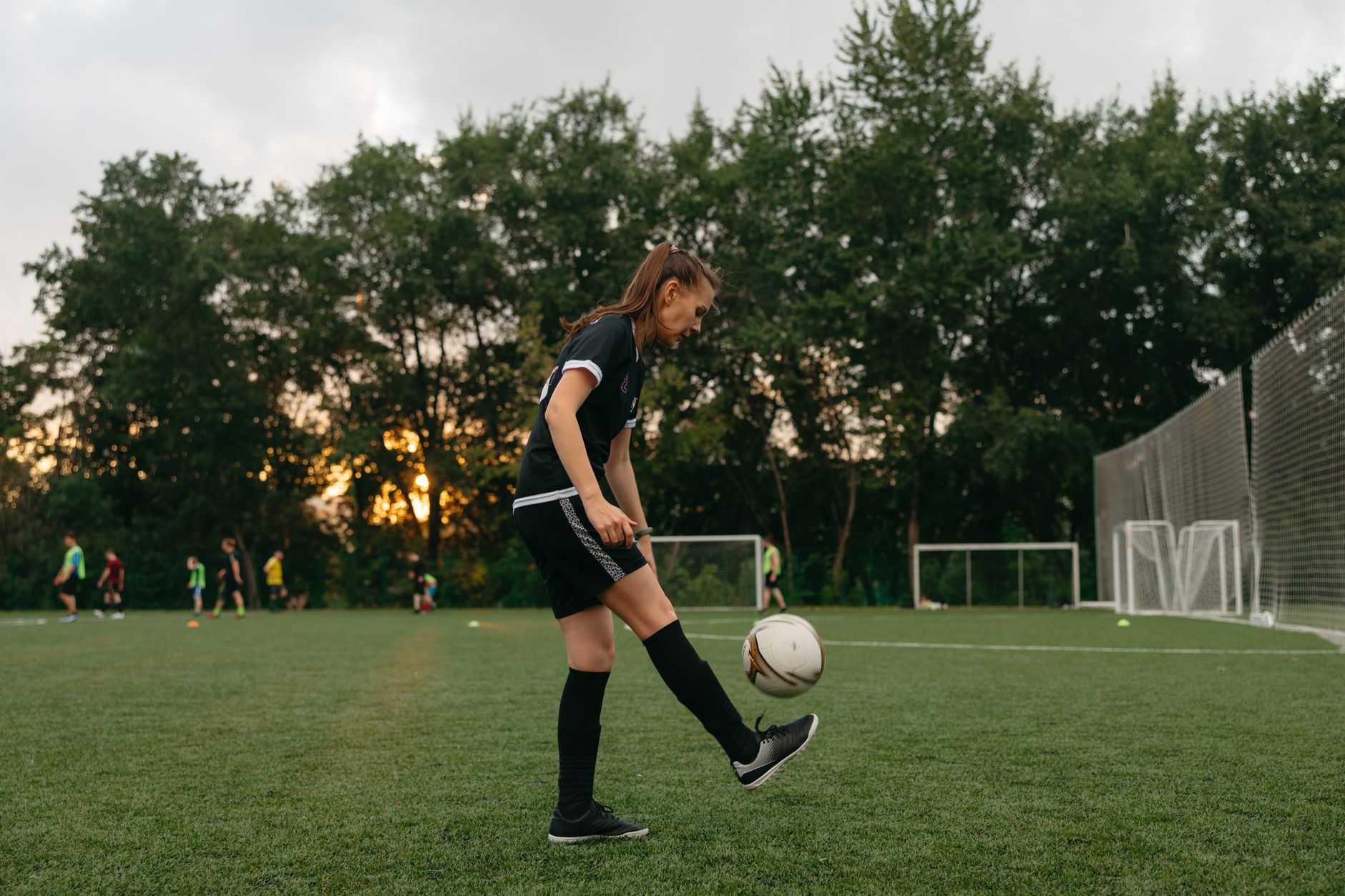
Other leagues trim or expand the roster differently. The Livingston Adult Kickball League says eight players must be present to start and continue a game and defines a full team as 11 players, which shows how local organizers balance participation with competitiveness. Lighthouse Point Recreation goes one step further in keeping order on the field: if a situation is not covered, the rules default to Major League Baseball, only the captain and co-captain may speak with referees, and abuse can lead to ejection. That is a reminder that adult kickball is not just a loose social outing; it is a governed sport with behavior standards attached.
CCA Sports in Columbus, Indiana, follows the same pattern by posting team registration details and roster limits, another sign that the sport scales through local structure. The numbers change from league to league, but the logic stays consistent: enough structure to keep games fair, enough flexibility to keep the barrier to entry low.
The modern adult version is still the playground game, just regulated
What makes adult kickball durable is the balance inside the rulebook. Ten fielders keep the defense active, seven innings keep the night moving, “no bouncies” forces skill over chaos, and “no headshots” keeps the social game from turning reckless. Add the gear rules, the roster differences, and the league culture built by WAKA and local organizers, and the sport becomes something more precise than nostalgia.
It still looks like a big red ball, a basepath, and a bunch of friends on a field. The difference is that every clean kick, every throw under control, and every smart defensive rotation now counts in a game built to reward both fun and discipline.
Sources
- [1]ccrec.org
- [2]kickball.com
- [3]instagram.com
- [4]brec.org
- [5]livingston.govoffice2.com
- [6]recsports.msu.edu
- [7]lhp.recdesk.com