How Argentina's detachable glass court helped padel go global
Padel’s global rise did not begin with a trophy or a marquee final. It began with a court that could come apart, travel, and be rebuilt anywhere, and with a glass design that made the action visible enough to sell the sport beyond its home base. In Mar del Plata, Jorge Galeotti’s Crystal Palace changed padel from a local habit into a product that could move.
The court that made padel portable
The International Padel Federation places a clear marker on 1989: Galeotti introduced the Crystal Palace in Mar del Plata, and it was the first detachable and transportable glass court. That detail matters because portability changed the economics of the sport. Padel no longer needed to live only inside permanent club infrastructure, which meant promoters could stage it for exhibitions, international events, and temporary builds without waiting for a fixed venue to be completed.
That same year also delivered another milestone in Mar del Plata, when the first international competition between Spain and Argentina took place in January. The timing was no accident. The sport had already become serious enough in Argentina to support cross-border competition, and the new glass court made that ambition physically workable. What looked like an engineering tweak was actually the hidden infrastructure that let padel leave its birthplace and travel with confidence.
The design also solved a viewing problem. Earlier courts were more bound to local club use and less friendly to spectators, while a transportable glass structure opened the game to clearer sightlines and better event presentation. That is why the Crystal Palace sits at the center of padel’s international story: it made the sport easier to stage, easier to watch, and easier to replicate.
Argentina built the runway before the breakthrough
The Crystal Palace did not emerge from nowhere. FIP’s history materials place padel’s Argentine growth much earlier, saying the sport became a social phenomenon in 1982 at the Ocean Club in Mar del Plata, where the first padel courts in Argentina were installed. That gives the city more than symbolic value. Mar del Plata was the place where padel shifted from novelty to social habit, and then from habit to system.
The institutional base followed. In 1987, the Asociación Platense de Padel, known as APPTAS, was created as the first official padel-related institutional organization. A year later, a group of friends led by Oscar ‘Cacho’ Nicastro founded the Argentina Padel Association, or APA, which FIP identifies as the first national padel association in the world. That sequence is important: clubs, then organization, then national identity, then export.
By the time Galeotti unveiled the Crystal Palace in 1989, Argentina had already become padel’s key growth engine in the 1980s. The court did not create that momentum, but it gave it a chassis. It translated a local sports culture into something with standards, transportability, and enough visual clarity to travel into other markets.
Why glass changed more than the look of the game
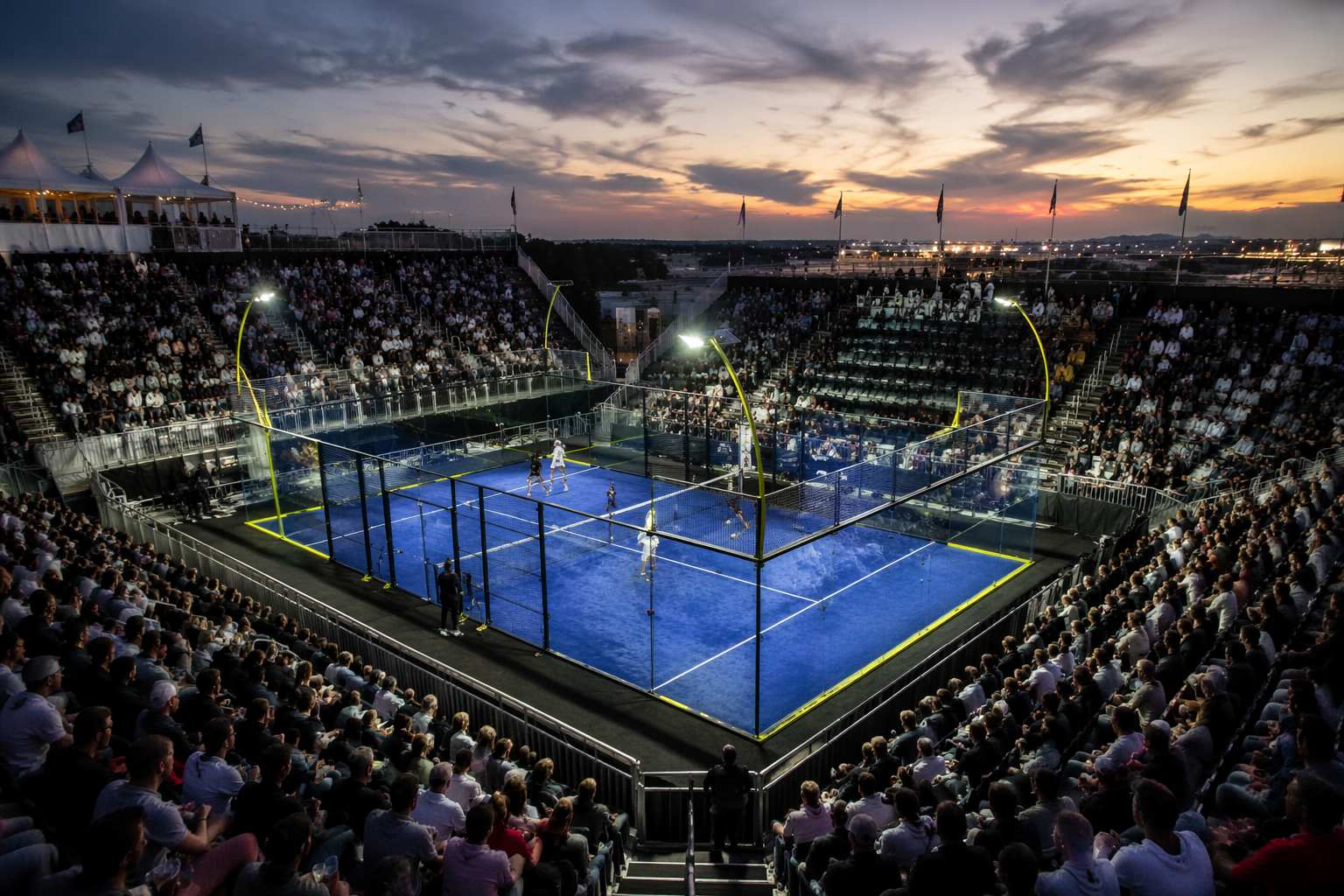
The modern appeal of padel stadiums, urban pop-ups, and showcase events traces directly back to this 1989 shift. A glass court does more than look sleek. It makes the rally legible from the stands, which is crucial for a sport built on rebounds, angles, and constant movement. The more visible the walls and ball paths are, the easier it is to sell the match as a live spectacle.
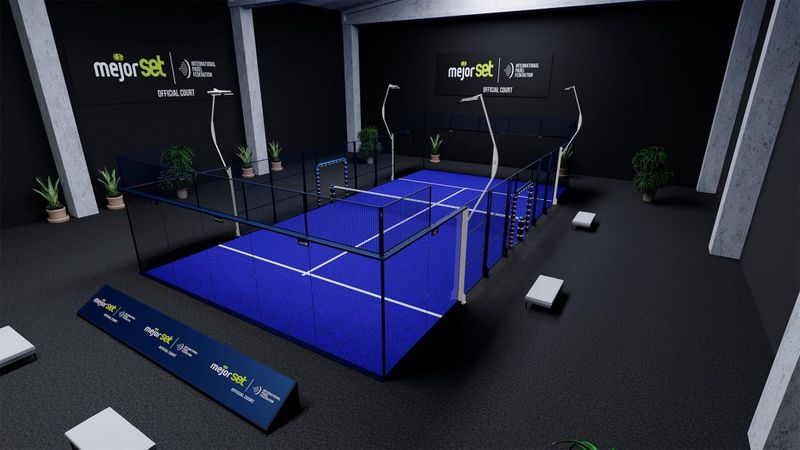
That logic is now embedded in how the sport talks about its own infrastructure. In October 2023, FIP and MejorSet announced the FIP Official Court model, saying it was meant to internationalize padel and standardize the technical environment for champions, juniors, and amateurs while maximizing visibility with a disruptive design. The language could have been written as a direct descendant of Galeotti’s invention. The message is the same: if the court is clean, consistent, and readable, the sport can scale.
This is why today’s showcase courts matter so much. When padel appears in an urban plaza, a temporary stadium, or a premium event build, the court itself is part of the spectacle. The glass is not decoration. It is the mechanism that turns a compact, fast game into a broadcast-friendly event with recognizable architecture.
The rules now protect the sightlines
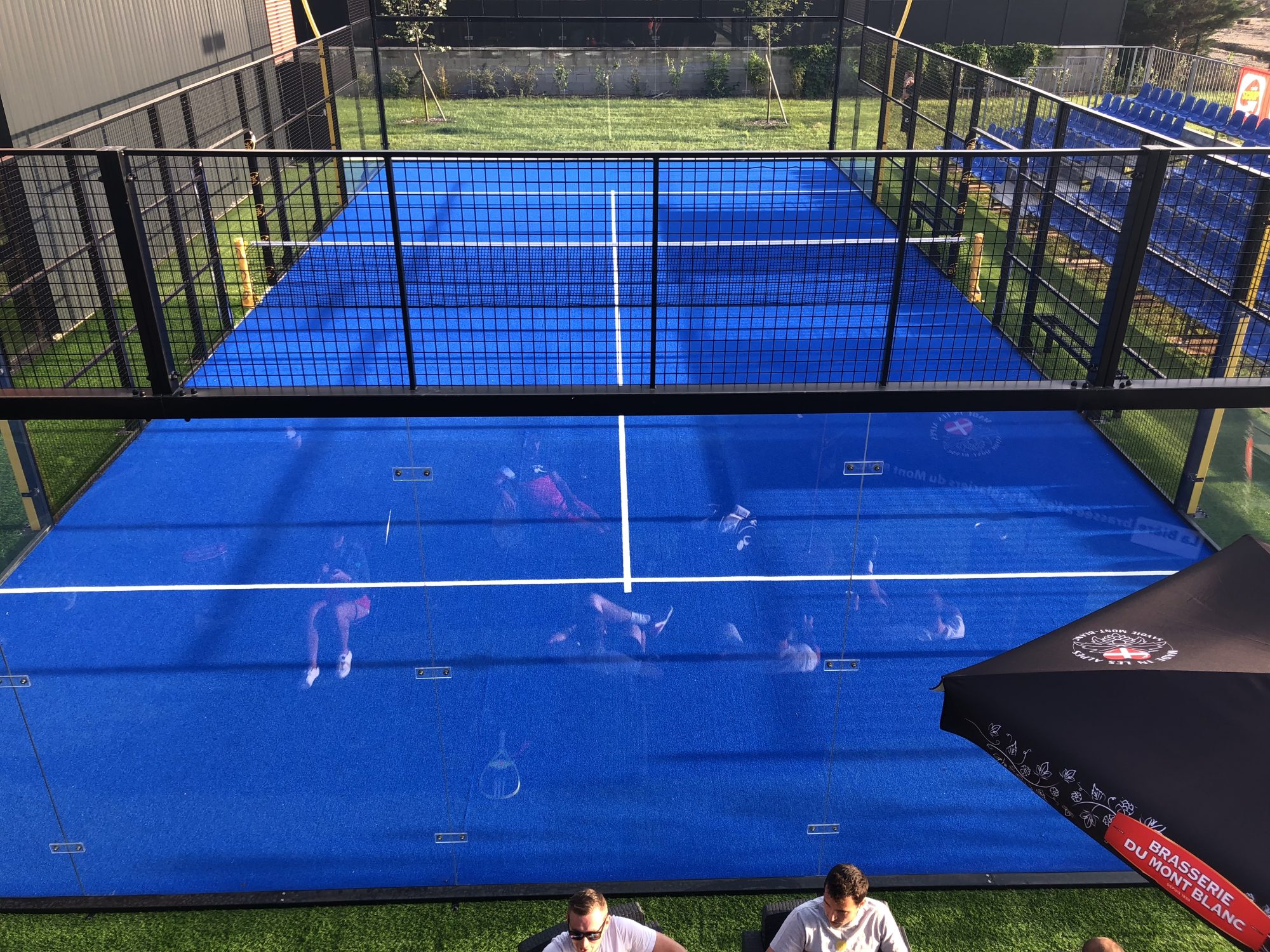
FIP’s current rules show how deeply that visibility-first approach has become part of the sport’s technical identity. Glass courts must comply with standards for tempered or plate glass, which gives the court a defined material baseline rather than leaving it to improvisation. The rules also allow logo imprinting or painting only if it does not interfere with the player’s vision, which makes branding secondary to playability.
The court dimensions are equally revealing. FIP requires court lines to be 5 cm wide and the court height to be at least 6 meters throughout. Those are not cosmetic details. They help preserve consistency from venue to venue, and they make it easier for players, organizers, and broadcasters to know exactly what they are getting when a court is built in a new city.
That standardization is part of the same story as the Crystal Palace. Once padel became portable, it also became repeatable. Once it became repeatable, it could be governed. And once it could be governed, it could be exported without losing the visual identity that made it attractive in the first place.
The global game still carries the Mar del Plata logic
The arc from the Ocean Club in 1982 to the Crystal Palace in 1989 to the FIP Official Court model in 2023 shows how padel globalized through infrastructure, not just through athletes. Argentina gave the sport an organizing culture, but Galeotti’s detachable glass court gave it a transportable form. That combination is what allowed padel to move from improvised local courts into international showcases and stadium-style events.
Modern padel still depends on that original idea: make the court visible, make it portable, and the sport can go almost anywhere.
Sources
- [1]padelfip.com