How coed kickball captains build rosters around gender rules
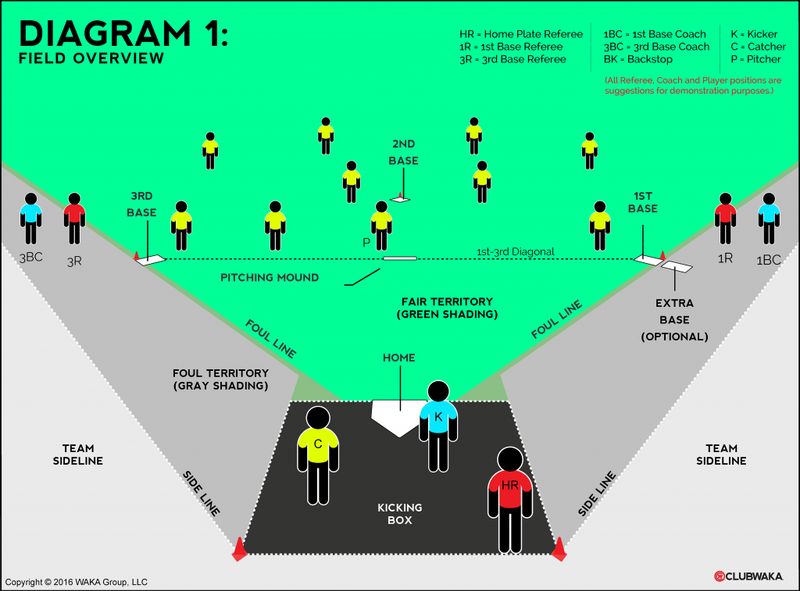
KLOB locks the kicking order before the game, limits late arrivals to replacing a player of the same gender, and bars more than two men from kicking in a row. In coed kickball, a smart captain is not just picking the strongest legs, but mapping genders, substitutions, and late arrivals so the lineup stays legal when the game starts to bend.
The rulebook is the strategy guide
Adult kickball grew from a social idea into a serious roster puzzle. The World Kickball Association dates the modern adult game to Washington, D.C., in 1998, then dropped the word Adult and expanded into ClubWAKA programming.
The batting order is where captains win or lose ground
Once the order is locked, the captain has to think several spots ahead. KLOB’s rules also require teams to keep a scorecard and give captains only a narrow lane for rotating women through the lineup without breaking the format. A captain cannot just stack power, but has to space it so the order stays legal and useful when the cycle turns.
Bonner Springs requires an equal male-to-female ratio and an alternating gender batting order. Douglasville says no more than two males may kick in a row, and it puts the burden on captains to check the other team’s lineup before the game. Tega Cay treats a male kicking at both the top and bottom of the lineup as back-to-back, while female kickers have no limit on consecutive slots. Captains can be more flexible with women in the order than with men.
You cannot always hide your weakest kickers at the bottom of the lineup, because the gender pattern may force them into a higher-leverage spot. You also cannot stack all your best men together and call it a power lane, because the rulebook turns that into an illegal stretch the second it crosses the line.
Depth on the bench matters as much as power in the box
Roster depth is where coed kickball gets ruthless. Westover Sports requires at least 10 players, including a minimum of 5 men and 5 women, and caps the roster at 12. If a team has fewer than 8 players at game time, it forfeits; with 9 players, it takes a ghost out.

Louisburg Recreation tightens the screws in a different way. Teams may field up to 10 players, the entire roster kicks, at least 8 players are needed to start and finish, and both stealing and leading off are forbidden. With no stealing and no lead, the running game shrinks and a clean, legal order matters more. A weak runner matters less when the base paths are constrained, but a missing body or an illegal gender slot can still wreck the inning.
In KLOB, a late arrival can only replace a player of the same gender, and some leagues allow same-gender pinch runners or kickers in injury or emergency situations. A late arrival or an injury in the middle of the order still has to fit the gender slot already on the card.
What smart captains are actually solving
The best coed captains are solving a set of linked problems, not a single lineup question.
• They place their most reliable contact kickers where the gender pattern allows them to do the most damage without creating an illegal run of kickers.
• They keep enough same-gender depth on the bench to survive late arrivals, injuries, and emergency swaps without tearing up the order.
• They build for the rules of their league, whether that means Westover’s minimum 10-player roster, Bonner Springs’ equal gender ratio, or Louisburg’s maximum 10 on the field.
• They plan for the absence of stealing and leading off, because in leagues like Louisburg and Westover, the order and the kick matter more than the hope of manufacturing runs on the bases.