How college dodgeball grew from dorm joke to championship sport
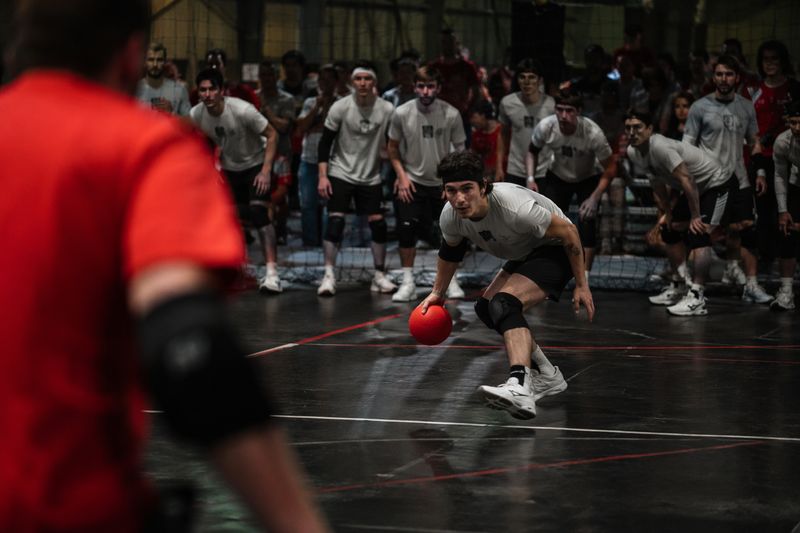
Before college dodgeball had a governing body, a championship bracket, or even a clean ruleset, it had Ohio State and Kent State. Their March 10, 2003 exhibition match, a 16-14 Ohio State win, is the first recorded intercollegiate game in the sport’s history and the moment the league now treats as the beginning of organized college dodgeball. What looked like a campus novelty quickly became the sport’s first real proving ground, because the battle for Ohio did more than crown a winner. It showed who would control the narrative, who would set the rules, and who would decide whether this was a joke or a legitimate competition.
Ohio’s rivalry became the sport’s first identity
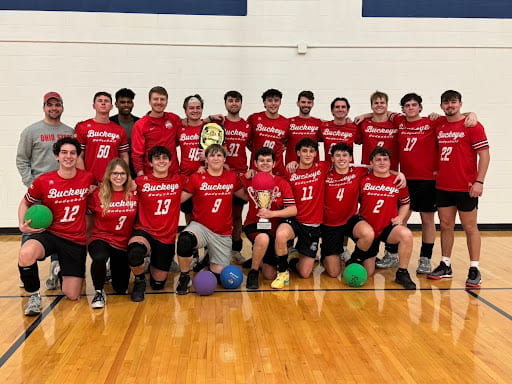
The Ohio State and Kent State clubs were both founded in 2002, and the NCDA still treats them as the league’s oldest rivalry. Ohio State’s own team page calls Kent its largest rival, stretching back to that first recorded intercollegiate match, while Kent identifies itself as the second-oldest team in the NCDA and a participant in that opening game. That matters because rivalries are usually decoration in a young sport. Here, rivalry was the engine. The informal label for that first meeting, the “Battle for Ohio Dodgeball Supremacy,” tells you everything about the stakes: the early years were not just about throwing balls, but about claiming legitimacy for the entire college game.
That Ohio foundation still shapes how the sport talks about itself. The NCDA did not emerge from a national office handing down a polished model. It grew from campuses testing each other, with Ohio State and Kent State setting the tone for competition, identity, and bragging rights. In a sport that could have remained a student pastime, the first meaningful question was not whether people would play, but who would control the structure around the playing.
Rules came next, and Michigan turned chaos into a format
The next big step came in Michigan, where Delta College met Michigan State in what the NCDA describes as the first real league-style game with two teams and set rules. Michigan State won that match, but the result is less important than the shift it represents. This was where the sport stopped being a loose series of campus challenges and started becoming a defined competition with a unified ruleset.
That match became the inaugural Michigan Dodgeball Cup, now described by the NCDA as the oldest regular event in college dodgeball. Michigan State has hosted it every year since, which gives the sport something that many newer college competitions never get: continuity. Regular events create memory, and memory creates standards. Once the Michigan Dodgeball Cup became annual, the sport had a recurring test case for how college dodgeball should look, how it should be officiated, and how a regional rivalry could be turned into a durable tradition instead of a one-off stunt.
April 2005 gave college dodgeball its championship calendar
The first collegiate Nationals arrived at Michigan State on April 9-10, 2005, and that weekend is the clearest marker of when the sport crossed from club chaos into organized championship culture. The event, then called the Spartan Dodgeball Invitational, included five member teams: DePaul, Kent, Ohio State, Michigan State, and Delta Community College. Those five teams formed the Midwest Dodgeball Conference, and the NCDA says the league itself was founded on April 9, 2005, the same day Nationals was first hosted.
That timing is not an accident. Nationals gave the sport a title race, a calendar, and a reason to keep standardizing itself beyond local quirks. The NCDA’s champions list shows how quickly that structure took hold, with 2005 national champions including Grand Valley State University, the University of Kentucky, and Oakland University. In a sport with roots in dorm rooms and campus gyms, a champions page is proof that the game had already begun building its own record book.
The modern NCDA is built for scale, not nostalgia
The NCDA now describes itself as a 501(c)(3) nonprofit governing body for collegiate dodgeball, and it is student-operated. That is the key to why this story matters beyond nostalgia. The organization was not built to preserve a joke from the past; it was built to run a sport. Its brand of college dodgeball is a 12-on-12 game played on a basketball-sized court with rubber dodgeballs and a neutral zone, which tells you the league cares as much about structure as it does about speed or power.
The scale keeps growing, too. The NCDA’s 2022 season recap recorded 172 ranked matches across 22 events, a schedule that would have been impossible to imagine when Ohio State and Kent State were settling their first campus grudge match. That volume is what turns a regional rivalry into a national system: repeated competition, official rankings, and a rules philosophy that can survive across schools and seasons. The oldest rivalry still matters, but it matters now inside a league that has moved far beyond one night in Ohio.
College dodgeball did not simply survive as a dorm-room joke. It built a governing body, a championship weekend, a recurring rivalry circuit, and a student-run identity that still reflects the Ohio and Michigan flashpoints where the sport learned how to govern itself. The NCDA’s modern shape is the direct product of those early battles, and every ranked match still carries that original fight for control, legitimacy, and structure.