How DodgeBall inspired ESPN8: The Ocho and a summer tradition
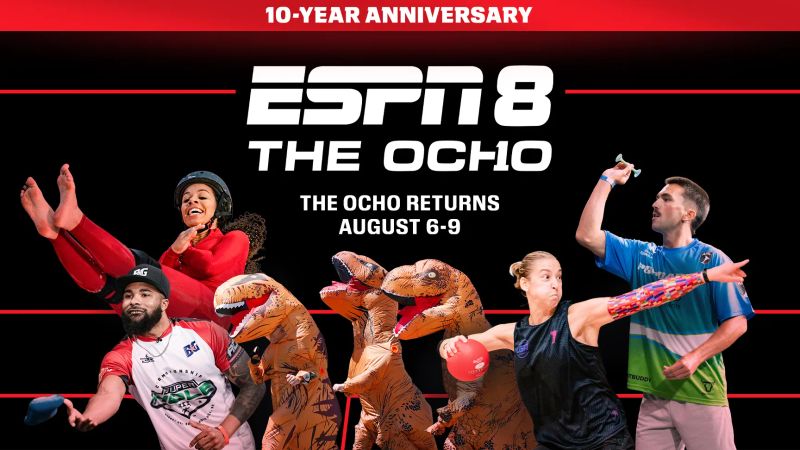
A throwaway joke from DodgeBall: A True Underdog Story became one of ESPN’s most durable summer identities. What started as a parody channel in a cult comedy has turned into a real annual showcase for offbeat competitions, with the network treating the weirdness as the point rather than the punchline.
From movie parody to sports brand
The fictional ESPN8: The Ocho was born in the 2004 film starring Vince Vaughn and Ben Stiller, where Rawson Marshall Thurber built a world around Cotton McKnight, Pepper Brooks, Chuck Norris and Patches O’Houlihan. The line “If you can dodge a wrench, you can dodge a ball” did more than become a meme. It gave ESPN a joke that already understood the language of sports television, including the old ESPN2 nickname “the Deuce,” which made the parody feel less like nonsense and more like a sharp inside joke.
That connection matters because the gag did not mock sports culture from the outside. It borrowed the rhythms of sports broadcasting, then exaggerated them just enough to make the idea memorable. The result was a fictional channel that fans could picture immediately, which is why the Ocho name still lands as both comedy and shorthand for anything gloriously obscure.
The day ESPN made the joke real
ESPN turned that movie bit into a one-day stunt on Aug. 8, 2017, transforming ESPNU into ESPN8: The Ocho. The initial lineup included 11 events, and the block opened at midnight ET with the 2016 American Disc Golf Championship. That first schedule did exactly what the concept promised: it gave an unusual sport a legitimate spotlight instead of a quick laugh.
The launch was never just a novelty exercise. ESPN built the day around competitions that already had athletes, rules and real followings, including disc golf and trampoline dodgeball. By giving those events airtime with the full machinery of a network special, ESPN showed that a joke could still carry competitive weight. The broadcast was playful, but it was not dismissive.

How a one-day stunt became a summer fixture
The real turning point was repetition. ESPN’s 2023 Ocho explainer said the event had grown into 43 hours of unique programming on ESPN2, a far cry from the original one-day ESPNU stunt. By 2024, ESPN was calling the celebration “Ocho Years of the Ocho” and describing it as the number one destination for seldom-seen sports.
That kind of branding only works when viewers recognize the package instantly. ESPN did not just recycle a movie reference each summer; it turned The Ocho into a recognizable annual slot with its own identity, tone and expectations. The network leaned into the humor, but it also made the block feel communal, like a place where niche sports could be treated with the same energy that mainstream leagues get all year.
In 2026, ESPN marked the 10th anniversary of the concept with a return scheduled for Aug. 6-9. The network said that run would include 74+ hours of programming and 80 events across ESPN platforms. Those numbers show how far the idea has traveled from a single-day joke on ESPNU to a multi-day, multi-platform summer tradition.
What The Ocho has done for dodgeball and the sports around it
The bigger story is not just that ESPN found a fun programming gimmick. It is that The Ocho changed the way unusual sports are presented to people who might otherwise see them as a punchline. When ESPN gives a competition production value, a schedule and a recurring slot, it tells viewers to take a second look.

For dodgeball specifically, that has meant staying visible as a cultural reference point long after most movie jokes fade out. The film made the sport funny; The Ocho kept it in circulation. Even when dodgeball is not the headline event in a given year, it remains the symbolic origin of the brand, the sport most closely tied to the entire concept.
The same effect spills over to the rest of the lineup. Disc golf, trampoline dodgeball and the other oddball events ESPN features each year benefit from the same simple move: they are treated as real sports content, not filler. That changes fan recognition first. Names become familiar, formats become legible and a viewer who once thought of these games as curiosities starts to understand them as actual competitions with their own athletes and stakes.
Why the feedback loop still works
The Ocho lasts because it sits in the sweet spot between parody and respect. The movie gave ESPN a joke that sports fans already understood, and ESPN returned the favor by giving strange sports a platform that made the joke feel earned. That is why the concept keeps working a decade later: it is not just nostalgia for DodgeBall, it is a yearly reminder that sports culture and pop culture keep borrowing from each other.
A fake TV channel became real because the joke was built on something sports fans already knew. ESPN then used that joke to build a summer tradition that now has its own audience, its own scale and its own place in the calendar.
Sources
- [1]espn.com
- [2]espnpressroom.com
- [3]sports.yahoo.com
- [4]africa.espn.com