How flag football positions work, from center to quarterback
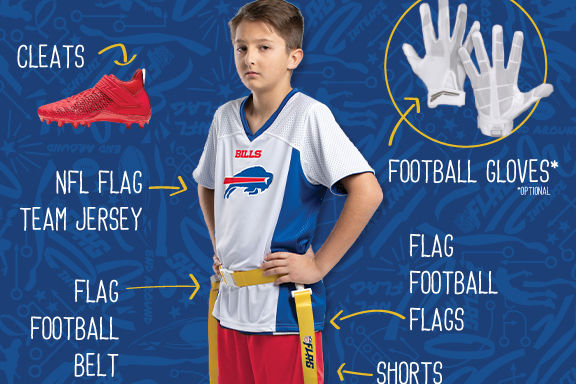
Teams in NFL FLAG start at their own 5-yard line, get four downs to cross midfield, and then three downs to score. Flag football is a non-contact version of American football, usually played 5-a-side, and that stripped-down format puts the center, quarterback and rusher at the center of every possession. Without the collisions that dominate tackle football, the best teams win by creating clean space, moving the ball quickly and forcing one decisive mistake.
Why the positions matter more here
The simplest way to understand flag football positions is to start with what the sport removes. There is no traditional line play built around blocking and tackling, so the game becomes a series of quick decisions in a compressed field.
That down-and-distance setup makes each role feel larger than it does on a full-contact field. A single bad snap, a late read or a missed flag-pull can swing an entire drive, especially when there are fewer plays to recover from a mistake.
The center: the first playmaker
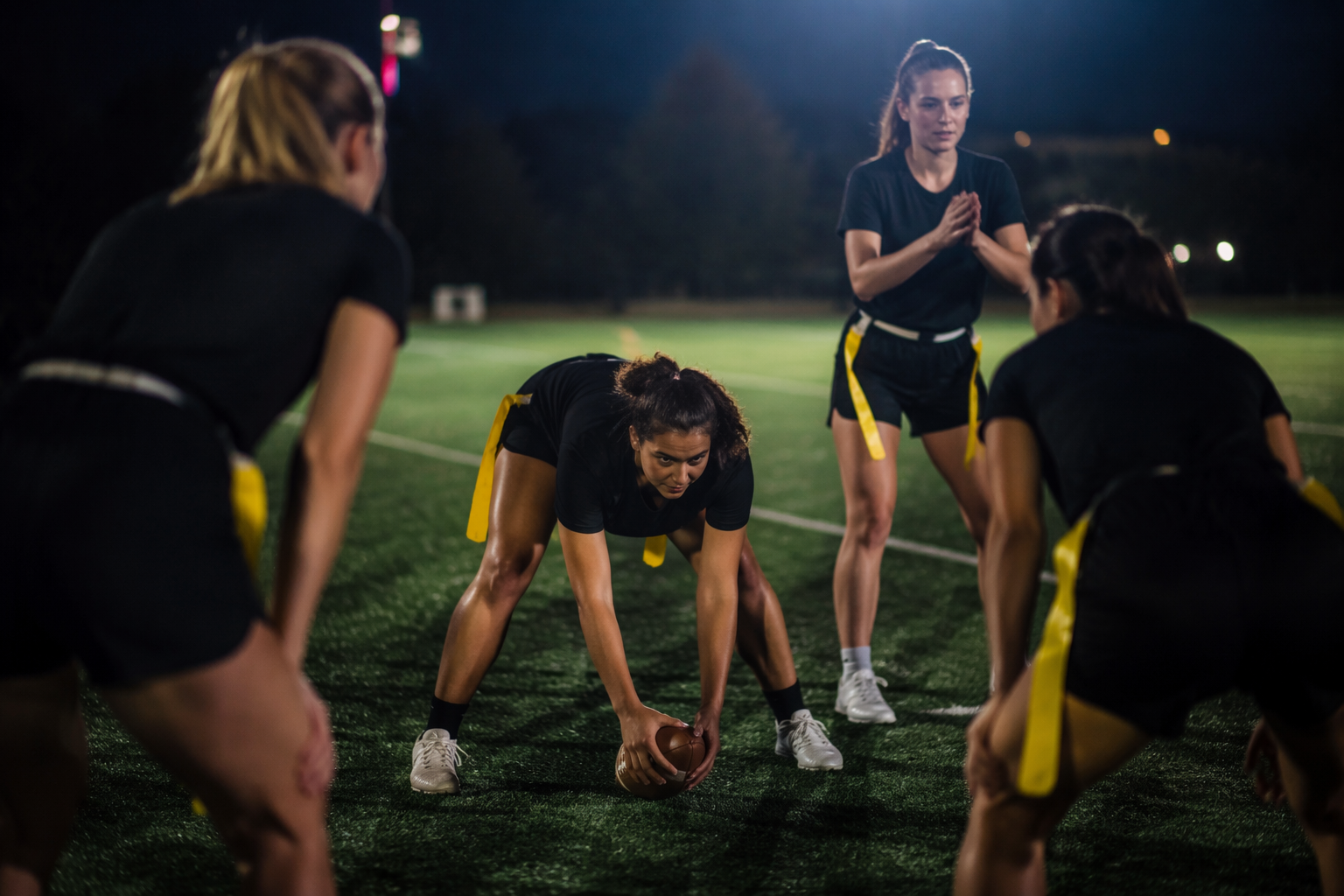
The center is not just the person who starts the play. The snap is the start of an offensive play and involves two players, the center and the quarterback, which shows how central that exchange is to every snap. In a sport built around timing, the quality of that exchange can decide whether a route hits on time or stalls before it begins.
The most interesting wrinkle is how flexible the job can be. The center can snap the ball and then become a receiver, a detail that would look unusual to many football fans raised on tackle schemes. That design turns the center into more than a delivery point: on some plays, the snap itself is the first step in the route concept.
Picture a drive starting near the 5-yard line. The center snaps, then releases into the flat while the quarterback hits a short route before the defense can settle into coverage.
The quarterback: timing beats power
The quarterback still runs the offense, but the job rewards a different kind of skill set than it does in tackle football. Quarterback timing matters more than arm strength, and that fits the way flag football is played. The quarterback has to read spacing quickly, deliver the ball before pressure arrives and know when a short throw is the best throw.
That makes the position less about standing behind a wall and more about solving a moving puzzle. If the defense opens a lane underneath, the quarterback has to take it with a fast throw. If the defense closes that lane, the quarterback has to move to the next option without wasting the down.
One useful example is a quick out route on first down near midfield. If the quarterback releases on time, the receiver catches the ball with room to turn upfield and the offense keeps its drive alive. If the throw arrives late, the cushion disappears and the defense has already recovered.
Receivers: separation is the real currency
Receivers in flag football do not need to overpower defenders, but they do need to separate from them. With fewer plays to work with and more value placed on each catch, route discipline becomes a major weapon. A clean break at the right depth can matter more than a highlight-reel contested catch.
That also changes how catches are made in traffic. Receivers have to know when to sit in a soft zone, when to keep moving and when to turn a short completion into a first-down gain. With so few downs to work with, a receiver who wins by a yard or two can change the entire complexion of the drive.
A crossing route is a good example. If the receiver stems one way before flashing across the middle, the defense has to choose between passing off the route or chasing it, and either choice can open a lane for the quarterback.
The rusher and the defensive mirror
Defense in flag football is built differently because the sport does not rely on a full defensive front. One player, the rusher, often sets the tone by pressuring the quarterback while the rest of the defense protects space and closes passing lanes. That makes the rusher one of the most tactically important players on the field, because one quick burst can force the offense to throw early or abandon its preferred route concept.
The International Federation of American Football published 2023 rules for 5-on-5 non-contact, 7-on-7 beach flag, 4-on-4 and indoor flag. IFAF also revises its rules every year to improve safety and quality of play. In flag football, the defense tries to disrupt timing without losing coverage integrity.
Here’s what that looks like in a real possession. If the offense tries a deep shot, the rusher’s job is to make the quarterback hurry the throw before the route fully develops. If the offense answers with a quick slant, the defense has to rally immediately and pull the flag before the receiver turns a short gain into a big one.
Growth and the Olympic debut
NFL FLAG’s 2024 year in review lists 767,516 youth athletes and more than 2,500 leagues across 49 states and Canada. Project Play, using Aspen Institute data, counted 277,000 more children ages 6-12 playing flag than tackle in 2022, a shift that explains why so many families are learning the positions from scratch.
Flag football will make its Olympic debut at the 2028 Los Angeles Games, and NFL materials from Aug. 5, 2024 listed men’s and women’s flag football in the program.