How FootGolf courses are designed, from teeing zones to 21-inch holes
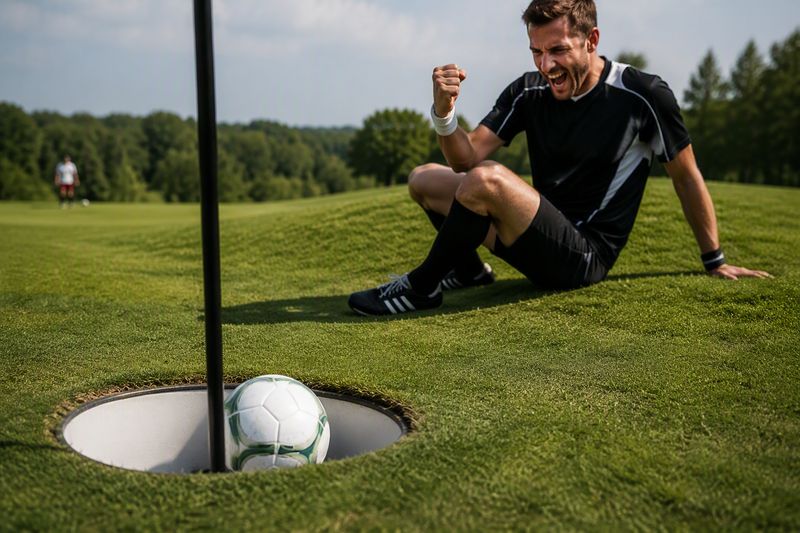
A regulation No. 5 soccer ball aimed at a 21-inch hole starts from a marked teeing zone, not a standard golf tee box. Players move through the course in order and stay behind the group ahead. The sport uses those basic elements to shape pace, safety and shot variety through tee-marker placement, shortened holes and cup locations.
The teeing zone is the first design decision
The official rulebook defines the game as play from the teeing zone to the hole on the green zone in the fewest number of kicks, and BREC instructs players to place the ball within two paces of the marker before the opening kick. That is a very different experience from treating the first shot as if it belonged on a regular golf tee box.
Golf’s own rules help explain why. The USGA defines the teeing area as a two club-length deep rectangle measured from the tee markers, and The R&A defines the teeing area as where each hole starts. FootGolf borrows that logic but trims it down for foot traffic, often using numbered posts and distance markers instead of a traditional golf tee box.
That compact start area matters for more than aesthetics. A marked teeing zone gives every group the same angle, keeps traffic organized and limits the spread of players before the hole begins.
Shortened holes are what make the course playable
The common misconception is that FootGolf is simply soccer played on a golf course. In reality, a course has to be shortened and rethought to work. Olde Homestead Golf Club describes FootGolf as using a regulation No. 5 soccer ball on shortened holes with 21-inch diameter cups. The ball is familiar; the hole is not.
Shortening the hole is what lets operators fit FootGolf onto existing golf land without turning every shot into a full-field blast. FIFG classifies the sport as being played on specially designed courses or modified golf courses. A modified layout can reuse fairways, rough and natural contours, but the hole lengths, target positions and teeing areas have to be adjusted so the course works for kicks instead of clubs.
Cup placement drives the shot-making. Put the 21-inch hole in the wrong place and the layout becomes either too easy or too punishing; put it in the right place and it rewards angle control, layup management and short-game accuracy.
Pace and safety depend on how the holes flow
FootGolf’s course design is also an operations story. The official rulebook calls for minimal supervision of a marshal and depends on players to show consideration for other players. BREC requires the route to be played in order around the course while staying behind the group in front.
Cup locations help control that pace. When the target sits in the right spot, a hole finishes cleanly and the next group can move on without bunching up. When the hole forces unnecessary traffic through high-wear areas, the course slows down and maintenance gets harder. Well-placed targets also keep golfers’ greens out of play and reduce the chance that FootGolf traffic collides with a golf operation running at the same time.
FootGolf works best when teeing zones, walking routes and target areas are separated enough that players are not repeatedly crossing each other’s lines. Shortened holes reduce the need for giant kicks into shared space, and the ordered flow around the course keeps the sport from spilling into the kind of free-form movement that would make a mixed-use property harder to manage.
The sport spread because operators could adapt what they already had
FootGolf’s growth in the United States showed how attractive that course math could be. On April 9, 2015, Fort Carson’s Cheyenne Shadows Golf Club announced it would add FootGolf, and the American Footgolf League said the sport was already being played at more than 370 courses nationwide. The American Footgolf League said only 30 golf courses offered FootGolf two years earlier.
The American Footgolf League has set standards for course design, layout and yardage for pars since 2011. FIFG also frames FootGolf as a game for specially designed or modified golf courses. A course that works in one park or resort needs measured starts, shortened holes, clear target zones and a flow that fits mixed-use property.
Resort and municipal operators have leaned into that logic because it adds a new recreational lane without rebuilding a course from scratch. Disney’s Oak Trail Golf Course is one example of how FootGolf can be layered onto existing golf infrastructure, turning unused capacity into an additional draw.
Sources
- [1]golf.brec.org
- [2]footgolf.sport
- [3]usga.org
- [4]randa.org
- [5]footgolfusa.com
- [6]bluegolf.com
- [7]golfcourseindustry.com
- [8]army.mil
- [9]oldehomesteadgolfclub.com
- [10]golfwdw.com
- [11]monmouthcountyparks.com