How horizontal stack shapes modern Ultimate Frisbee offense

A horizontal stack sets cutters across the field before the first throw leaves the handler’s hand. Instead of packing them into a tight vertical lane, the shape forces defenders to protect width and depth at the same time. It has become one of the most influential offensive structures in modern Ultimate Frisbee and appears as a base system rather than a novelty.
Why the horizontal shape works
The appeal starts with space. A horizontal line opens the middle of the field and gives cutters room to separate, which makes one-on-one matchups easier to attack and reduces the congestion that often slows down a possession near the thrower. Horizontal stack is extremely common in offensive play, and Ultimate Frisbee HQ calls it the most widely known and used offensive structure because of its simplicity and effectiveness.
That simplicity is deceptive. The shape does not just spread players out for the sake of width. It creates decisions for the defense, especially when the force and help defenders have to split attention between the open sideline and the inside lane. When the defense leans toward the middle, the sideline opens. When it widens to protect the edges, the under space becomes easier to attack.
How it differs from vertical stack
The contrast with vertical stack is tactical. Ultiworld’s offensive strategy archive includes “Davide’s Doctrines: Horizontal Stack” alongside “Davide’s Doctrines: Vertical Stack,” which was published on Oct. 15, 2021 by Davide Morri. Vertical stack organizes cutters in a line down the field and tends to build offense through depth and sequential movement. Horizontal stack instead prioritizes width, and that changes both the first cut and the reset structure.
Vertical stack often asks cutters to clear through lanes and wait for a front-of-stack opportunity. Horizontal stack gives the offense more immediate lateral separation, which can make the first cut cleaner and the continuation easier to read.
The structure inside the structure
Ultiworld’s horizontal stack breakdown is organized around Structure, Diamond, Piston, Sweep and Drills. The basic structure is a wide set of cutters that keeps the center open and gives the thrower multiple angles. From there, the named variants show how teams can build different rhythms on top of the same shell.
The diamond variation creates more defined lanes for the first cut, which helps set the timing for the possession’s opening action. The piston idea keeps motion constant, making the offense feel alive even when the disc is not moving quickly. Sweep cuts push defenders laterally and can open under space by forcing the defense to travel side to side before it can recover.
What handlers gain from it
Horizontal stack is especially useful for throwers because it gives them space to work with quick swings, resets and continuation throws. The offense rewards handlers who can move the disc decisively and cutters who can read timing well, since the shape is really about manufacturing angles rather than simply standing apart from one another. Once the defense shifts to one side, the thrower can hit the open lane, attack the continuation, or swing the disc and restart the pattern.
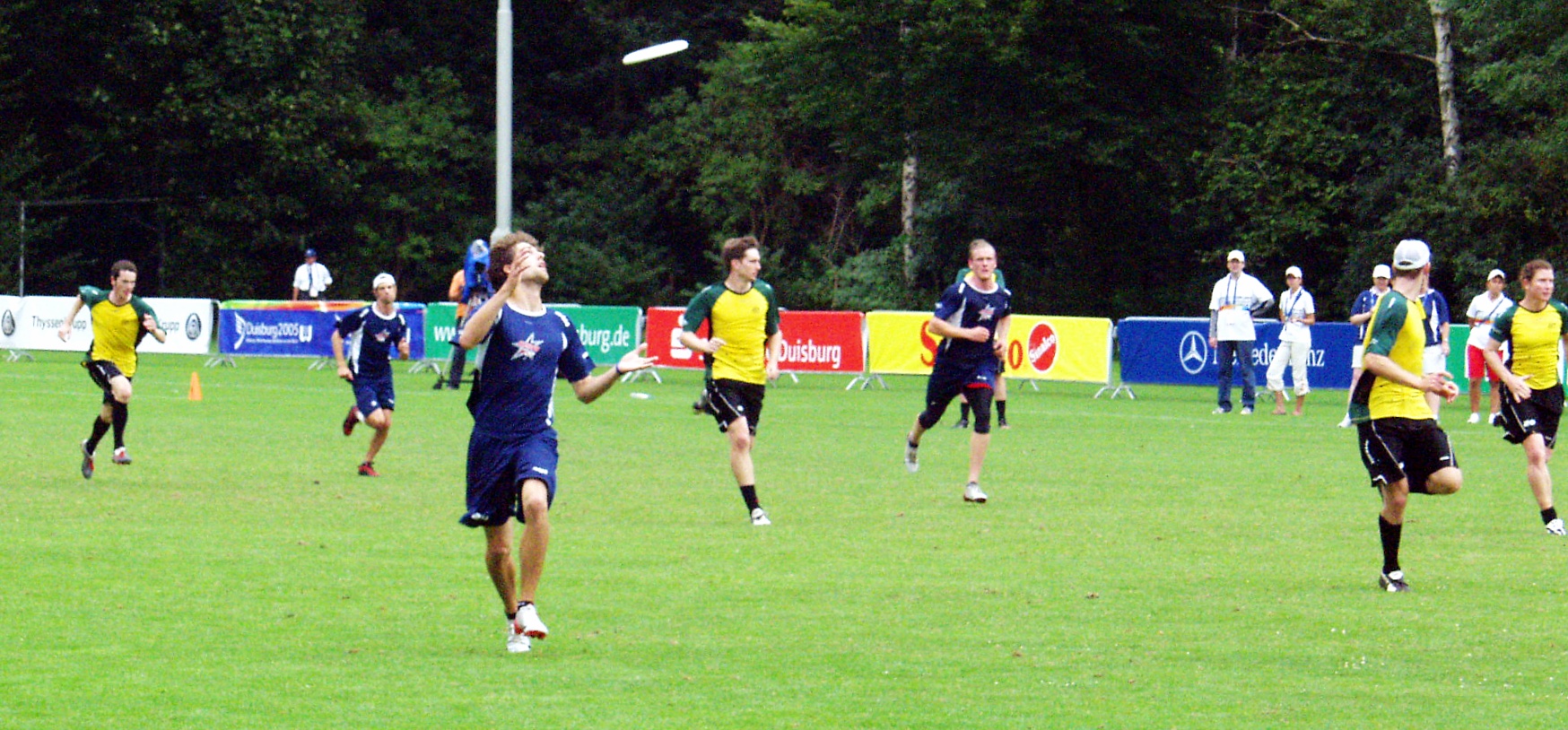
That handler-cutter relationship is one reason the system fits modern Ultimate. Elite offenses increasingly rely on players who can do more than one job, and horizontal stack gives those hybrid handlers and cutters room to show it. A thrower who can break a mark, a cutter who can change speed on cue, and a reset who can keep the disc alive all fit naturally in this structure.
When horizontal stack is most effective
Horizontal stack works well against a cup defense. A cup compresses the thrower’s options, so the extra width of horizontal stack helps create lanes that can stretch the zone’s outer shell and open the middle. When a team wants to make the field feel larger and reduce traffic around the disc, the horizontal shape can be a clean answer.
It also plays well when the offense has a clear spacing advantage or a cutter group that understands timing. CUSB Shout and CUSB La Fotta were featured with Ultiworld’s horizontal stack piece, putting the system in real game environments rather than leaving it as an abstract theory. The shape is especially useful when the defense is forced into repeated help decisions, because every help step risks giving away the next lane.
Where it breaks down
The same width that creates separation can also slow a team down if the timing is off. If cutters do not move decisively, the shape can become static, leaving handlers staring at a flat line of players with no clean continuation. Horizontal stack depends on rhythm, and when that rhythm breaks, the offense can look wide without actually creating pressure.
It can also be less efficient when the defense is comfortable switching or when the thrower cannot hit the necessary reset windows. In those situations, the wider shape stops being an advantage and starts becoming distance the offense has to cover. The system is strongest when the team is disciplined about motion, rather than simply lined up horizontally and hoping the shape does the work.
A system with coaching lineage
Flik Uti credits a horizontal stack theory page to Dylan Freechild and Jimmy Mickle, and the system has been packaged and taught by elite players as well as coaches and analysts.
Ultiworld credits Davide Morri as author of the horizontal stack piece, Giovanni Saracco for additional editing and Andrea Beghelli for video, with CUSB Shout and CUSB La Fotta featured as the athletes on display.