How kickball adapts for PE classes, skill levels, and younger players
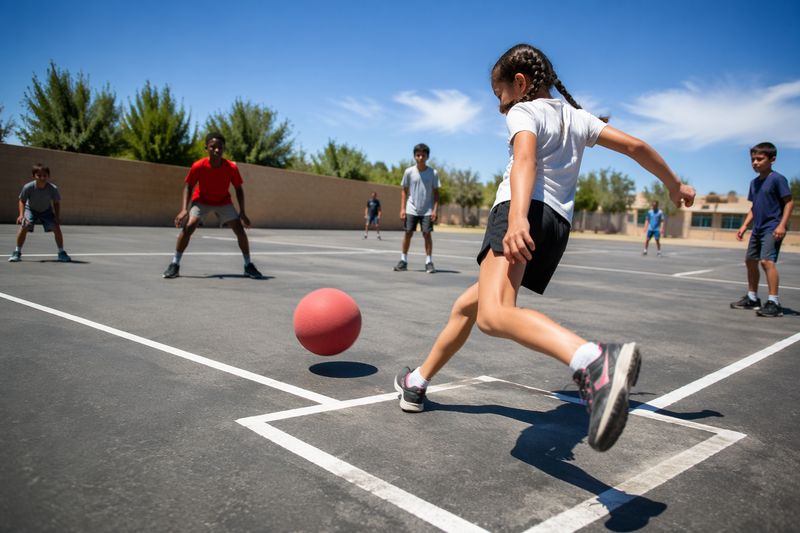
The Utah Education Network turns kickball into a 60-minute lesson built around base running, throwing, and catching with nothing more than kickballs, bases, and a field. From there, the same game can shrink for younger students, expand for stronger groups, or bend to a crowded gym without losing buy-in.
Why it still fits modern PE
Kickball lands in a sweet spot that school schedules rarely offer. SHAPE America recommends 150 minutes of instructional physical education per week for elementary students and 225 minutes for middle and high school students, which puts a premium on games that can start quickly and keep a class moving. SHAPE America released its new National Physical Education Standards in 2024 after a multi-year revision process, reinforcing the idea that PE has to do more than fill time. Games that teach movement, inclusion, and game awareness in one unit help teachers meet those expectations without a long setup or a complicated rules lecture.
The CDC says children and adolescents should get 60 minutes or more of physical activity each day, and schools are in a unique position to promote healthy behavior through physical education. Physical activity is also linked with improved academic performance, brain health, muscular fitness, heart and lung health, cardiometabolic health, long-term health, bone strength, and healthy weight measures. Kickball checks several of those boxes at once, especially when the goal is a game that can be taught fast and repeated often.
Build the lesson in layers
In the Utah Education Network lesson plan, kickball works as a teaching sequence, not just a game. Its middle-school version folds the rules into base running, throwing, and catching, which makes the sport easy to frame around class objectives instead of around a single final score. The structure works for students who are still learning the basics and for students ready for more tactical play.
The same lesson plan gives teachers practical knobs to turn. A smaller field can shorten the distance for younger or less experienced players. A softer or larger ball changes the feel of the game without changing the structure. Slower pitching, peer tutors, and brighter equipment all help the class stay organized and accessible.
Younger players need a different rhythm
PE Central’s All-Ball Kickball for grades 2-3 reworks the game for elementary students without losing its shape. The setup uses foam balls, cones, and a modified goal area to build kicking-for-distance, dribbling, and running skills. Instead of forcing younger players into a version built for older kids, the activity uses a curved goal line and two parallel baseline lines to simplify positioning and keep the action readable.
The scoring system matters too. By structuring the game so students get repeated touches instead of standing in a long line, the lesson keeps energy up, reduces dead time, and gives students more chances to kick, run, reset, and make decisions under light pressure.
WAKA frames the sport as a way to build social skills, teamwork, and an active lifestyle while teaching the basics of kicking, throwing, and catching. The softer ball is part of the appeal for younger players because it lowers the intimidation factor and makes participation easier.
The advanced version still has room to grow
PhysEdGames calls kickball a familiar playground staple with many different rules or ways of playing, and its “Super Kickball” version for grades 5-8 is designed so more players are moving more often. The game can be made busier without becoming harder to understand.
For older or more skilled groups, that flexibility opens the door to more advanced team concepts. Teachers can tighten the field, change the pace, and make positioning matter more, all while keeping the central action simple enough for a class to follow. The sport does not need to become baseball to become more sophisticated. Teachers can ask players to read space, react to the ball, and move as a unit.
Why teachers keep coming back to it
The strongest case for kickball is classroom utility. The same game can be taught with a kickball, bases, and a field, then adjusted with smaller spaces, softer balls, slower pitching, peer tutors, or cone-based layouts depending on age and ability. That gives teachers a rare combination: low setup, fast rule adoption, and built-in opportunities to teach inclusion, movement, and game awareness in one unit.
Youth-program leaders have also used kickball tournaments as a way to bring children together and steer them toward positive community activity. In school, that same social pull keeps students engaged while the lesson does the heavier work of building physical literacy.
Sources
- [1]emedia.uen.org
- [2]shapeamerica.org
- [3]convention.shapeamerica.org
- [4]cdc.gov
- [5]physedgames.com
- [6]waka.com
- [7]en.wikipedia.org