How kickball's ball size and bounce shape the game
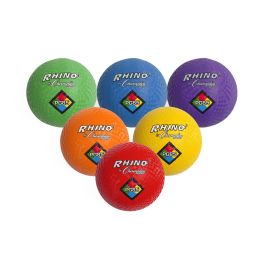
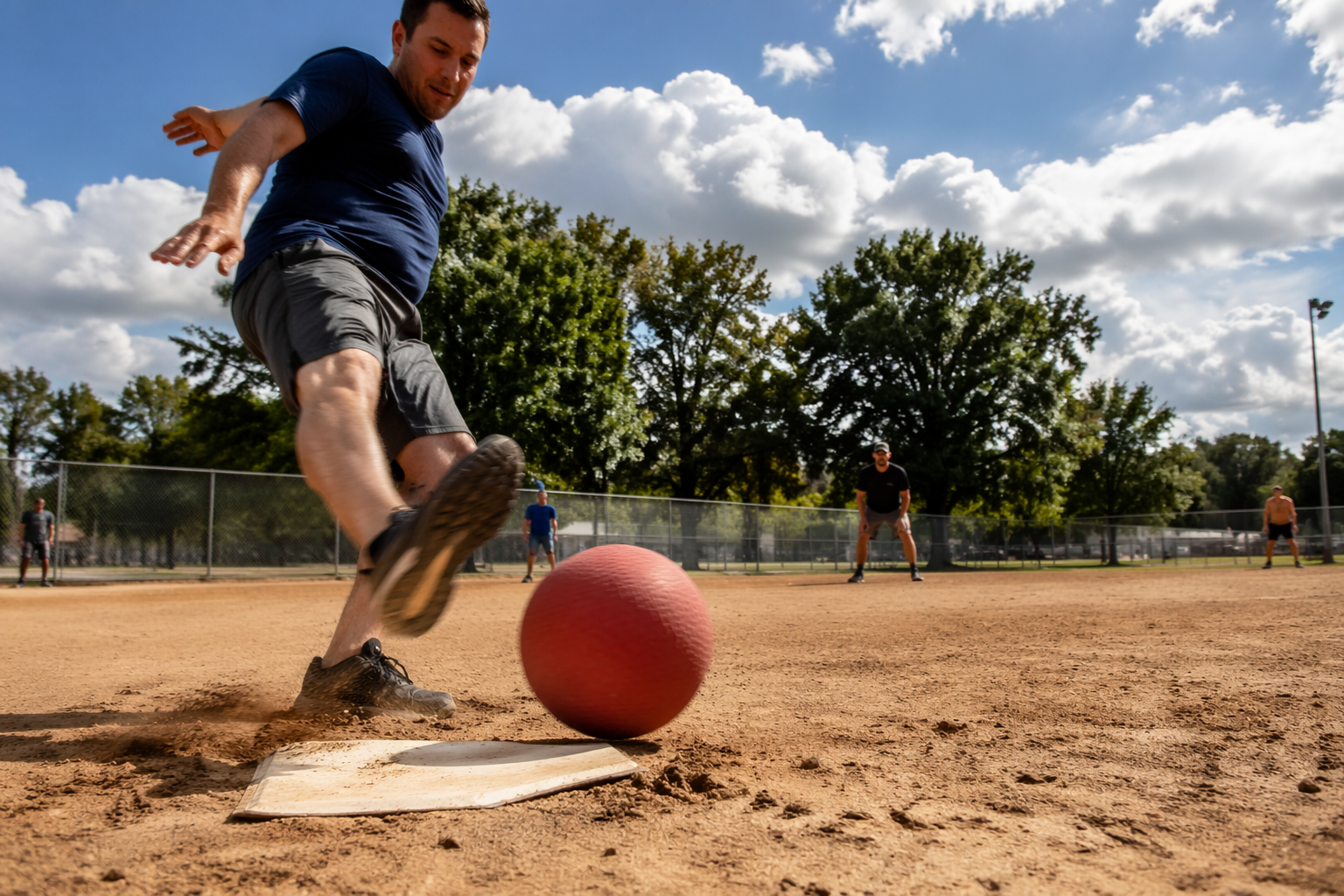
The official kickball is a red, 10-inch ball inflated to 1.5 pounds per square inch, and that combination drives everything from visibility to bounce to how cleanly a fielder can get under it. Strip away those standards and the sport stops feeling simple fast.
The ball is the sport
Kickball is built around two teams, bases, and a big red ball. A red ball is easy to track against grass, dirt, and a crowded infield, which matters when a rolling grounder is deciding an out by a step. At 10 inches, it is large enough to be kicked with force and fielded with both hands, but not so big that it turns into a different game.
The 1.5 psi inflation standard matters just as much as the diameter. A ball that is too firm comes off the foot hotter and skips more unpredictably; one that is too soft dies on contact and removes the lively bounces that make infield defense interesting. Kickball’s “simplicity” depends on that narrow band of size and pressure, because the ball has to be friendly enough for recreation and demanding enough to create actual defensive decisions.
Why bounce changes strategy
The bounce is where kickball stops being a playground afterthought and becomes a game of angles. A high-bounce ball rewards clean positioning and quick first steps, while a dead ball turns almost every roller into a slow dribbler that favors the runner. That is why the traditional high-bounce playground ball is such a useful fit for the sport.
School Health lists red playground balls in 5, 6, 7, 8.5, 10, and 13-inch sizes. Smaller balls bring down the rebound and make the kick less punishing for younger players, while larger ones can add livelier movement and a bigger strike zone for the foot. Champion Sports describes its playground ball as durable, high-bounce, and textured for grip and control.
A textured cover helps kickers make cleaner contact and helps fielders secure the ball after a hop, which reduces the kind of bobbles that can make a rec league inning drag.
Accessibility starts with the right ball
For younger players, the World Kickball Association recommends smaller, softer, lighter balls. That guidance is not just about safety, though safety is part of it. It is also about whether a child can actually participate in a sport that asks for kicking power, timing, and fielding confidence all at once.
Its youth materials describe kickball as a way for kids to build social skills, teamwork, and an active lifestyle, and say modifying the game with a soft and safe ball gives younger children access to the sport. A ball that is easier to kick and less punishing to field broadens the circle of kids who can play without getting left behind by force, size, or fear of the bounce.
If the ball is too hard, too heavy, or too lively, the game stops being inclusive. If it is soft enough and sized properly, kickball becomes a sport where a wide range of ages can share the same field.
A school game before it was a league game
Kickball emerged in the early 1900s and likely began spreading through physical-education classes from the 1920s onward. “Kick Baseball” appeared in the Cincinnati school system in 1917, which shows how early school settings shaped the sport’s identity even when the origin story is not settled into one neat line.
The 1971 ERIC record ED093881 shows kickball being taught formally to grades 7-12 as a physical-education course. That course was built around the principles and basic fundamentals of kickball and described it as a lead-up game to softball: teach movement, spacing, throwing, and force control in a simpler format before moving into a more complex diamond sport. SUNY Cortland’s history of physical education traces school sports spreading from colleges to private schools and then public schools, while PE emphasized fitness, social development, and health.
A standardized, familiar, colorful ball made it easier for teachers to run the same activity across classes and grades, and it gave the sport the consistency needed to move from gym floor to playground to league field.
From playground equipment to adult league identity
The modern adult game grew out of that same portable simplicity. The World Kickball Association started in 1998 and now serves as the sport’s governing body, while ClubWAKA began in 1998 as the World Adult Kickball Association before expanding into a broader social-sports brand. It now runs kickball and other leagues in cities across the United States, turning the playground ball into the centerpiece of a very adult kind of organized recreation.
A red, textured, high-bounce ball can move from school supply catalog to rec league kit without needing a redesign for every venue.
Sources
- [1]schoolhealth.com
- [2]kickball.com
- [3]eric.ed.gov
- [4]files.eric.ed.gov
- [5]www2.cortland.edu
- [6]clubwaka.com