How Major League Quadball builds 30-player rosters each spring
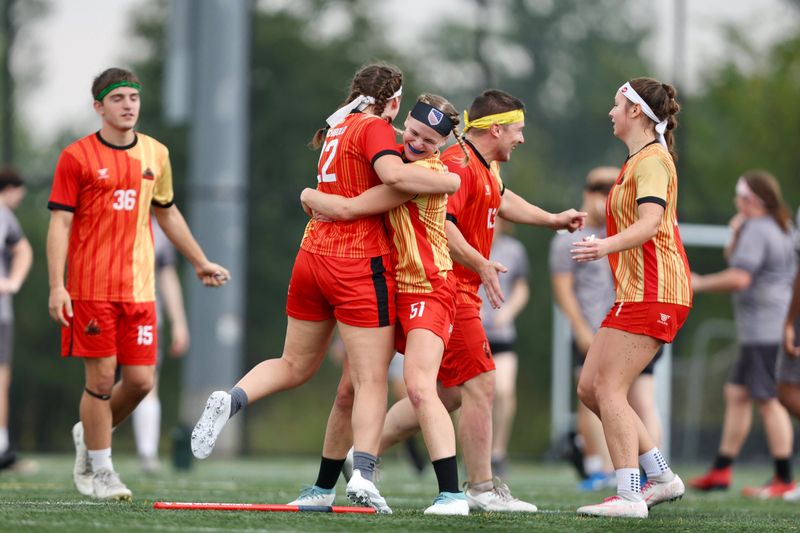
Each spring, MLQ teams build 30-player rosters for a season in which only 21 athletes are active in each match series and the championship tournament. Every spot has a real job. Add a minimum of six minority-gender players and a residency system tied to franchise radii, and the league’s quietest rules decide who gets rostered, where they play, and why.
The 30-player cap decides almost everything
The first pressure point is the cap itself. MLQ’s tryout structure is built around a team assembling a working 30-person unit, and each drafted athlete has to sign a written commitment to play for that team for the full season. That turns roster selection into a seasonal contract, not a loose invitation.
The game-day limit makes the roster math even tighter. With only 21 athletes participating in each match series and the championship tournament, coaches have to think beyond top-end stars and toward role coverage, endurance, and matchups. A player can be good enough to make a 30-player roster and still lose the last active spot if the team already has that role covered or needs better balance across the lineup.
The gender requirement sharpens that calculation further. Each active roster must include at least six minority-gender players, and MLQ’s 2024 ruleset caps at most three players of a single gender on pitch during seeker floor and at most four during seeker on pitch. Teams have to build lineups that stay legal during both seeker floor and seeker on pitch.
Geography is part of the roster, not a side note

MLQ’s roster system is also a geography test. The league has 16 teams across the United States and Canada, and its season runs from June 1 to August 30, which helps explain why roster building happens in a concentrated spring window rather than through a year-round club cycle. Teams are not just drafting athletes, they are drawing from a map.
The residency rule is the cleanest example of how that map governs access. To be eligible for a franchise or practice squad roster, an athlete must live within that team’s designated radius for at least 60 days between June 1 and August 19. The league can ask for proof, including an active lease, utility bill, gym membership, or state-issued ID, and false residency information can bring suspensions, bans, and penalties for franchise leadership.
In 2025, the league said the radius system is meant to maintain divisional balance and preserve distinct team culture. A player cannot simply chase the easiest path to a stacked roster in another city if the move does not fit the radius, and a team cannot quietly import talent from halfway across the continent without running into the waiver system.
Waivers exist, but they are not a blank check. The league handles them case by case, though waivers over roughly 250 miles generally will not be approved, and players have to apply each season even if they were approved before. A player in New York City looking to land on a roster much farther away, or a New England athlete hoping to jump to a Midwestern team, is dealing with more than preference or opportunity. A waiver denial can end eligibility before the depth chart even opens.
Tryouts are open, but not casual
The tryout process is built to let players meet those rules without making the league inaccessible. Video tryouts are allowed, and players can submit full-game footage from the previous year if they cannot attend in person. Registration closes at 11:59 pm ET on May 1 unless a head coach says otherwise, which gives the entire league a hard spring deadline before rosters are announced publicly at the beginning of May.
That deadline shapes the market for spots. A player can choose a city based on the radius where they live, review the franchise radii and waiver process, and even look into costs before registering. In MLQ, the tryout calendar sets eligibility and roster deadlines.
The result is that a tough cut is often not just about whether someone can play. It can be about whether a team has enough local depth, whether a player’s address qualifies, whether the roster already has enough minority-gender athletes, and whether the final 21 can actually function in a match series. A talented athlete can miss because a team needs one more eligible local instead of one more highlight reel.
Why the system looks this way
The sport rebranded from quidditch to quadball in July 2022, and MLQ’s inaugural season was in 2015. The league has grown into a national competition with standardized schedules, high-level officiating, in-depth statistics, and live and recorded footage of every game, which raises the stakes on every roster decision.
MLQ is building league-style franchises with regional identities, and the radius system is meant to support divisional balance and a strong, distinct team culture. The New York Titans, for example, debuted in that inaugural 2015 season under commissioner Amanda Dallas and coach Michael “Yada” Parada.