How NJCAA basketball rankings work, from points to first-place votes
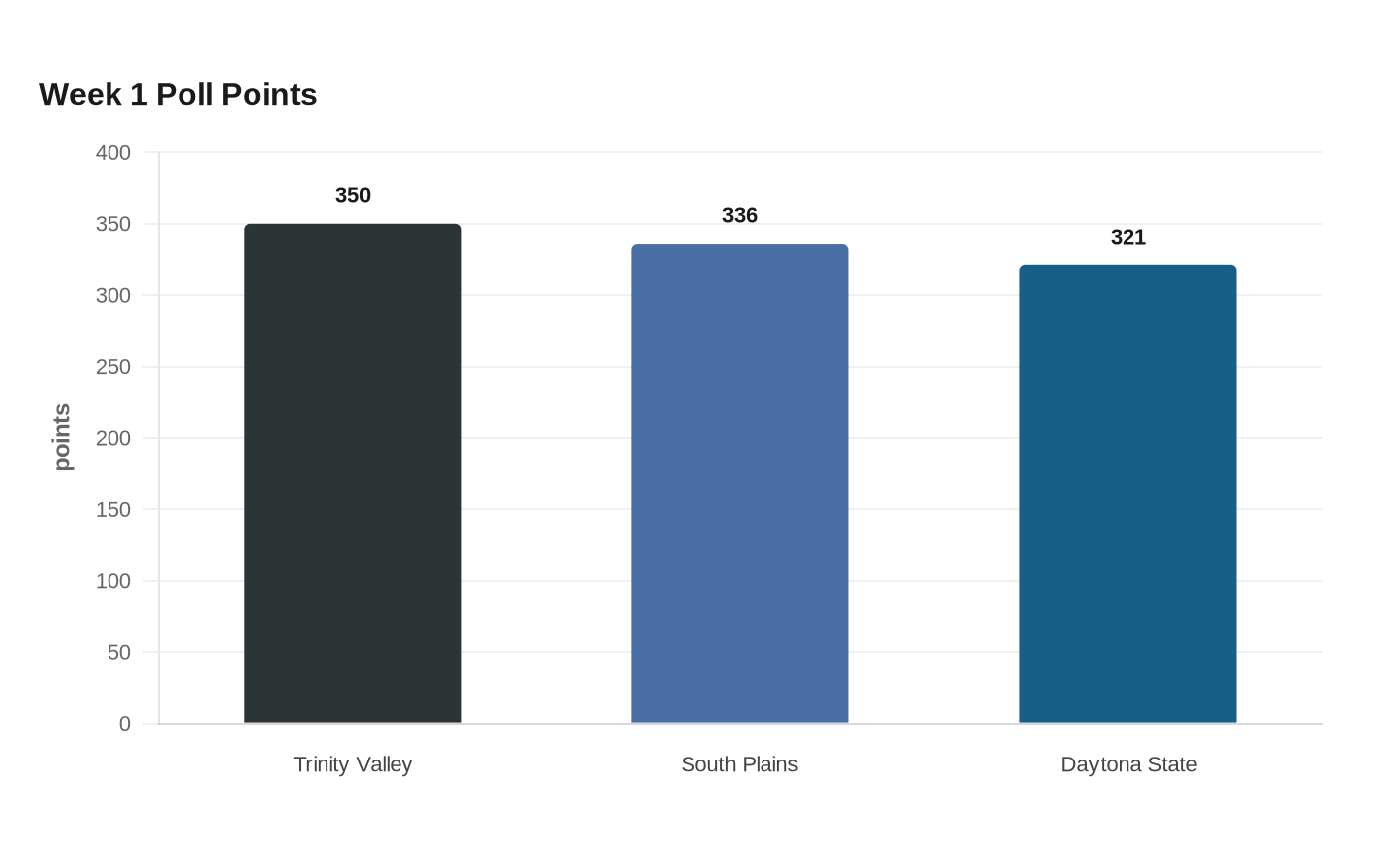
The number next to a team’s name is only the beginning. In the NJCAA men’s basketball poll, Trinity Valley Community College opened the 2025-26 season at No. 1 with 350 points and 16 first-place votes, while South Plains College sat No. 2 with 336 points and Daytona State College followed at No. 3 with 321. That one line tells you the page is not just a standings chart, it is a weekly snapshot of how voters see the sport.
How to read the poll page
The NJCAA Division I men’s poll uses a simple set of columns that do most of the work for you: Place, Name, Region, Record, Points, 1st, and Prev. Place is the current rank. Name is the school. Region shows the NJCAA region, which gives each team its geographic and organizational place in the larger structure. Record shows the win-loss mark, Points is the total score assigned by voters, 1st shows how many ballots put the team No. 1, and Prev tells you where it stood in the previous poll.
That layout matters because it lets you read a team in layers instead of as a flat number. Trinity Valley’s Week 1 line, for example, showed Region 14, a 2-0 record, 350 points, 16 first-place votes, and a previous rank of 1. South Plains, in Region 5, also opened 2-0 but had 336 points and no first-place votes. Daytona State, in Region 8, was 4-0 and still third with 321 points. The page is telling you that unbeaten does not automatically mean No. 1.
Why points and first-place votes tell a deeper story
The points column is the clearest sign that the NJCAA poll is built on consensus, not just results. A team can win two games, go undefeated, and still trail another undefeated team if voters think the résumé is stronger on the other side. That is why Daytona State’s 4-0 start still left it behind Trinity Valley and South Plains in Week 1. The poll rewards more than a clean record, it rewards the total argument a team has made.
First-place votes sharpen that picture. Trinity Valley’s 16 first-place votes in the Week 1 poll gave it a clear edge in the eyes of the voters, even before the rest of the points column did the math. South Plains had enough respect to land No. 2, but its zero first-place votes show the difference between being well-regarded and being the team most people believe is best. For fans, that split is the fastest way to understand whether a ranking is unanimous, split, or still up for debate.
The previous-rank column is where the movement lives
Prev is the column that turns a poll into a weekly narrative. It tells you whether a team is rising, holding steady, or sliding, and that movement is often more revealing than the ranking itself. A No. 4 team that jumped from No. 9 is gaining momentum; a No. 2 team that fell from No. 1 may still be strong, but it has lost some trust.
That is why the NJCAA archive matters so much. It preserves the preseason poll, Week 1, and each weekly update afterward, so the season becomes a timeline rather than a single snapshot. The 2025-26 Division I men’s archive includes a preseason poll dated October 20, 2025, and weekly rankings through at least Week 14 on February 23, 2026. That history lets you trace who surged early, who stayed in place, and who faded as conference and nonconference results stacked up.
Separate divisions, separate conversations
The NJCAA does not bundle all of its basketball teams into one national list. The rankings hub breaks the sport into separate pages for men’s Division I, Division II, and Division III, and the main rankings landing page also links to women’s basketball, football, and other sport rankings. That structure keeps comparisons honest. A Division I No. 1 is not meant to be measured against a Division II or Division III No. 1, because each division has its own competitive landscape, schedule profile, and championship path.
For first-time readers, that division split is one of the easiest places to get tripped up. The number beside a team’s name only makes sense inside its own division and its own weekly poll. When you move between DI, DII, and DIII, you are not looking at one ladder with three rungs, you are looking at three separate ladders.
Rankings are not records, and they are not seeds
The cleanest way to avoid confusion is to remember what the poll is not. It is not a win-loss table, and it is not postseason seeding. A team can have a better record and still rank lower if its schedule, opponents, or overall body of work has not convinced voters. The Week 1 poll made that obvious by placing Daytona State, unbeaten at 4-0, behind two 2-0 teams.
That distinction becomes more important as the season deepens. The rankings page tracks reputation and momentum from week to week, while the bracket is decided later, when championships are set and seed lines are drawn. The difference matters because a team can spend months climbing the poll without that movement guaranteeing anything in March.
The championship backdrop gives the poll its weight
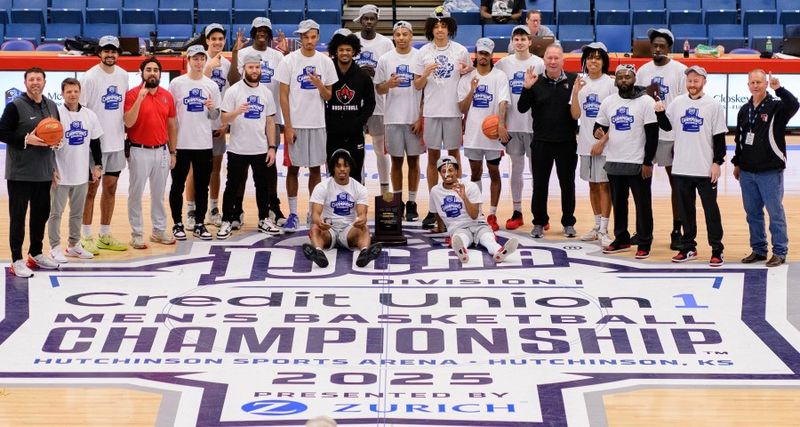
The rankings are not floating in a vacuum. The 2024-25 NJCAA Division I men’s basketball championship was held March 22-29, 2025, at Hutchinson Sports Arena in Hutchinson, Kansas, and Trinity Valley won its first NJCAA Division I men’s basketball national championship there. That is the real destination behind every poll release, because the weekly order is building toward the tournament that settles the season.
The next year’s DI men’s basketball hub names Howard (TX) as the 2026 national champion, another reminder that the poll is a season-long conversation, not the final verdict. Week by week, the ranking page tracks who is earning belief before the bracket arrives. By the time the title is decided, the poll has already spent months telling the story of how that team got there.
Sources
- [1]njcaa.org