How Olympic flag football works, four downs to midfield and the end zone
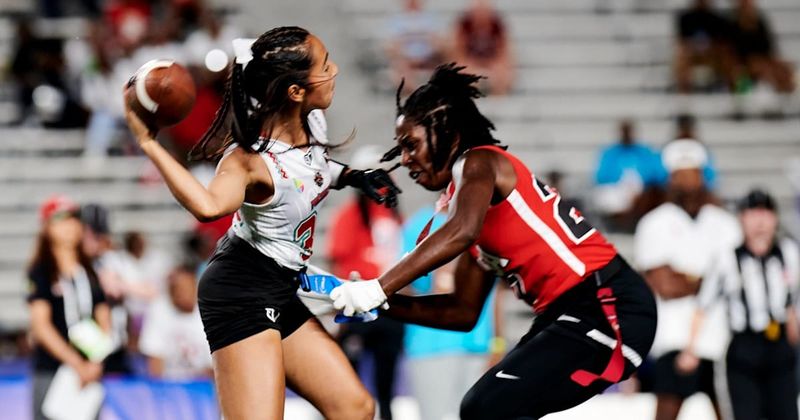
Four downs to midfield, then four more to the end zone. That simple ladder is the clearest way into Olympic flag football, and it is the reason the sport should read so cleanly for new viewers when it debuts at Los Angeles 2028. With only five players on the field, no contact, and every possession built around a visible midfield first-down line, the game strips away a lot of football’s clutter without stripping away its chess match.
How the possession works
Olympics.com’s basic explanation is the right place to start: each team gets four downs to reach midfield, and if it gets there, it earns another four downs to reach the end zone. That is the entire rhythm of a drive, and it gives every snap a clear purpose. The offense is not grinding for 10-yard chunks in a long chain of bodies; it is solving a shorter, sharper field-position problem.
That structure changes the meaning of each play. A short completion can be smart football if it keeps a drive alive, while a deep shot that falls incomplete can stall momentum immediately. A defense does not need a crushing hit to change the game, either. It can end the series with one stop before midfield or force a turnover at exactly the wrong moment for the offense.
Why the Olympic version feels faster
Standard Olympic-style flag football is typically five-on-five, played on a 50-yard field, and each player wears two flags at the waist. A play ends when a defender removes a flag from the ball carrier, which is why the sport moves without the pileups and collisions that slow tackle football. The field is smaller, the number of bodies is smaller, and the end of a play is visually obvious the moment a flag comes off.
That is also why the game is easier to read in real time. There are no linemen in the standard Olympic-style setup, so the action is built around spacing, timing, and quick decisions rather than trench warfare. The offense has to create leverage with motion and route design, while the defense has to stay disciplined enough to prevent easy completions without relying on contact to bail itself out.
Some flag rules also add no-run zones near midfield and near the end zone. Those areas further push the game toward passing, spacing, and fast decision-making, which is exactly why Olympic flag football tends to feel like a series of puzzles instead of a series of collisions. New viewers do not need to memorize a dense playbook to follow the action, because the most important question on nearly every snap is visible immediately: can the offense get the next chunk of field or not?
What changes in Los Angeles 2028
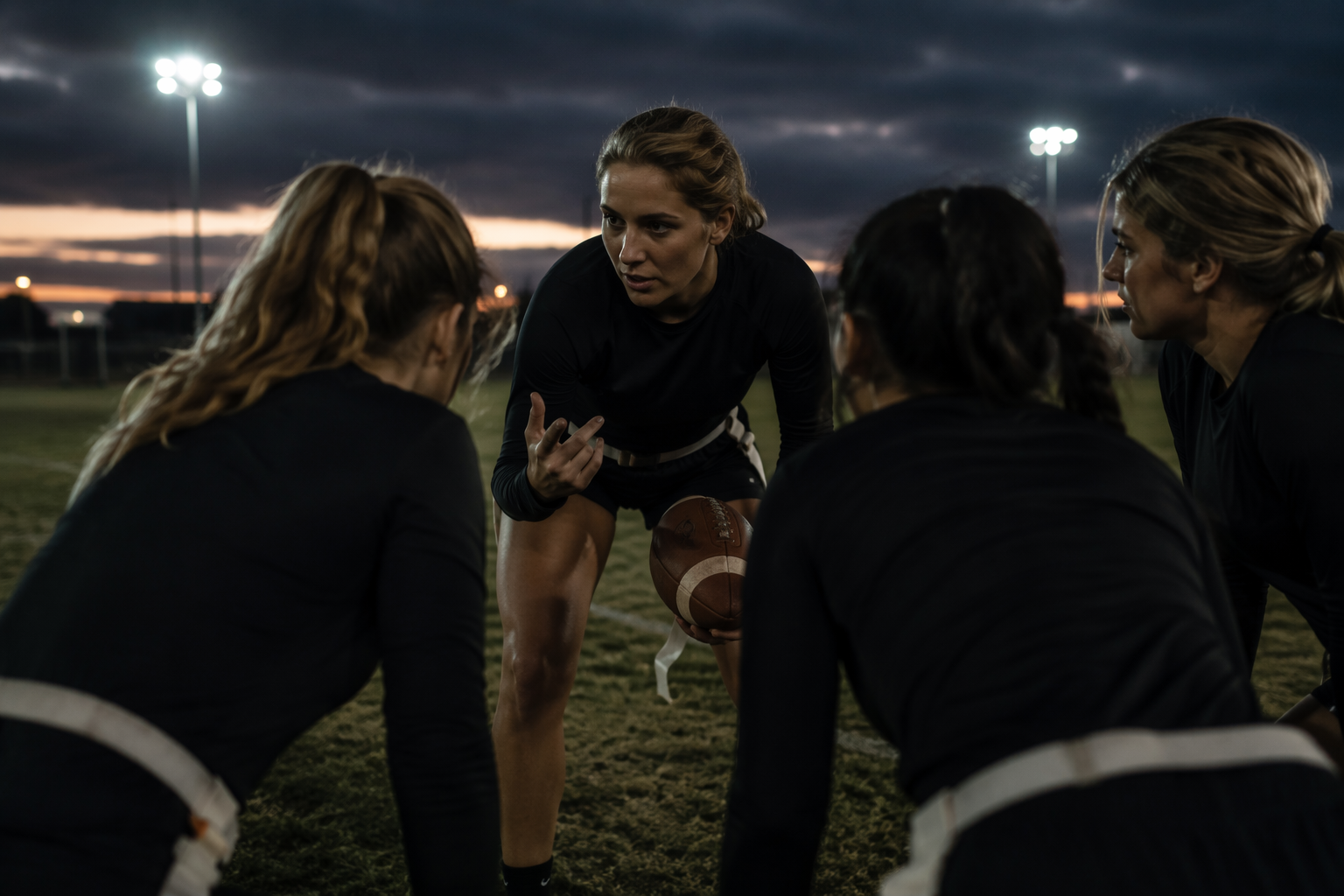
Flag football will make its Olympic debut at the Los Angeles 2028 Games after the IOC approved LA28’s proposal in October 2023. That approval put American football on the official Olympic program for the first time in history, and LA28 has framed the event as a showcase for a faster, cleaner version of the sport. LA28 describes it as "fast, explosive and incredibly dynamic," and says the non-contact format will bring "an exciting new energy to the Games."
The competition setup is already taking shape. LA28 and NBC Olympics identify BMO Stadium in Exposition Park, home of LAFC, as the venue for flag football. NBC Olympics has said the men’s and women’s tournaments will both be played there, and reports say each side is expected to include six teams. LA28 also says the games will be played in two 20-minute halves, a format that should keep the pace tight and the broadcast windows compact.
For viewers, those details matter because they keep the Olympic version from feeling like a watered-down copy of tackle football. The shorter halves and smaller rosters make every possession feel larger, and the BMO Stadium setting gives the event a defined stage rather than a sprawling football weekend. In a sport built on quick decisions, the tournament structure matches the rules.
Who has already moved to shape the event
The NFL, IFAF, and USA Football all welcomed the IOC’s approval of flag football for LA28, and the league later made its own move. In May 2025, NFL owners unanimously voted to allow NFL players to participate in flag football at the 2028 Olympics. Reports on that vote said no more than one player per NFL club would be permitted, and Olympic rosters will be selected by each country’s national committee.
That opens the door to a star-driven event, which is part of the appeal and part of the risk. The NFL has already promoted the sport’s Olympic arrival, including a handover campaign featuring Jalen Hurts. At the same time, some long-time flag football players and insiders worry that big-name NFL talent could overshadow the athletes who helped build the game internationally. That tension is real, because the Olympic stage can amplify flag football in one breath and distort its hierarchy in the next.
USA Football’s role adds another layer. The organization describes flag football as the heart of its non-contact game type and as a foundational entry point in its Football Development Model. That is an important detail for readers who only know football through the NFL, because the Olympic version is not just a novelty side event. It sits inside a larger development system that treats flag as the cleanest way to teach the sport’s core decisions.
What to watch on every drive

The best way to follow Olympic flag football is to track the field in chunks, not just the scoreboard.
• Watch the midfield line first. The first goal is not the end zone, it is the line that buys another four downs.
• Watch the spacing before the snap. Motion and alignment are how offenses create one-on-one matchups in a game with limited space.
• Watch short throws differently from deep shots. A safe completion can be the smartest play on the field, while a risky one can hand the possession back immediately.
• Watch the flags, not the collisions. The tackle is the stop, and it ends the play instantly.
• Watch how the defense responds before midfield. One clean stop there is as valuable as a turnover deeper in the red zone.
That is what makes the Olympic version so accessible without making it shallow. It rewards route timing, defensive discipline, and field awareness, but it packages those skills in a format that does not bury the action under piles of bodies. The 2022 World Games women’s final between Mexico and the USA already showed how international the sport can be, and LA28 now gives that same style of play a larger stage. By the time the first snap is live at BMO Stadium, the logic will already be clear: get to midfield, get one more set of downs, and keep the drive alive long enough to reach the end zone.
Sources
- [1]olympics.com
- [2]nbcolympics.com
- [3]la28.org
- [4]nfl.com
- [5]atlantafalcons.com
- [6]bbc.com
- [7]cnn.com
- [8]usatoday.com
- [9]usafootball.com
- [10]americanfootball.sport
- [11]espn.com