How padel's racket rules shape the sport's identity
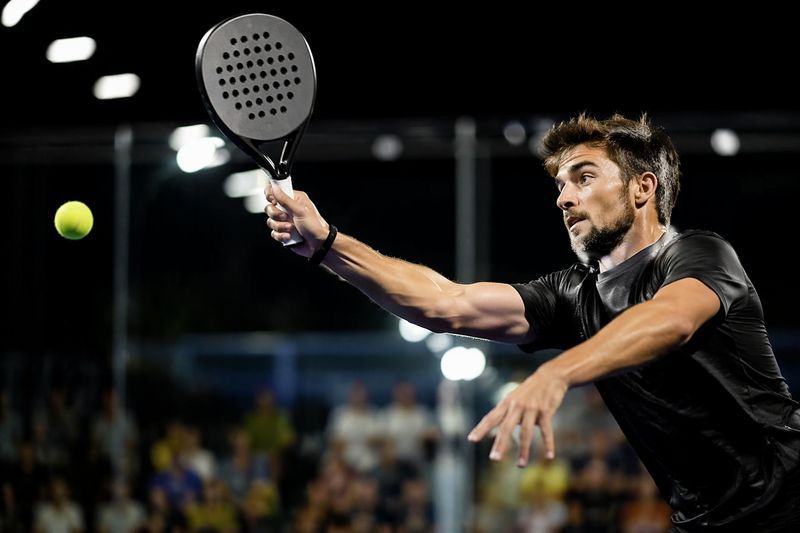
The fastest way to understand padel is to look at the racket, because the sport has built its identity around what the rulebook allows and what it refuses to leave open. Under the FIP rules marked for application from 01.01.2026, the racket must be manufactured according to the Annex Padel Rackets Homologation, and its shape is tightly bounded: the total length, head plus handle, cannot exceed 45.5 centimetres, thickness checks allow a 2.5% tolerance, and the hitting surface uses an unlimited number of cylindrical holes in the 9 to 13 millimetre range in the centre area.
The racket is part of the sport’s architecture
That detail matters because the International Padel Federation does not treat the racket as a free-market gadget. It sits inside the same regulatory system that sets courts, balls and conduct, with the sports department continually monitoring the game and able to recommend changes to the General Meeting, the final authority on rule changes. In other words, the racket is not a side issue in padel governance; it is one of the ways the federation keeps the sport comparable across countries, courts and tours.
The hard line is clear where regulation draws it. Brands can shape the feel, balance and surface design within the homologation envelope, but they cannot stretch padel into a longer, stringed-power model or escape the measured limits on size and thickness. That is the core of the sport’s competitive architecture: innovation is permitted, but only inside a framework that preserves the same basic conditions for every player who steps on court.
Why the racket looks and plays the way it does
Padel’s rackets are short, solid and perforated for a reason. The compact format favours control, touch and repeatable contact, which is why the game rewards quick hands at the net and sharp placement more than the long-lever power mechanics associated with stringed rackets. The hole pattern is not just cosmetic either; it is one of the clearest visible signs that padel was designed as a different game, with aerodynamic feel built into a compact hitting zone.
That design also helps explain why padel has grown with such a distinct identity. A racket with a strict length cap and a controlled perforation pattern keeps the sport accessible to players who value feel, positioning and reflex speed. The result is a game that can look explosive without becoming equipment-driven in the way some other racket sports can be, and that balance is protected by the rulebook as much as by coaching or tactics.
From a 20 x 10 court in Acapulco to a global rule system
Padel’s equipment story begins with the sport itself. FIP says the game was invented in 1969 at Las Brisas in Acapulco, Mexico, by Enrique Corcuera, on a first court that measured 20 x 10 metres and was enclosed by 3-metre walls. Viviana Corcuera drafted the first set of rules, which is a reminder that padel’s early identity was built around controlled spaces and clear constraints rather than open-ended invention.
The sport then spread through a series of milestones that made standardisation unavoidable. FIP says Prince Alfonso of Hohenlohe introduced padel to Spain in the early 1970s, while Julio Menditeguy helped bring it to Argentina. The first international competition between Spain and Argentina came in January 1988 in Mar del Plata, and the first transportable glass court was introduced in 1989 by coach Jorge Galeotti, a breakthrough that helped padel travel beyond fixed private installations.
How standardisation turned a regional game into a global one
The institutional framework followed quickly. FIP says it was founded in Madrid on 12 July 1991 by the Argentine, Spanish and Uruguayan padel associations, and the first World Padel Championships were staged in 1992 in Madrid and Seville. In 1997, Spain and Argentina agreed in Barcelona to unify the rules and standardize the name Padel, closing the door on fragmented national versions of the same sport.
That same impulse toward consistency runs through the modern growth figures. FIP’s 2025 World Padel Report says the sport surpassed 35 million active players, with clubs up 16.1%, courts up 15.2% and registered federation members up 42%. A June 2026 FIP update pushed the figure to 38 million players, 100 affiliated federations and more than 80,000 courts worldwide, while a November 2025 milestone recorded 14 new national federations joining as FIP reached 100 members. Those numbers, drawn from the federation’s National Federation Survey and research department, show why homologation matters: when padel spreads this far, equipment rules become part of legitimacy, not just style.
The racket’s restrictions are therefore not a technical footnote but a statement of intent. Padel’s governing body has built a sport where the power balance stays checked, the touch game stays central and the same competitive conditions can be recognized from Acapulco to Madrid, from Mar del Plata to La Plata.
Sources
- [1]padelfip.com