How Quadball works, and why its four roles stand out

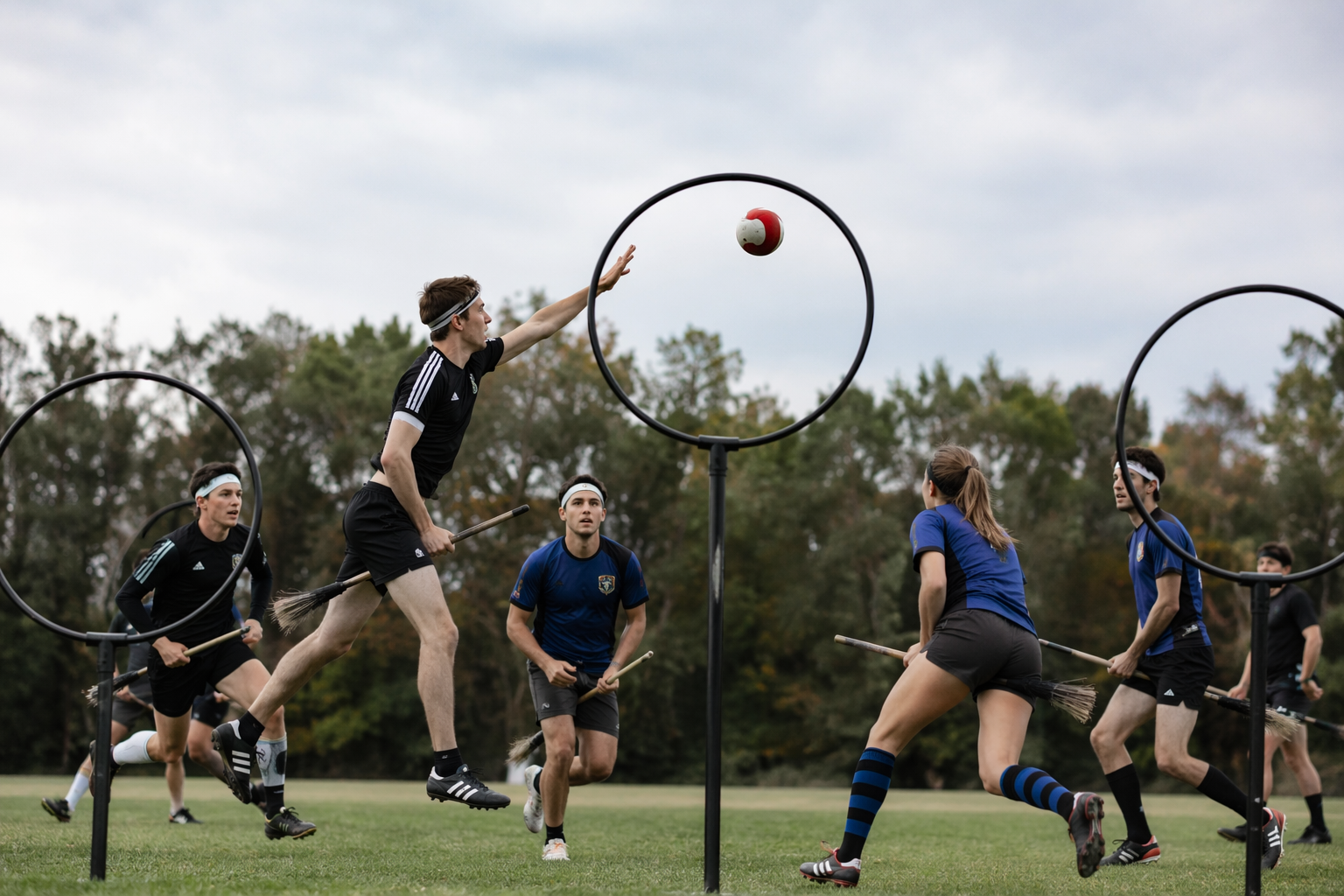
Quadball looks strange for about five seconds, until the structure clicks: seven players are on the pitch at once, every player must keep a broom between their legs, and the real contest is built around four roles that shape space, contact and timing. What began in 2005 at Middlebury College in Vermont, when Xander Manshel and Alex Benepe adapted a game from the Harry Potter book series, has become a sport with a formal rulebook, a mixed-gender lineup system and an international calendar.
From a campus invention to a global name
The sport’s identity changed as deliberately as its rules did. US Quadball and Major League Quadball rebranded in July 2022, and the International Quadball Association planned to adopt the new name worldwide after a formal renaming process. The switch was not cosmetic: the IQA said the name points to both the number of balls in play and the number of positions on the field, which gives the sport a cleaner public identity than the old wizarding reference.
That broader identity now stretches well beyond its origin story. The IQA says quadball is played in more than 30 countries, and that the sport had grown to about 600 teams across 40 countries around the time of the rebrand. For a game that started as a student experiment, the scale matters because it explains why the rulebook has become standardized and why the sport now supports league structures, championships and international play.
The four roles that make the game legible
Quadball is easiest to follow when you track the roles rather than the chaos. Three chasers carry the quadball, formerly called the quaffle, and score by sending it through the hoops for 10 points per goal. The keeper defends those hoops, but the position is not passive, because the keeper can also handle the quadball and score.
Two beaters create another layer of strategy with dodgeballs, using them to knock opponents out of play. The seeker is the most recognizable role to new fans, pursuing the snitch attached to a neutral flag runner. Each role is identified by a headband color, which turns a fast-moving field into something viewers can decode quickly: white for chasers, green for keepers, black for beaters and yellow for the seeker.
That color system matters because quadball is not just a collision sport with a novelty prop. It is a rotation of responsibilities, and the positions tell you who is trying to advance the score, who is trying to stop it and who is waiting for the late-game chase that can change everything.
What the broom and dodgeballs actually do
The broom image is the easiest part to misunderstand. In live play, the broom is not a decorative reminder of the sport’s roots, it is part of the rules, and players must keep it between their legs while they are active on the pitch. That detail is what gives quadball its unmistakable look, but it also reinforces the sport’s off-balance, multidirectional style.
The dodgeball rule is where the game gets its sharpest resets. When a player is hit, that player must drop the ball, dismount the broom and run back to their own hoops before rejoining play. In practice, that makes every beater attack more than a momentary disruption, because one clean hit can erase possession, slow the break and force an entire team to reorganize around the loss.
Why the snitch changes the clock
The snitch is not a gimmick at the end of quadball, it is the part of the game that changes how the final stretch works. The seeker chases a flag attached to a neutral flag runner, and catching the snitch is worth 35 points. That number matters because it is large enough to matter on the scoreboard but not so large that it erases the rest of the game.
US Quadball’s current rules add another twist: at the 20-minute mark, the leading score gets 60 points added, and either team reaching that total ends the game. That point-cap system means the last phase of a match is not just a scramble for one final score. It is a calculation about whether to press for a goal, defend the line or force the snitch chase to decide the result before the cap is reached.
US Quadball also keeps the official rulebook active through a dedicated rules team, and the changes from the previous rulebook are tracked in an appendix. That matters in a sport whose reputation can make it sound improvised, because the modern game is actually maintained like any other serious league product, with a standing body revising how it is played.
Why mixed-gender play is built into the sport
Quadball’s inclusion rules are not an add-on. US Quadball’s Title 9 3/4 and Gender Maximum Policy limits how many players of the same gender can be on the field at one time, and those limits change by division: in Club Competitive Division and College Division One, no more than three players of the same gender may be on the field, while Club Open Division and College Division Two can go up to four.
US Quadball says it is one of the most gender-inclusive sports leagues in the country and that it has prioritized gender inclusivity since day one. That policy changes how coaches build lineups, how substitutions are managed and how teams think about balance across the field. In quadball, inclusion is not separated from tactics; it is one of the tactics.
The international stage is already set
The sport’s biggest event is the IQA World Cup, which the international body describes as its premier championship. The 2023 edition was held in Richmond, Virginia, where the United States won the title, and US Quadball said it had been planning to host that tournament in Richmond since 2018. The next major marker is already fixed too: the 2027 IQA Quadball World Cup is scheduled for Barn Elms Sports Centre in London, England, from July 23 to 25, 2027.
That timeline shows a sport that has moved well past novelty. It has named roles, a maintained rulebook, a global membership base and a championship calendar that reaches from Richmond to London, which is exactly what makes quadball readable once you stop looking at the broom and start watching the positions.
Sources
- [1]usquadball.org
- [2]iqasport.org