How quadball’s rolling bench shapes tactics and roster management
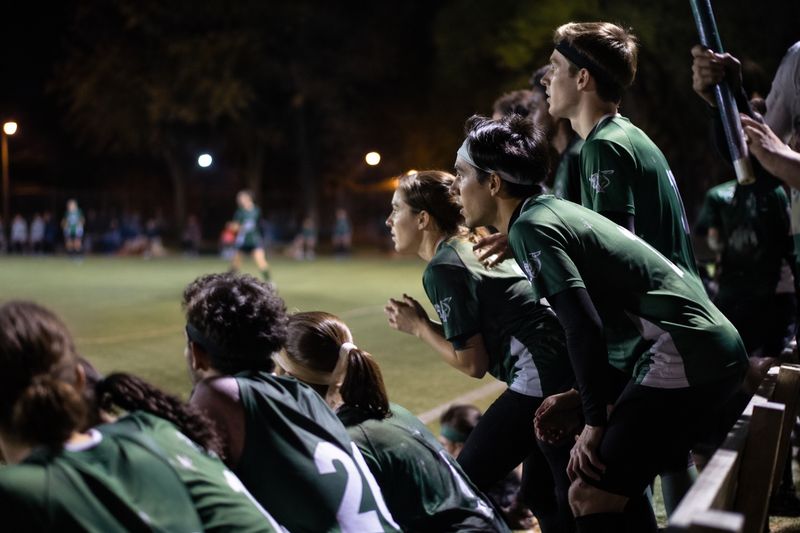
With up to 21 athletes on a roster and only seven on the field at once, coaches treat substitutions as a constant weapon, not a late-game rescue plan. The sport’s rolling, unlimited changes let a staff swap like for like, keep the shape intact, and attack the next matchup before the opponent can settle.
The bench is part of the starting formation
Quadball’s structure makes every substitution meaningful because every spot has a job. Teams field three chasers, one keeper, two beaters, and one seeker, with positions marked by headbands, so a coach can replace a chaser with another chaser or a beater with another beater without changing the team’s overall identity.
The tactical value shows up immediately after a defensive stop. A fresh chaser group can come in to push the pace on the next possession, while a rested beater pair can be sent back out to protect the ball carrier and disrupt counters. Because substitutions are rolling and unlimited, the right move is often not to wait for fatigue to become visible, but to make the next line change before the game’s rhythm shifts.
Why roles, not just legs, drive the changes
The specialized structure means coaches are not simply managing endurance. They are hunting for the right skill at the right moment: a stronger ball mover after a turnover, a more physical beater pair when possession is under pressure, or a different seeker profile when the ending window becomes more important than the middle of the game.
That is especially true in beater-control swings. When one side loses control of the beaters, the game can tilt quickly because clean possession becomes harder to sustain and open runners become easier to chase down. A coach with depth can answer by changing beaters before the damage spreads, restoring pressure, slowing the opponent’s tempo, and buying time for the rest of the lineup to reset.
Seekers add another layer to that calculation. Because the seeker role is so tied to timing and endgame positioning, substitution decisions around the seeker are often about when to commit energy rather than how much energy remains. Teams that manage that timing well can save legs for the final run while keeping the rest of the lineup stable enough to survive the middle stretch.
Mixed-gender rules make every change a legality check
Quadball’s substitution chessboard is even tighter because the sport is mixed gender and regulated by a gender maximum on the field. Under the International Quadball Association system, no team may have more than three players of the same gender on the pitch at one time, and the same limit applies in US Quadball’s top divisions, with some divisions allowing four. Every change therefore serves two masters at once: tactical advantage and lineup legality.
The IQA adopted its “3-Max” policy in 2022. The policy followed a survey that received 516 responses from 27 countries, and the IQA said its exemption policy would apply to IQA events in 2024 and 2025. Coaches are not just reading fatigue and matchups when they look to the bench; they are tracking the gender balance of the lineup every time a player steps off or comes on.
US Quadball calls itself one of the most gender-inclusive sports leagues in the country and says it has prioritized trans, non-binary, and queer athletes since day one. Its Title 9 3/4 initiative is designed to challenge how the world thinks about gender in sports.
The sideline is controlled, not casual
The 2024 IQA rulebook sharpened the bench’s role even further by restricting players to the team bench unless they are about to substitute into the game. That keeps the sideline organized and limits players to a controlled substitution zone.
The bench and substitution area may extend up to 7 meters at the event director’s discretion, giving substitutes and staff room to stand and store equipment.
For coaches, that setup rewards discipline. The team has to know who is next, who is legal, who matches the opponent’s current line, and who can sustain the next sequence without collapsing the shape.
From Middlebury to a global game
That tactical sophistication sits on top of a sport that is still young by major-league standards. The sport dates to 2005 at Middlebury College, and the name change from quidditch to quadball came in July 2022 through US Quadball and Major League Quadball. The sport is now played in over 40 countries.
The highest stage for that roster management is the IQA World Cup, the sport’s premier international event. The 2025 World Cup was held in Brussels and Tubize, Belgium, and the next edition is scheduled for July 23-25, 2027, in London, England.
Sources
- [1]iqasport.org
- [2]usquadball.org
- [3]wpdev.iqasport.org