How racquetball matches are won, and why serve matters most
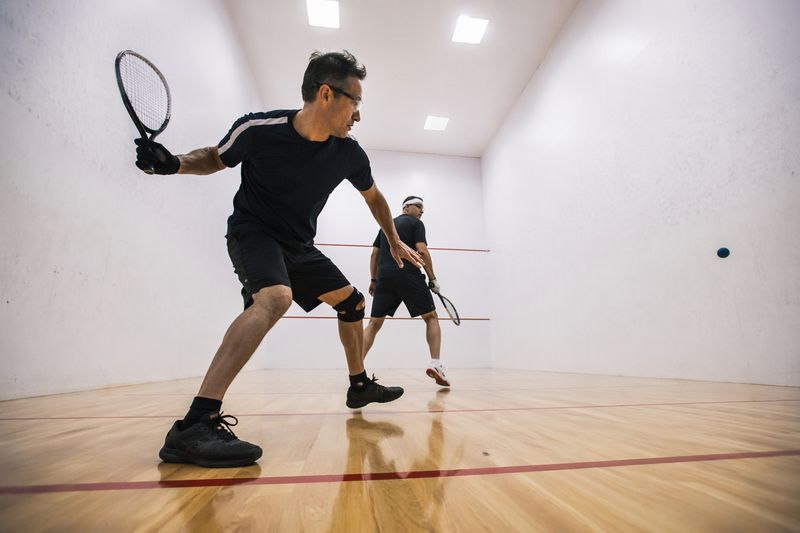
Racquetball looks like speed, but the real story is control. The serving side is the only side that can score, so every rally is a fight to keep the ball and the scoreboard on the same side. Once you understand that, the game stops looking chaotic and starts reading like a sequence: serve, rally, point, and, when the server loses control, a change of possession that can swing the match.
How a racquetball match is won
A match is simple on paper and ruthless in practice: the first side to win two games takes it. The opening two games are played to 15 points, and if each side wins one, the tiebreaker is played to 11. That format makes every point inside a game matter, but it also puts extra weight on the middle of a match, because a split after two games sends the whole thing to a shorter, sharper deciding frame.
The details of doubles scoring are where first-time viewers usually get lost. If a team loses the serve on its first server, that is a hand out or half out. If it loses the serve on its second server, that is a side out. In plain English, the first miss on a two-server team is not as costly as the second, because the team still has one more chance before surrendering the service game entirely. That is why doubles can feel like a sequence of small escapes before a full turnover hits.
Serve first, score later
The serve is not just how a point starts. It is the one moment where the serving side controls the shape of the rally before the returner ever touches the ball. USA Racquetball’s play regulations say the server gets two opportunities to put the ball into play in sanctioned competition, and that alone tells you how important the opening action is. If the first serve fails, the second one is not filler. It is the last reset before the serve disappears.
The referee calls the score before the service motion begins, which sounds minor until you watch a tense game and realize how much it sets the entire rhythm. The server also has to visually check that the receiver is ready, and the motion cannot begin before the score is called. That keeps the point from becoming a scramble before the ball is even struck. In other words, racquetball starts with a verbal cue, not a guess.
The tiebreaker adds another layer that rewards what happened earlier in the match, not just who won which game. In a deciding game, the side with more total points in games one and two gets the first-serve choice. If the total points are tied, a coin toss decides it. That means a team can split games and still earn a serving edge in the decider by piling up more points overall, which is a subtle but real competitive reward for sustained pressure.
Why serve is such a big deal
Once the ball is in motion, racquetball becomes a game of geometry inside a very small box. The court is 20 feet wide, 40 feet long, and 20 feet high, with a service zone and safety zone that are each 5 feet by 20 feet. The standard ball is about 2 1/4 inches in diameter and weighs about 1.4 ounces. Those dimensions create a fast, dense playing space where the ball can rebound off multiple walls in quick succession and force instant decisions.
That compact court is why the serve matters so much. The ball has to bounce in the service zone, be struck before the second bounce, and hit the front wall first. After contact, the server and non-serving doubles partner may move outside the service zone, but they still cannot interfere with the return. So the serve is not just the opening shot; it is the first tactical claim on space, timing, and angles.
There is also a built-in clock pressure. The rules allow a technical warning or foul for delays exceeding 10 seconds. That matters because racquetball rewards pacing as much as power. A player who serves with discipline, checks the receiver, and keeps the motion clean is already winning part of the point before the rally begins.
What to watch in doubles and why the language sounds strange
Doubles is where racquetball’s jargon suddenly makes sense if you know what happened two seconds earlier. The first server and second server have different consequences when a rally is lost, which is why fans hear hand out, half out, and side out so often. Those terms are not decoration. They describe exactly how much service authority a team still has left.
If you are watching a match live, the easiest way to follow doubles is to track which server is active, because the whole match flow turns on that spot. Lose the first server and the team is still alive. Lose the second server and the other side gets the ball. That is the sport’s heartbeat: protect the serve, or give it away.
From Joseph G. Sobek to a global sport
Racquetball began in 1950 with Joseph G. Sobek, who is commonly called the Father of Racquetball by USA Racquetball. During the Korean War, Sobek asked NJ Magnum Co. to make 25 racquets, and a friend at Canfield Rubber Company helped arrange for Seamless Rubber Co. to create a ball. USA Racquetball’s Hall of Fame materials say the first racquetball racquet was developed with a test run of 25 in 1950, which puts the sport’s origin in a very specific, hands-on experiment.
The sport did not stay small. Britannica says racquetball is played on a four-walled court and that by the early 21st century there were about 10 million players in more than 90 countries. That scale matters because the rules you see in a local club match are the same rules carrying the sport across national and international competition.
Why the modern rulebook still matters
Racquetball is not frozen in 1950. USA Racquetball’s current rule materials include a major eye-protection policy update, along with clarified rules on delaying play. That tells you the sport continues to balance speed with safety, and officials still adjust the framework when the game demands it.
The competitive calendar shows the same thing. USA Racquetball’s 2026 homepage lists the National Junior Championships in Des Moines, Iowa, from June 24-28, 2026. Panam Sports added racquetball to the Lima 2027 Pan American Games sports program in August 2025, and it said the 2024 Pan American Racquetball Championship served as a qualifier for other regional games. Those events are proof that the rules are not abstract. They govern a sport with junior pipelines, regional qualifiers, and medal stakes.
If you are watching your first match, keep one rule in your head and the rest falls into place: only the server can score. From there, the rally becomes easy to read. The serve creates the pressure, the return tests it, and the scoreboard follows whoever keeps control long enough to win two games.