How racquetball’s self-officiating rules put safety first
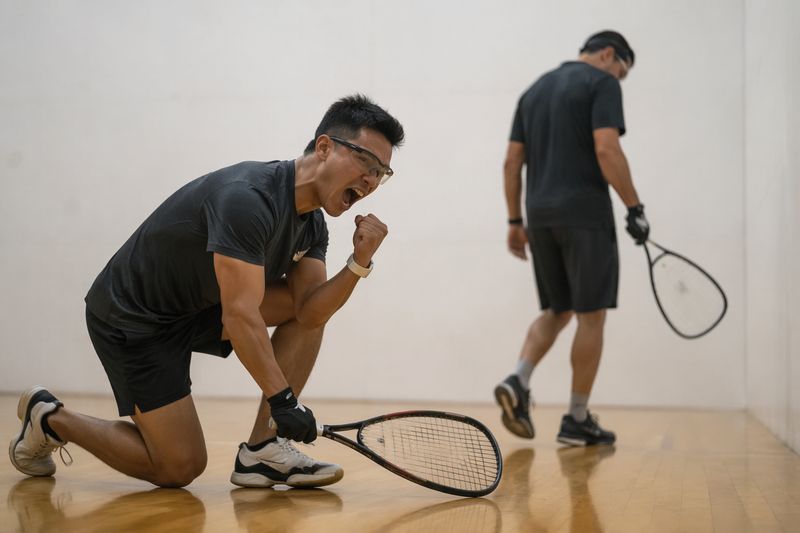
Racquetball's quickest rallies are built on a rule that can look counterintuitive from outside the court: players are expected to stop a swing if contact might be possible. That self-policing code is not a quaint courtesy. It is the mechanism that keeps matches fast, safe, and affordable when a referee is not present.
How the self-officiating code works
The sport's everyday rules are blunt about who owns the call. The server announces the score, and both sides are expected to agree on it before the first serve goes in. Once the rally starts, the hitter is responsible for deciding whether a shot skipped, double-bounced, or otherwise turned illegal, and the etiquette of the game pushes players to call against themselves when they are unsure.
That same logic applies on the return of serve. The receiver has primary responsibility for fault serves, while screen serves belong to the receiver alone to call. If the players cannot agree, the rally is replayed. In practical terms, that means racquetball does not force a bad call to become a fight. It resets the point and keeps the match moving.
The rulebook also draws a clear line between what players can police themselves and what still needs a referee. Foot faults, 10-second violations, and receiving-zone violations generally require official oversight. For sanctioned events, USA Racquetball also has a broader officiating structure, including a Tournament Rules Committee, which shows that self-officiating is the norm in many everyday settings, but not the sport's only operating model.
Why safety comes before the shot
The most revealing line in USA Racquetball's self-officiating guidance is also the simplest: safety is every player's responsibility. Players are expected to hold up their swing without penalty whenever they believe physical contact might be possible, and that instruction says a lot about the sport's priorities. In racquetball, a cleanly won point is never supposed to matter more than avoiding a collision.
That safety-first standard shapes the rhythm of the game. A player hesitating on a possible skip, a receiver stopping on a screen serve, or both players pausing because traffic in the court looks dangerous are not interruptions to the sport's identity. They are the identity. The code asks players to protect each other in real time, which is why racquetball can remain so fast without becoming reckless.
The business logic is there too. A sport built around self-calls does not need a referee on every court to function, which keeps local play practical at schools, clubs, gyms, and community centers. That lower staffing burden helps explain how racquetball can stay accessible in weekly league play and in consolation brackets, where the cost of a missed call is not just a lost rally but a hit to a player's reputation.
Honesty as part of the competition
Inside the sport, honesty is not treated as an extra virtue. It is built into the competitive structure itself. USA Racquetball's National Rules Commissioner said in 2025 that self-officiated matches are often weekly league matches or consolation-bracket games, and that the reward for winning those matches is not worth sacrificing a reputation. In other words, the code works because players know they will see one another again, on the same local courts, in the same leagues, and under the same unwritten test of character.
That cultural pressure matters as much as the written rules. Racquetball rewards players who can make immediate judgments under pressure, concede a point when the ball clearly skipped, and accept a replay when the court view is too contested to settle cleanly. The sport's conflict resolution is simple but demanding: if agreement breaks down, replay the rally and move on. That keeps disputes short and protects the pace that makes racquetball distinctive.
It also explains why the game has stayed unusually personal, even as equipment and venues have changed. In self-officiated play, players are not just opponents. They are each other's first line of enforcement, and that makes every match a test of judgment as well as shot-making.
The history behind the habit
The self-officiating culture is easier to understand when it is placed against racquetball's origins. USA Racquetball credits Joseph G. Sobek with inventing the sport and says he developed the first racquetball racquet with a test run of 25 in 1950, after adapting handball with a racquet. He later helped establish the Paddle Rackets Association, which shows how early racquetball grew out of both experimentation and rule-making.
Bud Muehleisen helped formalize the sport from another angle. USA Racquetball identifies him as the first rules committee chairman, someone who helped shape the original rules and went on to win an unprecedented 41 national titles. That combination of championship pedigree and rule-writing help explains why the sport's culture has always blended competition with self-regulation.
The history also gives the numbers context. Britannica says racquetball was invented in 1950 and had about 10 million players in more than 90 countries by the early 21st century. Statista's U.S. participation data puts American participation at about 3.53 million players in 2017, ages six and older. Those figures show a sport with real scale, and scale makes trust-based officiating more than a novelty. It is part of how the game continues to function across a wide player base.
From local courts to elite play
Racquetball's self-officiating code sits alongside a more formal tournament world, not in opposition to it. Panam Sports says racquetball has been part of the Pan American Games since 1995, and its event history includes Santiago, Chile, where the racquet sports center hosted the competition. At the top of the sport, officiating is structured and centralized. At the club level, the players themselves still carry much of the burden.
That split is one reason the sport can support both elite championships and a wide youth base. USA Racquetball is currently promoting junior national championships with divisions from 6-and-under through 21-and-under, which shows how deeply the sport depends on local courts, teaching spaces, and youth competition where referees are not always available. The same etiquette that settles a disputed skip in a weekly league also helps a 10-year-old or a college-age player learn how to call a serve honestly.
Racquetball's hidden operating system is not a quirk at all. It is the reason the game can stay quick, fair, and safe without turning every rally into an argument, and that trust-based code remains one of the sport's most durable strengths.
Sources
- [1]usaracquetball.com
- [2]britannica.com
- [3]statista.com
- [4]panamsports.org