How racquetball’s standard ball shape and bounce define the game
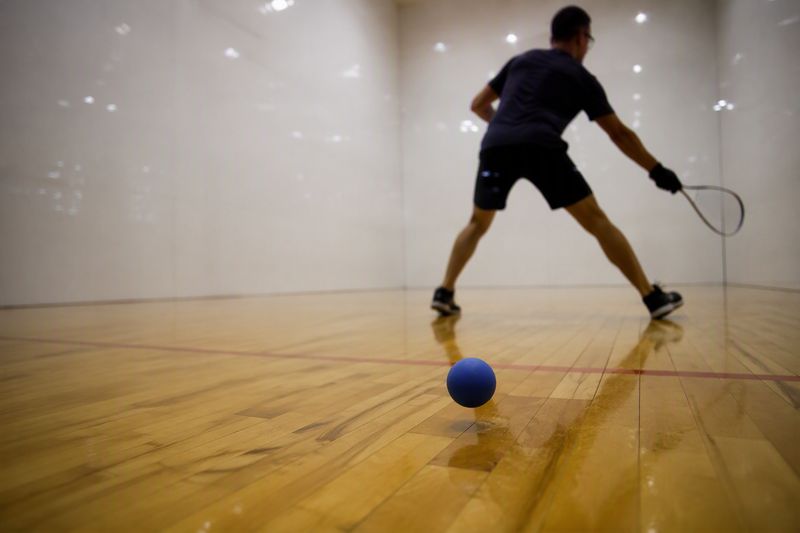
The standard racquetball is about 2 1/4 inches in diameter and weighs roughly 1.4 ounces. It is judged by a 100-inch drop test that should produce a 68 to 72 inch rebound at 70 to 74 degrees Fahrenheit. That narrow standard is why the same court can feel fast one night and stubborn the next, with the ball’s liveliness changing as the room, the floor, and the ball itself warm up or cool down.
The standard that sets the rhythm
Its small size and light weight let it accelerate sharply off the front wall, side walls, and floor, which is what gives racquetball its signature speed. The drop test turns that liveliness into a measurable target, so a legal ball is not just round and rubbery, but predictably responsive under standard conditions.
Racquetball is played in a closed court, not an open space where the ball can drift away and reset. USA Racquetball’s court standard sets the room at 20 feet wide, 40 feet long, and 20 feet high, with a back wall at least 12 feet high.
Temperature is the hidden performance variable
The ball’s response changes as temperature changes. In a colder court, the ball tends to feel deader and rebound less. In a warmer environment, it becomes more active and can fly faster off the front wall and corners, which changes shot selection, speeds up retrievals, and alters the length of rallies.
In a cold gym
A cold gym slows the whole conversation between ball, wall, and player. The ball loses some of the spring that players expect, so shots that normally jump off the front wall can sit down sooner or die earlier on the side wall. That can reward patience and cleaner placement, but it also forces players to generate more of their own pace instead of relying on the ball to carry it.
The practical effect is immediate: drives may need more force, passing shots may need tighter lines, and the margin for lazy swings shrinks. A ball that feels flat in warm-ups can stay flat deep into a match if the court never heats up, and that changes how aggressively players can attack corners or use height.
During warm-up
Warm-up is also the first chance to see how much the ball has already come alive from court temperature and repeated contact with the walls. The same legal ball can feel controlled at the start and far livelier after several minutes of rallies, so the opening exchanges often tell players more than the brand name on the can.
Experienced players watch the first few rebounds instead of assuming the ball will play the same way all night. A ball that starts to respond faster off the front wall can turn safe-looking shots into lively caroms, especially in the corners, where extra bounce changes whether a player can recover in time or has to concede position.
With a fresh ball
Freshness matters because the ball changes over the course of play. Even when it remains legal, a single ball can become faster or slower as it gets used, and players notice the difference in pace and control. RacquetWorld’s newsletter lists four racquetball manufacturers, which helps explain why players may feel differences from ball to ball even when each one meets the same standard.
A ball that still rebounds in the 68 to 72 inch range from a 100-inch drop at 70 to 74 degrees Fahrenheit is within the standard, but players can still feel differences in the way one ball carries off the walls compared with another.
How the court magnifies every bounce
Tournament racquetball is played by two or four players, with singles for two and doubles for four, while cut-throat is a common non-tournament variation played by three players. Those formats change spacing, but the court itself stays the same, so the ball’s speed and rebound are always being tested against the 20-by-40-foot floor plan.
That tight geometry is why racquetball feels so different from many other racket sports. A shot that dies in the back corner, skids off the side wall, or pops off the front wall at the wrong height can change the point immediately. In doubles, that speed can force cleaner communication and faster recovery. In singles, it can reward players who read the bounce early enough to cut off angles before the ball turns the corner.
The official bounce test and what it tells you
The 100-inch drop test is the simplest way to understand how the sport measures quality. Instead of judging by appearance, the standard asks how the ball performs under a specific height and temperature, then checks whether the rebound lands in the defined 68 to 72 inch window. It separates a legal racquetball from one that has gone dead or played too lively.
Because the test is tied to 70 to 74 degrees Fahrenheit, the same ball can behave differently in a cold building and in a heated court. A player can own a legal ball that still feels wrong for the room.
A sport built around a deliberate design
Joseph G. Sobek, who lived from 1918 to 1998, invented racquetball while working in a rubber manufacturing plant in Bridgeport, Connecticut. The European Racquetball Federation traces the game to his dissatisfaction with the indoor court sports available in the 1940s, and that frustration helped shape a game built around speed, rebound, and a controlled indoor space.
USA Racquetball’s most recent rulebook included seven rule changes passed by its Board of Directors in July 2023.
What to watch before the first serve
• Check the room temperature and the early bounce, because a cold court can make the ball feel dead while a warmer one makes it fly.
• Expect the ball to play differently after warm-up, when repeated hits and a hotter court can increase pace.
• Use the 100-inch drop standard as the benchmark for legal play, not your eye alone.
• Pay attention to manufacturer feel, since multiple manufacturers make racquetballs and the response can vary even within the standard.
• Adjust shot selection to the bounce you actually have, not the bounce you want. A flat ball asks for more control and patience. A lively ball punishes loose spacing and late preparation.