How to build a tournament-grade Wiffle Ball strike zone
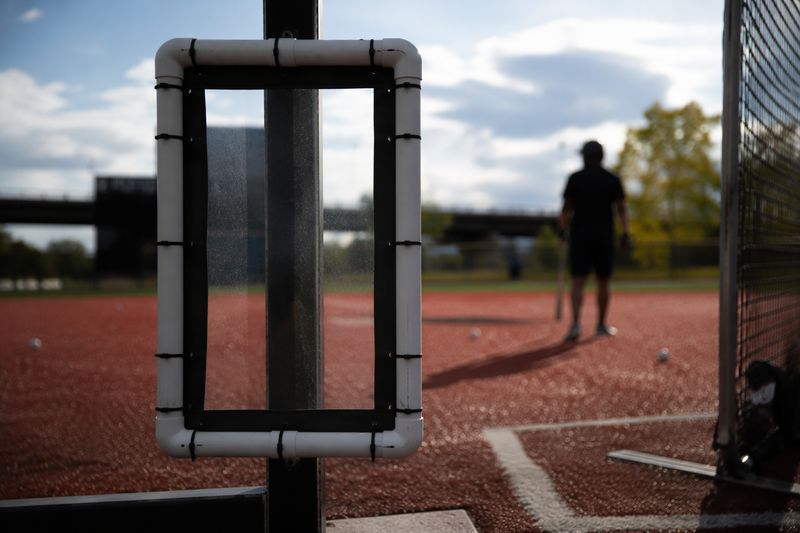
The best Wiffle Ball games are decided long before the first pitch. In the World Series of Wiffle Ball build guide, the strike zone is treated like equipment because it is equipment: the Twinsburg standard uses 1-inch PVC, costs about $40 to $50 in materials, and can be built in a couple of hours. That matters because the right zone turns movement pitches into a fair contest, while the wrong one turns every edge call into noise.
Start with the Twinsburg standard
The most useful thing about the instruction PDF is that it gives you a fixed target, not a vague idea. It says the build uses the same dimensions as the Twinsburg World Series of Wiffle Ball, which is exactly what serious players and tournament hosts need when they are trying to compare games across different fields. The official World Series of Wiffle Ball site calls the event the largest Wiffle Ball tournament in the world, and that scale only works when the strike zone is built the same way every time.
That standard is not cosmetic. In the 2024 updates, organizers made the rule plain: strikes must strike and “ping” the metal, while hitting the PVC pipe is a ball. That detail tells you everything about the design philosophy. The frame has to be rigid, the face has to be readable, and the boundary has to be obvious enough that a close pitch is judged by contact, not by argument.
Know the dimensions before you cut anything
Wiffle Ball rules are not uniform everywhere, which is exactly why a tournament-grade build has to be precise. The Wiffle Fandom rules page lists a strike zone that is 22 inches wide and 30 inches tall, starting 12 inches off the ground. Another rules result puts the common dimensions anywhere from 22 by 30 inches up to 26 by 34 inches, usually 12 inches high and typically about 3 feet behind home plate. If you do not lock in the dimensions before the game starts, you are not building a standard, you are improvising one.
Distance matters just as much as height and width. One rules PDF places the pitching rubber 37 feet from the strike zone, while another uses 35 feet from home plate. The Twinsburg rules summaries also show how field geometry shapes the rest of the game: singles were painted at 42 feet, doubles at 65 feet, and the home run fence measured 90 feet in both the 2019 and 2021 summaries. Younger divisions used modified field dimensions, which is another reminder that the strike zone is part of a larger field package, not a stand-alone prop.
Build it with the right materials
The instruction sheet keeps the build simple. It calls for 1-inch PVC pipe, 14.5 feet total, and advises builders to buy 15 to 16 feet to be safe. The materials cost runs about $40 to $50, and the whole job takes a couple of hours. That is the sweet spot for a tournament host: cheap enough to reproduce, sturdy enough to survive repeated games, and standardized enough that every field feels the same.
The key is not just buying the pipe, but using it to create a target that stays readable under game speed. A zone that wobbles, sags, or shifts changes the strike zone from pitch to pitch, and that breaks the whole point of the exercise. If the target face is inconsistent or the frame flexes, the pitcher no longer trusts the edge, the hitter no longer trusts the call, and the game starts drifting away from clean competition.
Why the build changes the way the game plays
Wiffle Ball pitchers are not throwing flat fastballs and hoping for the best. They are trying to bend the ball with curves, drops, and risers, often with extreme movement. A stable strike zone gives those pitches a fixed target, which makes the break more meaningful and the misses more legible. It also gives hitters a sharper line between chase pitches and strikes, so selectivity becomes a skill instead of a guess.
That is why a bad zone can distort an entire event. If the target is too loose, too flimsy, or not built to the same standard across multiple fields, one diamond starts rewarding different pitches than another. A tournament built on that kind of inconsistency does not just look messy, it changes strategy, pacing, and the number of disputes that slow the game down.
The zone sits inside a larger tournament system
The Twinsburg event shows how much structure goes into a serious Wiffle Ball setup. In the 2021 rules, three fields were constructed in the outfields of fields 1, 2 and 3 at Liberty Park in Twinsburg, Ohio, for a total of nine tournament fields. The 2024 rules expanded that footprint to fields 1, 2, 3 and 4 at Liberty Park, which tells you the event has outgrown the backyard version of the sport. The official site lists Aug. 13-16, 2026 for the next tournament, and cleveland.com noted the 2024 event was scheduled for Aug. 8-11, 2024.
That scale is exactly why the strike zone has to be treated like a piece of field equipment. When one tournament is using multiple fields, 42-foot singles lines, 65-foot doubles lines, and a 90-foot home run fence, the strike zone has to match the same level of precision. Build it to the Twinsburg standard, keep the face readable, keep the frame rigid, and you get what every competitive Wiffle Ball game needs most: a target that makes the pitcher work and leaves no doubt when the ball has crossed the line.