How ultimate’s observer system keeps self-officiated games fair
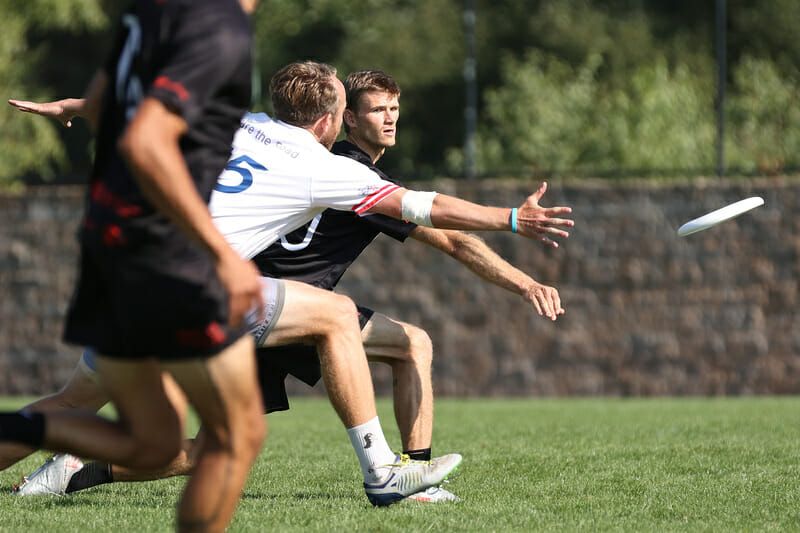
In the Pro Championships final, a downfield defender called a foul on an offensive cutter, the players took it to an observer, and the ruling went back as a foul that produced a turnover. That sequence is the heart of ultimate’s oddest and most important idea: titles can be decided in a game that still expects players, not referees, to make the first call.
The middle ground between self-officiating and refereeing
Ultimate does not hand the game over to officials in the way basketball, football, or soccer do. Players still make many of the core calls themselves, including foul and violation calls, and Spirit of the Game remains the foundation for how disputes are handled. WFDF puts that principle bluntly: "All players are responsible for administering and adhering to the rules. Ultimate relies upon a Spirit of the Game that places the responsibility for fair play on every player."
Observers sit inside that system, not above it. Their job is more specialized than a referee’s: they manage the game, apply the rules correctly, and provide a structured backstop when the speed and stakes of elite play make pure self-officiation difficult. That distinction matters in a sport where a single contested call can flip possession, erase momentum, or decide a championship point in a matter of seconds.
What the observer system actually does
The 2024 Observer Manual makes clear that observers are there to keep games fair, consistent, and moving. They do not replace player responsibility, and they are not a free-floating authority that turns every dispute into an official ruling. Instead, they support the flow of the game and intervene within a codified framework when a call needs structure, clarification, or timing help.
That framework is formal, not improvised. USA Ultimate has an archived Observer Certification Program page, which shows the sport maintains a clear certification path for observers rather than treating the role as an informal sideline assignment. The manual itself also reflects that institutional seriousness: its copyright page credits Rob Rauch in 1990, Vic Kamhi in 1998, the UPA Observer Committee from 2001 to 2010, and a USAU Working Group from 2011 to 2024.
How the April 2024 manual updates the job
The revised April 2024 manual is not just a historical artifact. It is actively maintained, with authors and contributors including Jon Bauman, Brian Bradburn, Hank Cary, Vincent Chang, Jerome Connell, Greg Connelly, Will Deaver, Caleb Denecour, Mitch Dengler, Mike Gerics, and Janna Hamake.
USA Ultimate’s substantive-changes document for 2024 says the observer manual was updated in three important ways to match the 2024-25 Official Rules of Ultimate. Timing before the pull was revised, halftime cap rules were updated, and the observer section on travels was rewritten to follow Rules Working Group guidance under the new rules. The travel note is especially telling: observers will uphold a travel call if the thrower did travel, even when that travel is less than two.
That detail shows how the system protects consistency without turning observers into independent stylists. They are there to enforce the rules as written, not to invent a looser or stricter game on the fly. For players, that means accountability still begins with the call on the field, but the final handling of a disputed travel, foul, or timing issue can be standardized.
Why ultimate needs this structure in championship games
Ultimate’s pace is part of its appeal, but that same pace makes self-officiation hard at the highest levels. The game is continuous, cuts happen fast, and possession changes can hinge on a call made in real time under pressure. In that environment, the observer system solves two problems at once: it keeps the game moving and it helps preserve fairness when players are too close to the action to see everything cleanly.
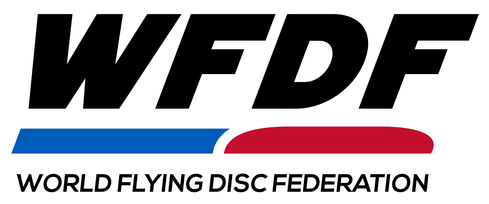
That is why the observer model fits championship play so well. It preserves the sport’s player-led culture while giving teams a neutral, trained mechanism for the moments that would otherwise stall or spiral. In practice, that means a disputed foul at the biggest game of the season can be resolved without abandoning the principle that ultimate belongs, first and foremost, to the players on the field.
A long-running debate, not a new compromise
The argument over whether observers conflict with Spirit of the Game has been around for years in North America and internationally. WFDF says that debate remains ongoing, which is no surprise in a sport that built its identity on trust and mutual responsibility before formal game management became standard at the top level. Adam Ford’s history piece on observers tracked that same tension, showing how long the sport has wrestled with the balance between purity and practicality.
The model is not unique to USA Ultimate either. Ultimate Canada runs a National Observer Program, which shows that this is part of a broader ultimate conversation, not just an American one. Different communities have formalized the role in different ways, but the core idea stays the same: keep self-officiation at the center, then add trained oversight where elite competition demands it.
The Pro Championships example is useful because it captures the system in motion. A call was made by a player, an observer stepped in, the rules were applied, and the game kept its competitive shape. That is the paradox ultimate has solved better than most sports: it stays self-officiated even when the title is on the line.