How US Quadball Cup qualification works across four divisions
The easiest way to get lost in quadball is to assume every team is chasing the same kind of spot at US Quadball Cup. The reality is sharper: every team is placed into one of four divisions, but only two of them, College Division 1 and Club Competitive, are capped at 16 teams and built around bids, qualifiers, and season-long performance.
The four-division map
US Quadball has built the championship around a simple split that doubles as the sport’s biggest point of confusion for new fans. College Division 1 and Club Competitive are the elite lanes, each capped at 16 teams. College Division 2 and Club Open remain uncapped, which keeps the event wide enough to accommodate more programs without forcing them into the same qualification pressure as the top brackets.
That structure matters because US Quadball Cup is not a niche invitational. The organization describes it as the season’s capstone event, bringing together more than 50 teams and over 1,000 athletes each year. US Quadball also defines itself as the U.S. national governing body for quadball, a 501(c)(3) nonprofit founded in 2010 that supports thousands of athletes, coaches, and volunteers nationwide.
How the road to Cup actually works
1. Choose the division, then the qualifier path
For teams aiming at College Division 1 or Club Competitive, the road to Cup starts long before the final weekend. US Quadball requires those teams to attend at least one national qualifier, and USQ assigns teams to a qualifier rather than letting every program roam freely. College teams rank their top three choices during registration and are then placed into one qualifier; club teams can signal interest in more than one event.
That assignment system is where casual followers often get tripped up. A team is not simply “entered into Cup” by record alone. It must fit into the right division, clear the qualifier process, and then earn the bid or seeding that gets it into the championship bracket.
2. Play the season, not just the tournament
US Quadball’s qualification rules reward teams that stay active all year. To be eligible for competitive division bids, teams must meet season-play benchmarks before the qualifiers even start: at least five official USQ games, against three different teams, at two USQ-official events, plus referee and flag runner requirements. Teams that miss those standards are seeded as unseeded, which turns the regular season into a real sorting mechanism rather than a warm-up.
That is one of the sport’s clearest cultural choices. Quadball’s governing body is not just chasing a single weekend spectacle. It is building a system that values participation, officiating development, and repeated competition, which helps smaller or newer programs grow while still giving active, well-tested teams a path upward.
3. Earn bids where the divisions demand them
The bid picture is different depending on the division. In 2024-25, around half of Club Competitive bids were available through national qualifiers, while college qualification leaned more heavily on qualifier bids with some at-large bids later in the season. That makes the competitive divisions feel like a true ladder: perform well at the right event, and the championship door opens.
USQ also tightened the calendar so the path feels like one season instead of a string of disconnected events. National qualifiers moved out of the pre-season and into the competitive season, which runs from mid-January to April. The qualifiers themselves were placed from the end of January to early March, with Cup at the end of the season in April.
4. Understand why some teams play under different max rules
The rulebook has also been moving toward a more standardized competitive format. USQ’s 2024-25 season-play update said club teams needed to play 3 max in official games to be eligible for Club Competitive at USQ Cup 2025, and College Division 1 was required to use 3 max for that same Cup. For 2025-26, USQ said College Division 1 and Club Competitive would again be 16-team divisions, College Division 2 and Club Open would remain uncapped, and bids in both competitive divisions would be set at 12 each.
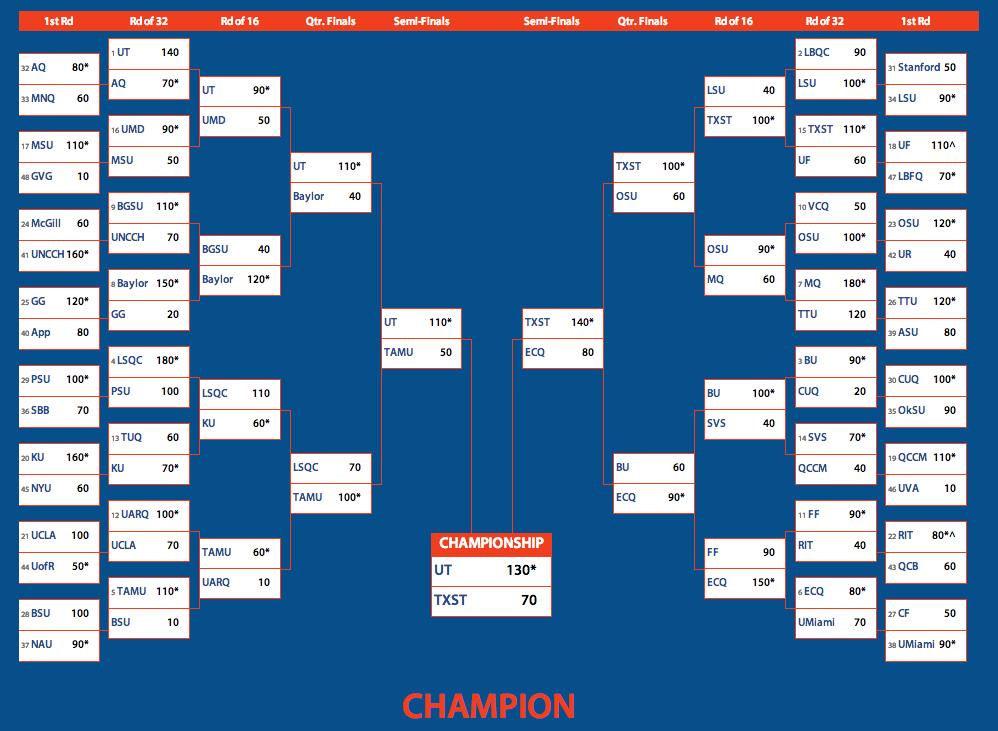
That shifting rule set shows how much the sport is still calibrating itself. The competitive divisions are being narrowed and clarified, while the open divisions stay flexible enough to keep the sport accessible. For fans following a weekend result, the key question is not only who won, but which rule set that win feeds into.
Why the schedule keeps changing
US Quadball reviews gameplay policies and programs every year from April to August, and that annual cycle explains why the path to Cup is never static for long. The organization also prioritizes indoor qualifier space for regions where historical temperatures during the hosting month are 45 degrees or lower, a practical detail that shows how geography and weather shape the national calendar.
That matters to the sport’s business and community footprint as much as to its bracket math. Quadball is still young as a formal governing structure, and its growth depends on balancing travel, weather, facility access, and competitive fairness. The qualifier system is not just about crowning champions, but about making sure programs from different regions can actually get onto the same calendar.
From Middlebury to a national championship
The modern version of the sport began in 2005 at Middlebury College with Xander Manshel and Alex Benepe, then rebranded from quidditch to quadball in 2022. US Quadball says the name change was supported by polling of players and fans, and that the International Quidditch Association planned to adopt the new name worldwide.
That history explains why the Cup pathway feels so layered. A game that started as a campus creation in Vermont has become a national championship system with capped divisions, open divisions, qualifier assignments, and bid allocation built into the season itself. For anyone trying to follow the stakes, the shortcut is simple: regular-season results matter, qualifiers decide the competitive brackets, and Cup is where the whole structure finally locks into place.