How US Quadball’s qualifier system shapes Cup bids and the season
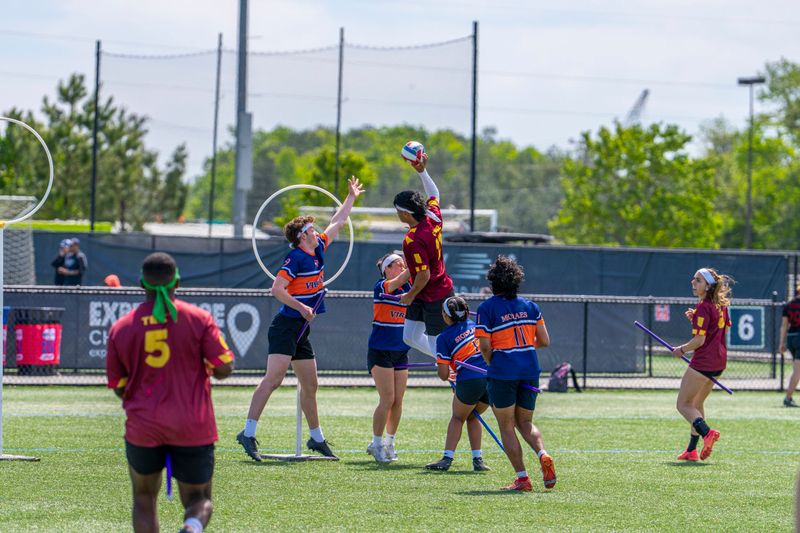
Winter and spring national qualifiers across the United States decide who reaches US Quadball Cup, who climbs the standings, and which teams can justify the travel, roster moves, and scheduling it takes to stay in the chase.
How qualifiers become Cup bids
National qualifiers are the sport’s on-ramp to championship play. US Quadball uses those events to award bids into the Club Competitive division and College Division 1 at US Quadball Cup, making the qualifier circuit the place where the postseason starts long before bracket play begins. For the 2026 cycle, the Club Competitive Division at Cup will be a 16-team field, while the Club Open Division will be uncapped.
The college side follows the same logic, but with different limits. College Division 1 at US Quadball Cup 2026 will be a 16-team field, and College Division 2 will be uncapped. For Division 1, 12 bids will be awarded through national qualifiers, with the remaining four handed out through an at-large process later in the season. That split makes the qualifier results matter twice: first for direct passage into Cup, then again for the at-large conversation that follows.
Why the qualifier circuit is not one-size-fits-all
The system is designed to reward both placement and participation. Club competitive qualifier bids are allocated with the Huntington-Hill method, which is meant to distribute opportunities across events rather than turning the calendar into a simple winner-take-all march. Club teams can attend multiple qualifiers, and those appearances count toward bid allocation at more than one event, a detail that pushes coaches to think strategically about where to send a roster and how to balance travel with results.
A strong team is not just chasing one local event, but deciding whether to stack appearances, chase a favorable bid path, or spread out travel to protect legs and availability.
The new attendance rule that raises the stakes
For the 2025-26 season, all college and club teams had to attend at least one national qualifier to qualify for College Division 1 or Club Competitive at US Quadball Cup 2026. That requirement turns qualifiers from an option into a gatekeeper. If a program wants a shot at the top Cup divisions, it has to show up somewhere on the national circuit.
College Division 1 will revert to a 4 max format in 2025-26 after member feedback that continuing with 3 max could create barriers to participation and growth.
What certified tournament directors actually control
Behind every qualifier, league game, and sanctioned event is a certified tournament director. All official games must be organized and supervised by a USQ-certified Tournament Director, which gives the role real authority on the ground. The certification path is straightforward: register for the program, review the overview deck, meet with the Events Director, and complete the exam if applicable.
USQ rolled out a TD Proctor program in 2024 to connect newer tournament directors with mentor TDs.

Official, sanctioned, unofficial: the three layers of event control
Certified tournament directors can run three types of events: official, sanctioned, and unofficial. Official events must be submitted at least four weeks before game day, all participants in official games must be registered USQ members, official teams need a USQ-certified coach, and official results count toward USQ standings.
Sanctioned events carry those same official requirements plus additional insurance handling. The tournament director has to provide additional-insured information so USQ can issue a certificate of insurance for the facility or venue partner. This is the layer used when a host needs the event fully formalized for a campus, city, or venue agreement.
Unofficial events sit lower on the ladder. They still need to be submitted in advance, but their games do not count toward standings. They can be used for playtesting if the tournament director agrees, which gives teams room to experiment with lineups, rules applications, or younger players without changing the standings picture.
An event submitted too late may be delayed, left off the calendar, or denied insurance documentation.
The tools that standardize the season
Quadball.One is required for events and games during the season, and in September 2024 USQ announced it would continue using the platform for all events and games. That requirement gives hosts a common scheduling and administration tool, which is especially important in a sport that spreads across campuses, clubs, and regional tournaments.
Official events can include member-compliance review, roster submission support, social-media promotion, proctoring opportunities for head referees and flag runners when applicable, event-calendar listing, and use of Quadball.One for scheduling.
Where the system came from
The modern structure sits on top of a sport that began at Middlebury College in 2005, when Xander Manshel and Alex Benepe helped found quadball. US Quadball, the national governing body, is a 501(c)(3) nonprofit founded in 2010. It renamed itself from US Quidditch to US Quadball in July 2021, alongside Major League Quadball and the International Quidditch Association moving toward the new name.
USQ counts thousands of athletes, coaches, and volunteers nationwide.