How WFDF governs ultimate frisbee worldwide and protects Spirit of the Game
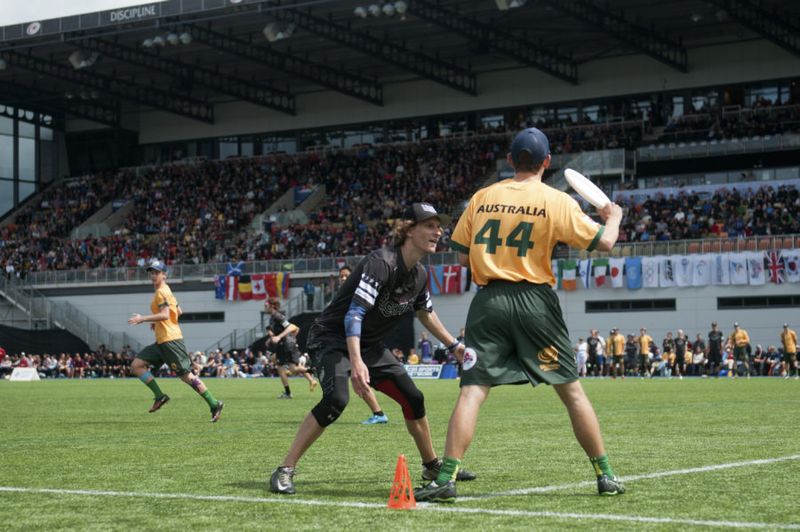
Ultimate runs on a rare bargain in team sports: the players police themselves, but a global federation still sets the boundaries. The World Flying Disc Federation sits at the center of that system, giving ultimate a shared rulebook, a championship structure, and a common language for Spirit of the Game that travels from neighborhood fields to world stages.
WFDF is the sport’s global backbone
WFDF says it was formed in 1985 and now counts 128 member associations in more than 126 countries. It is recognized by the International Olympic Committee, the International Paralympic Committee, and the International University Sports Federation, and it belongs to the International World Games Association, the Association of IOC Recognised International Sports Federations, the International Masters Games Association, and TAFISA. Those affiliations matter because they place ultimate inside the broader international sports system rather than leaving it as a loose collection of local scenes.
That administrative reach stretches across flying-disc disciplines, not just ultimate. WFDF is the international federation responsible for world governance of ultimate, beach ultimate, disc golf, freestyle, guts, and other flying-disc sports. In practice, that means the body that certifies major events is also the body that decides how the sport is standardized across borders, age groups, and competition formats.
The rulebook is part of the product
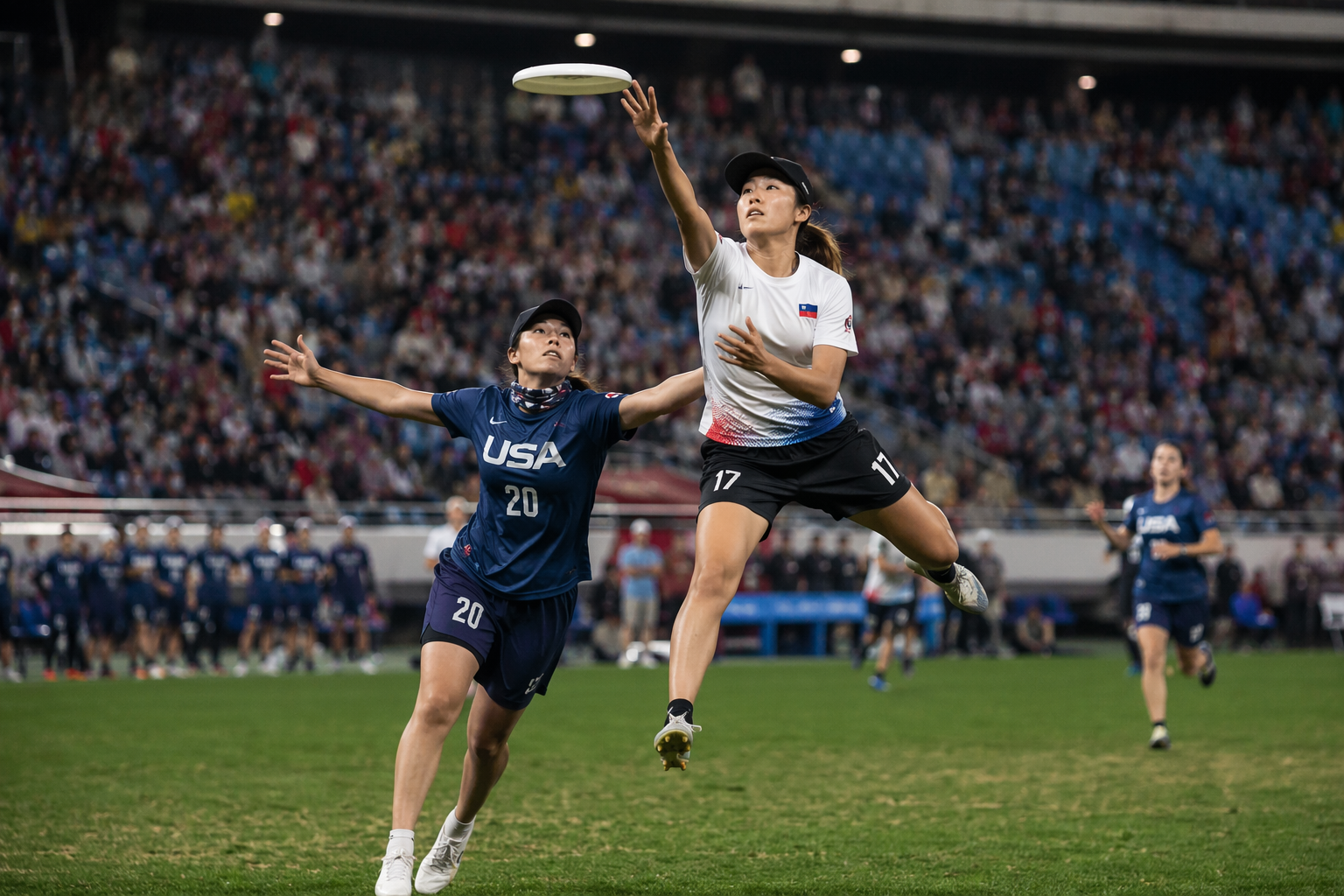
WFDF’s rules materials describe ultimate as a non-contact, self-officiated team sport guided by the Spirit of the Game. On the field, that translates into players making their own calls and resolving disagreements without conventional referees, a structure that remains unusual in elite team sports. The federation’s description also sets out the basic geometry of the game: two teams of seven on a field about the length of a football field, but narrower, with end zones at each end.
The same materials also spell out how the game usually runs. Matches are typically played to 15 points or about 100 minutes, and WFDF notes that shorter beach and indoor versions use different conditions. The federation also allows rules variations for special competitions, age groups, or available space, which is one reason ultimate can look slightly different in a world championship, a junior event, or a compact indoor setting without ceasing to be the same sport.
Spirit of the Game is not a slogan, it is governance
WFDF does not just preserve Spirit of the Game as a cultural ideal. Its stated responsibilities include sanctioning world championships and other international events, establishing uniform rules, recording world records, and promoting Spirit of the Game. That puts culture and bureaucracy in the same frame: the federation guards the etiquette of self-officiation while also controlling the official machinery that gives tournaments legitimacy.
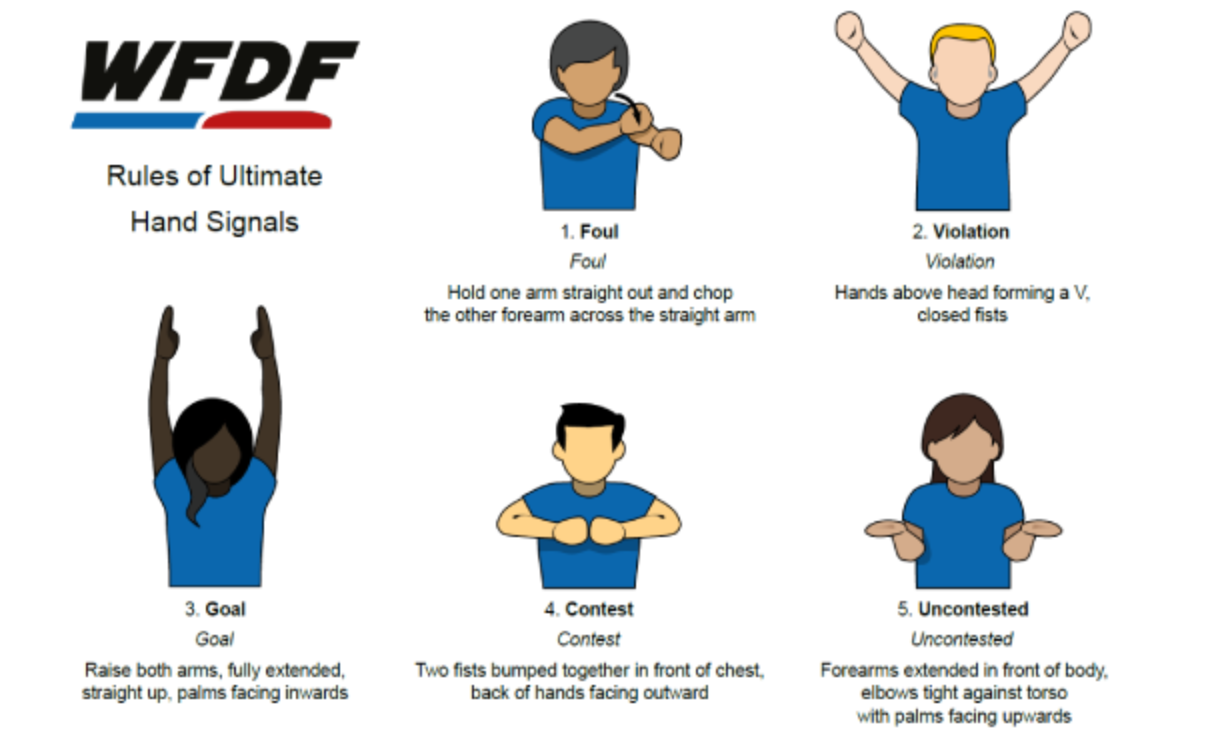
That matters because self-officiation only works when the standards are clear enough to be shared across countries. WFDF’s role is to define those standards so that a player in one federation can enter a tournament in another and still understand how fouls are called, how disputes are resolved, and what conduct the game expects. In ultimate, governance is part of gameplay, not something that happens off to the side.
The 2025-2028 rules cycle showed how change moves through the sport
WFDF’s updated Ultimate Rules and appendices took effect on January 1, 2025 after extensive engagement with the global ultimate community and approval by the Board of Directors. The federation said the revision cycle was designed to improve flow of play, produce fairer outcomes, align more closely with USA Ultimate, and support self-officiating as effectively as possible. Those are not abstract goals: they shape stall counts, stoppages, and how smoothly a game moves from one point to the next.
WFDF also published a USA Ultimate comparison document for players who normally play under USAU rules and travel to international tournaments under WFDF rules. That detail reveals where the sport still has friction. Even in a game built on shared values, a club player crossing from the USA and Canada into the international circuit still needs a bridge between rule sets, and WFDF treats that bridge as part of its job.
Major events turn the rulebook into a live system
The federation’s rules and standards matter because they are tested in high-level competition. USA Ultimate says the WFDF World Ultimate Championships are held every four years and are ultimate’s most prestigious multi-division international tournament. WFDF scheduled the 2024 World Ultimate Championships for August 31 to September 7, 2024 in Runaway Bay, Queensland, Australia, giving the sport a global showcase where rule uniformity and self-officiation have to hold up under pressure.
WFDF also maintains a results platform with statistics sections for WUC and WMUC events, which shows how event administration extends beyond a single tournament weekend. The federation’s current calendar continues to build the pipeline, with major 2026 and 2027 championships already on the books, including the World Masters Ultimate Club Championships, the World Junior Ultimate Championships, the World Ultimate Club Championships, and the 2027 World Under-24 Ultimate Championships in Japan. That calendar shows why WFDF’s rule-making is never static: every new event has to fit the same international structure, from masters to juniors to club and national-team play.
What WFDF governs, in the end, is not just paperwork. It is the shared framework that lets ultimate stay recognizable as one sport while it spreads across countries, age divisions, and tournament formats, all while asking players to keep officiating themselves. That is the balance that gives ultimate its identity, and WFDF is the institution that keeps it intact.
Sources
- [1]wfdf.sport
- [2]rules.wfdf.sport
- [3]usaultimate.org