How Wiffle Ball became a Connecticut family business legacy
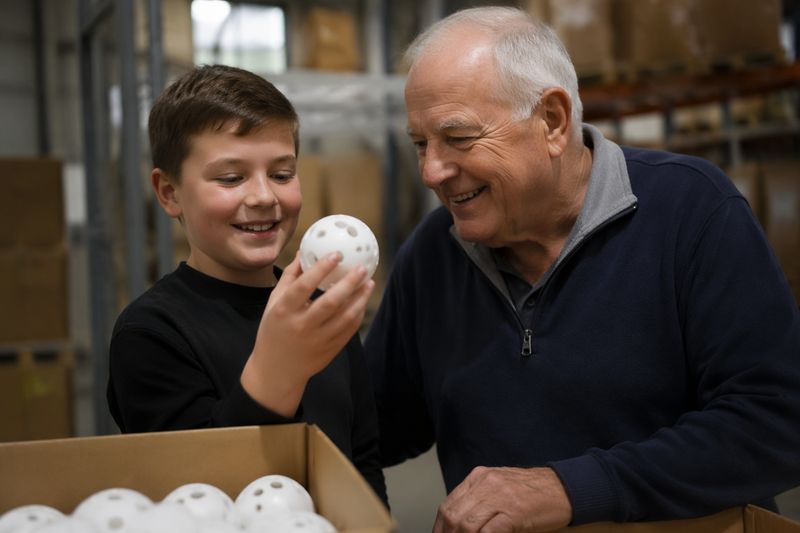
Wiffle Ball has always looked simple from the outside. The real story is stranger and sturdier: it is one of the rare iconic sports products that never lost its original home, and that continuity still shapes how players trust the ball and how the game sees itself. A backyard fix in Fairfield became a family business in Connecticut, and that lineage has outlasted the usual shuffle of outsourced manufacturing.
From a Fairfield backyard problem to a patent
The origin starts in 1953, when David N. Mullany was trying to solve a backyard baseball problem in Fairfield. The answer he built was not a gimmick that disappeared after a summer. It was a new kind of game ball, designed to make backyard play work in tight spaces, and the invention was formal enough that Mullany filed a patent on February 18, 1954.
That date matters because it marks the moment a neighborhood workaround became a durable product. Wiffle Ball was never just an informal toy that happened to catch on later. It was conceived as equipment, protected as an invention, and built with enough identity that the shape and movement of the ball would become the sport’s central feature for decades.
How the first sales push widened the game
The first push to sell the ball moved fast and stayed rooted in the Northeast. Early sales went from a nearby diner to Canal Street in Lower Manhattan, a route that tells you a lot about how the product spread: local first, then visible, then retail-ready. That is the kind of launch path that gives a product a story as well as a shelf life.
The Baseball Hall of Fame account says Woolworth later took an interest, opening a broader national retail pathway for the ball. That step mattered because Wiffle Ball did not need to reinvent itself to reach a wider audience. It just needed a distribution lane wide enough for a very specific object that already had a clear identity: a light plastic ball with a flight pattern unlike a standard baseball.
The early commercial path also explains why Wiffle Ball never drifted far from its original purpose. The product was built to make backyard baseball playable and fun, and the retail expansion did not change that core function. It simply put the same Connecticut-made idea in front of more households, more neighborhood fields, and more improvised games.
Shelton became the anchor, not an afterthought
By 1959, the Mullany family was operating its own factory in Shelton, Connecticut. That move turned Wiffle Ball from a successful invention into a family manufacturing operation with a fixed address and a durable identity. In a sports world where equipment often gets detached from its birthplace, Shelton became the point of continuity.
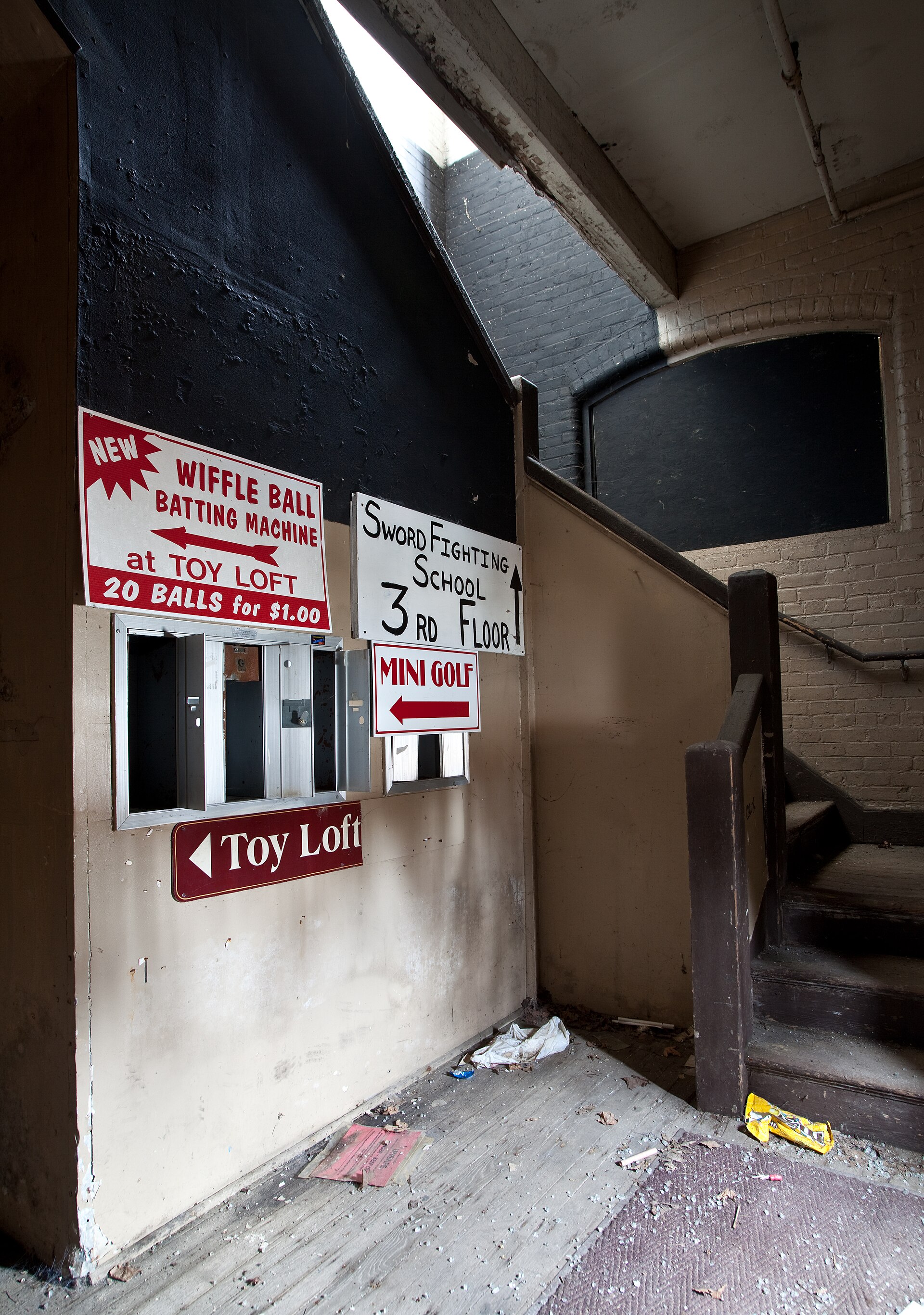
Today the company is still headquartered in Shelton under Mullany descendants, and that family control is not just sentimental window dressing. It is part of the product’s credibility. When the same family keeps making the same ball in the same state for generations, the object stops feeling disposable and starts feeling like a standard.
Today in Connecticut History notes that more than 60 million Wiffle Balls have been manufactured there. That number gives the legacy real weight. It is not a niche craft operation preserving a forgotten relic; it is a long-running industrial story with volume behind it, the kind that helps explain why the ball still carries recognition across age groups and playing styles.
Why the ball’s place of origin still shapes the sport
Wiffle Ball culture leans hard on authenticity, and that authenticity is tied directly to the ball’s unbroken Connecticut lineage. Players can invent house rules, shrink fields, build leagues, and adjust lineups, but the ball itself has stayed remarkably consistent. That consistency is part of the reason the sport still feels legitimate even when it is played in a driveway or on a patch of grass behind a house.
The trust comes from knowing where the ball comes from and who keeps making it. Serious Wiffle Ball players care about more than nostalgia. They care because the equipment behaves the same way, and because the ball’s production history has not been scattered across anonymous suppliers. The product still comes from Connecticut, and that fact gives the game a center of gravity.
The Connecticut story also explains why Wiffle Ball has never fully become a throwaway backyard category. Its identity is attached to a family business that has kept the original idea intact from Fairfield to Shelton. That kind of continuity is rare in sports equipment, and in Wiffle Ball it is the whole point: the game’s culture is built around a ball that never had to leave home to become iconic.
A small American product with a long memory
The details line up cleanly. Fairfield in 1953. The patent filing on February 18, 1954. The early sales route from a nearby diner to Canal Street. Woolworth’s national retail interest. The Shelton factory by 1959. More than 60 million balls made in Connecticut. Together, they show why Wiffle Ball is more than a casual pastime with a funny name.
The sport still works because the object at its center never stopped being what it was. That is the edge the game has over a lot of iconic products that got diluted, relabeled, or moved somewhere else. Wiffle Ball stayed in Connecticut, stayed in the family, and stayed recognizable. That is why the ball still carries authority every time it leaves a bat and starts cutting through the air.