Inside quadball's global governing body, how the IQA runs the sport
Quadball can look improvised once the whistle goes, with runners, chasers, bludgers, and snitch races all colliding at speed. But the sport is held together by a governance ladder that is much more orderly than the action on the field, and the IQA’s 2024 annual report lays out that structure in plain view.
For players, captains, and club organizers, the real question is not just how a match is won. It is who gets to decide the rules, who can send teams to elite events, and where a local dispute becomes a global policy issue. The answer starts with the International Quadball Association’s members, moves through its departments and trustees, and ends with the standards that shape tournaments around the world.
Who actually holds the power
The clearest line in the IQA’s trustees information is also the most important one: the Board of Trustees has ultimate authority over the organization’s business, policies, affairs, and activities. That means the board sits above the rest of the machine, even though the sport depends on volunteers and member organizations to function every weekend.
The annual report’s table of contents shows how that authority is organized in practice. It includes sections for the chair’s message, about the IQA, financials, members, membership categories, reports from the departments, events, communications, operations, trustees, acknowledgements, directors, volunteers, and FAQ. That is not just administrative housekeeping. It is a map of how quadball governance moves from idea to implementation, from policy to playable reality.
How the sport is organized from the ground up
The IQA describes itself as a 501(c)(3) nonprofit dedicated to governing quadball, a mixed-gender, full-contact sport played across the world. That nonprofit status matters because it explains why the sport is run through a formal member structure rather than a single commercial league or one-country federation. The organization’s own materials say quadball is played by thousands of players in over 40 countries, which makes centralized standards more than a bureaucratic preference. They are the only way the game stays recognizable from one national scene to the next.
The sport’s roots are still visible in its structure. US Quadball says the game was founded in 2005 at Middlebury College by Xander Manshel and Alex Benepe, while LinkedIn’s description of the IQA says the association itself was founded in 2010. That timeline matters because it shows the jump from a campus-born sport to an international body with trustees, memberships, departments, and recurring reporting. The game did not outgrow its volunteer base so much as formalize it.
Where clubs and national bodies fit in
If you are organizing at club level, the key detail is that the IQA works through National Governing Bodies. Its members page says those NGBs are active members of the IQA, and it invites new regions to get started by reaching out. In other words, the route to the top runs through national structure, not around it.
That matters for almost every practical issue. Eligibility for major events, recognition of teams, and the path for rule or membership questions all depend on whether your region is plugged into an approved national body. The annual report’s separate sections for members, membership categories, and reports from the departments reinforce the same idea: influence is not random. It flows through named channels.
Why the annual report is more than paperwork
The 2024 annual report is especially useful because it shows the sport’s operating system in one place. The sections on departments, events, communications, operations, trustees, directors, and volunteers show that quadball governance is split into working layers, not left to a single board meeting. The departments handle the day-to-day machinery, while the trustees retain the final say.
That structure is why a club organizer should care about an annual report. Rules do not become global because a few captains agree in a group chat. They move through membership categories, departmental reports, and board oversight before they harden into tournament standards or eligibility requirements. The annual report turns that process from abstract governance into something you can actually navigate.
The 2024 board refresh
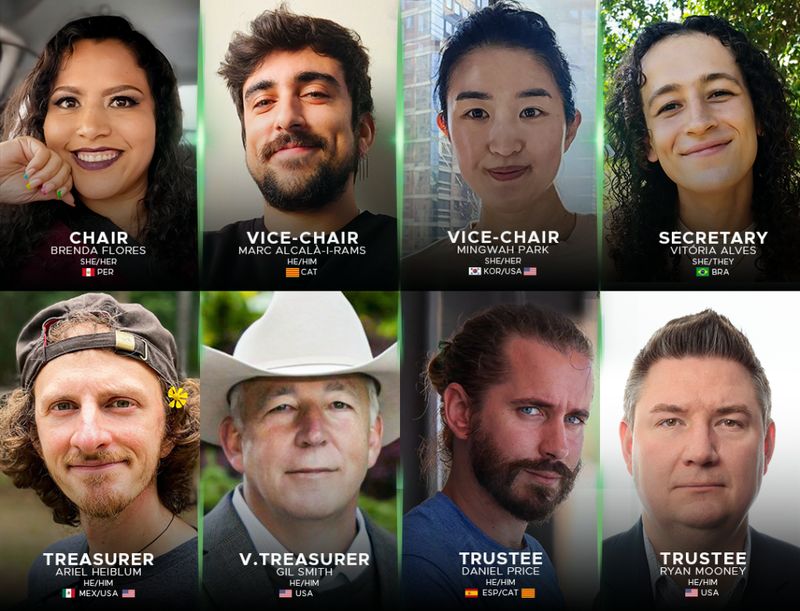
The board’s composition changed after the Annual General Assembly held on February 24, 2024, when the IQA later welcomed two new trustees, Daniel Price and Vitória Alves, in an April 7 announcement. The board then allocated responsibilities among six members. That is a reminder that the IQA’s leadership is built to refresh itself, not freeze in place.
Chair Brenda Flores captured that shift in her 2024 report when she said she was “incredibly excited to have been elected chair of the IQA.” That kind of turnover matters because the board is the sport’s top authority. When trustee seats change, the people steering policy, organizational priorities, and international standards change with them.
How events get decided
The IQA does not just govern the sport on paper. LinkedIn’s description says it annually hosts or sanctions around 25 events, including nine regional championships and the World Cup. Those numbers show how wide the federation’s calendar has become, and why operational decisions cannot be improvised country by country.
The World Cup is the clearest example. The IQA says its World Cup is open to elite international competition teams selected by eligible National Governing Bodies, which means qualification starts with national-level recognition. In 2023, the event was held in Richmond, Virginia, and the IQA said the United States national team won the title. Search results for that tournament show 15 teams from countries around the world, including Africa, Australia, Austria, Belgium, Brazil, Canada, England, France, Germany, Hong Kong, India, and Japan. That is the practical payoff of the governance ladder: a local team does not reach the World Cup by accident, but by moving through the body that recognizes its country.
Why the name change still matters
The IQA’s authority also extends to branding and identity. On July 19, 2022, the association said it would join US Quidditch and Major League Quidditch in changing the name of the sport from “quidditch” to “quadball” worldwide. Contemporaneous reporting linked the shift to distancing the sport from J.K. Rowling’s views on transgender issues and to avoiding trademark issues with Warner Bros.
That decision was more than a rebrand. It showed that global governance in quadball includes how the sport presents itself to players, sponsors, and the public. When the IQA changes the name worldwide, it is not polishing a logo. It is setting the frame that every member, team, and tournament has to operate within.
The upshot is simple: quadball’s chaos is real, but so is its hierarchy. Clubs feed into national bodies, national bodies feed into the IQA, and the board, departments, and trustees turn that network into rules, eligibility, and events that can actually be enforced on the pitch.
Sources
- [1]iqasport.org
- [2]usquadball.org
- [3]linkedin.com
- [4]reuters.com
- [5]npr.org
- [6]bbc.com