IQA Continental Games define quadball’s path between World Cups

The IQA Continental Games are not filler between World Cups. They are the sport’s clearest development tier, the place where national and regional programs get meaningful international games, test roster depth, and build the legitimacy that turns a promising group into a real contender.
How the calendar is built
The IQA places the Continental Games in the years between World Cups, so the global championship does not stand alone as the sport’s only true measuring stick. That structure gives federations a regular target to chase, and it gives players a level of competition that still feels consequential even when a World Cup is not on the calendar.
The bidding family now centers on the IQA European Games 2028, Pan-American Games 2026/8, Oceanian-Asian Games 2026/8, and World Cup 2027/9. The manual also says these events are generally intended to run across three consecutive days between June and October, ideally from Friday to Sunday. That time frame matters because it makes the tournaments compact enough for national federations to plan around, while still giving them the prestige of a major international window.
The same manual adds a governance detail that explains why the whole system works geographically as well as competitively. The IQA allocates continental regions based on factors such as team density and reasonable travel distances, which helps keep participation practical for programs spread across large landmasses and different funding realities. In other words, the continental map is not arbitrary; it is designed to make travel, budgeting, and field size manageable for a developing international sport.
Europe shows how the model scales
The European Games provide the cleanest case study in how the continental tier grows with the sport. The manual lists Sarteano in 2015, Oslo in 2017, Bamberg in 2019, Limerick in 2022, London in 2024, and Salou in 2026 as host cities, a sequence that tracks the event’s movement from early European staging to a wider regional anchor.
London’s 2024 edition gives the strongest snapshot of scale. It drew teams from 15 European nations and more than 400 athletes and volunteers, numbers that matter because they show the Games are large enough to function as a serious regional gathering, not just a glorified exhibition. For a sport still building its international footprint, that kind of turnout creates something every national program wants: a benchmark it can point to when recruiting players, raising money, and arguing for support at home.
That is why Europe matters beyond its own bracket. When a continent can produce a tournament with 15 nations and hundreds of people in the event ecosystem, it becomes easier for smaller programs to see a route upward. The Games reward participation, but they also expose the gap between established nations and the ones still learning how to travel, roster, and compete at a higher level.
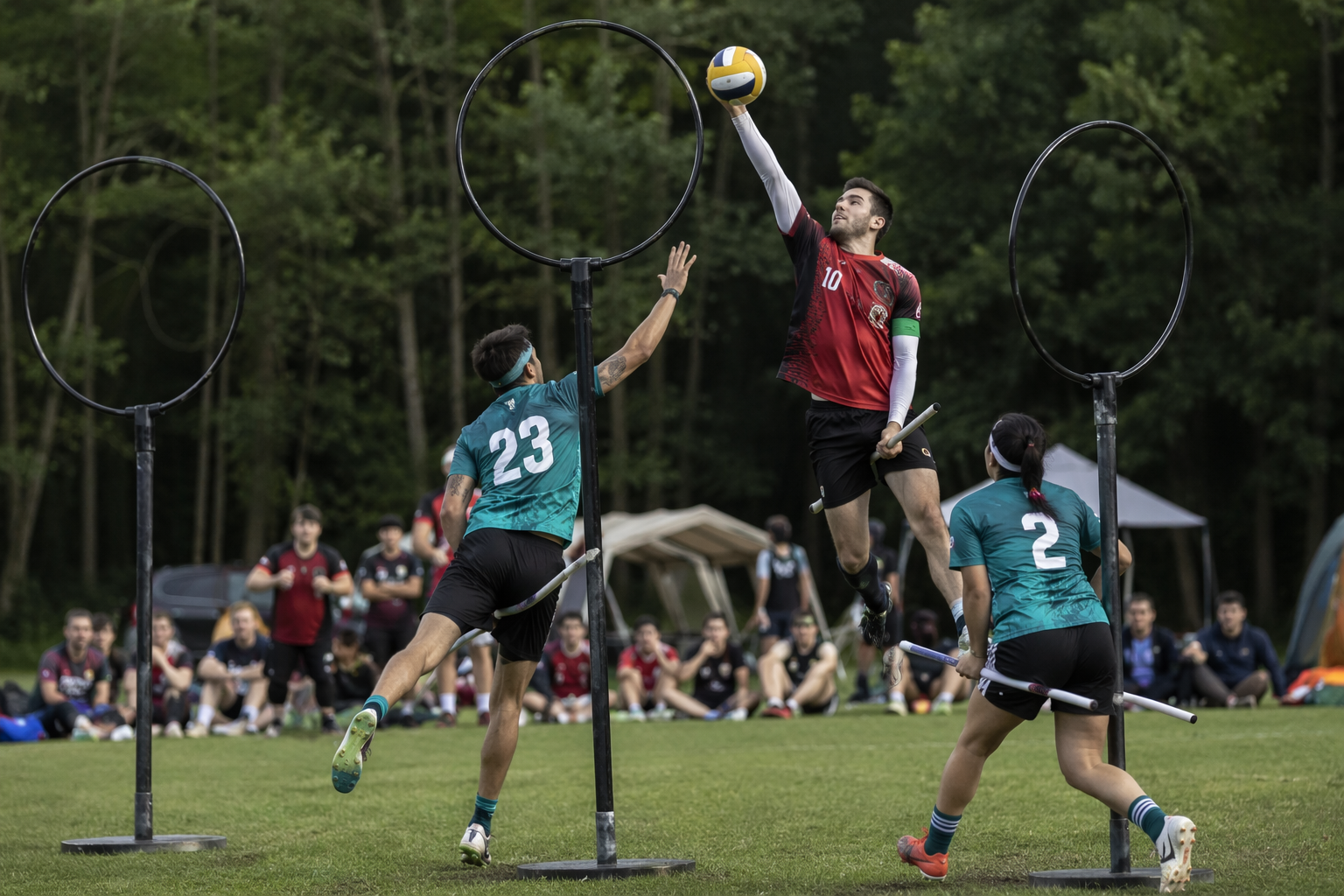
Pan-America shows what development looks like on the ground
The Pan-American Games are where the development argument becomes especially concrete. The manual identifies Richmond, Virginia, in 2019 and Lima, Peru, in 2022 as previous hosts, giving the competition a footprint that already reaches both North America and South America. That matters because the Pan-American pathway is not built around a single center of power; it is meant to connect federations across a vast and uneven regional landscape.
The IQA expects five to ten teams to represent North and South America in the third and fourth editions. That range signals a tournament that is still manageable in size but serious enough to shape the region’s hierarchy. It also gives national programs a realistic expectation of where they fit, whether they are established teams aiming for regional dominance or newer nations trying to close the gap.
The most revealing detail in the Pan-American section is that nations may field regional teams. That rule exists to create more balanced competition and development for both established and emerging nations, and it says as much about quadball’s priorities as any trophy format could. A regional team can give players from smaller markets or newer federations the chance to play meaningful international matches sooner, which is exactly the kind of experience that shortens the distance from hopeful to credible.
Why the bridge matters
This is where the IQA Continental Games become more than a tournament schedule. They function as the sport’s growth engine by giving countries a stepping-stone before the World Cup, while still preserving regional identity and competitive pride.
The value is practical as much as symbolic. A program that can survive three days of high-level regional play, manage travel, and field enough depth to stay competitive is better prepared for the demands of a World Cup cycle. The Games also create a record of progression, with host cities, team counts, and player pools that show whether a nation is moving from participation to contention.
That is what makes the continental tier so important for quadball’s future. The World Cup may be the summit, but the Continental Games are the route that gets teams there, one regional test at a time.
Sources
- [1]iqasport.org