IRF builds global junior pathway through World Junior Championships
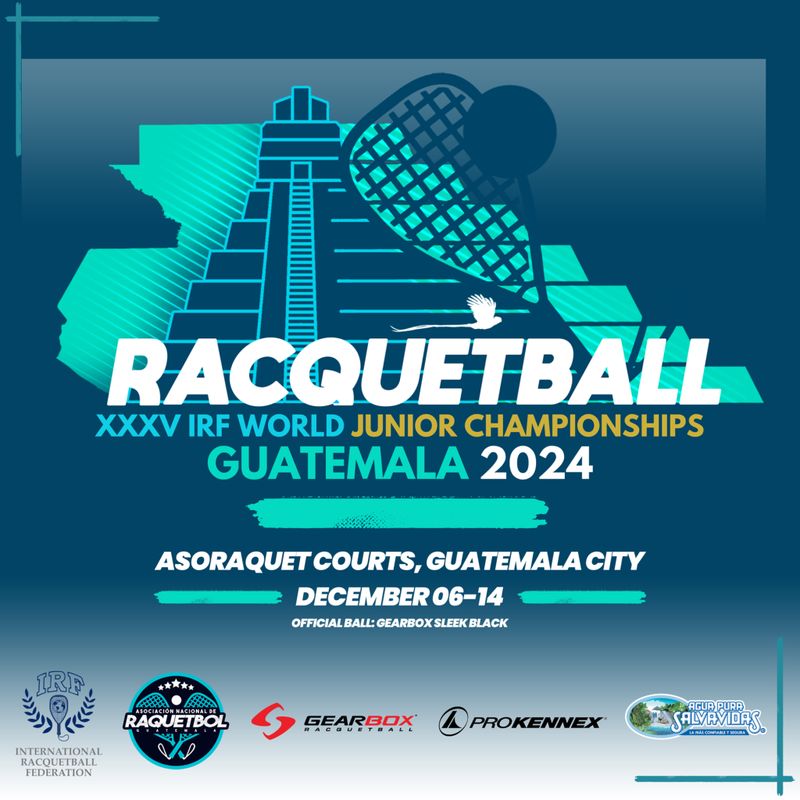
The biggest story in racquetball is not a single title run or one breakout star. It is the pipeline, and the World Junior Racquetball Championships sit at the center of it, feeding national teams and future pro-level contenders through a structure that is both global and brutally specific.
The federation built the ladder first
The International Racquetball Federation was formed in 1979 with 13 national federations across four continents, then expanded to more than 70 countries. Racquetball was part of the World Games from the first edition in 1981, and the federation was later recognized by the International Olympic Committee in 1985. That history matters because the junior championship is not a side project bolted onto the sport, it is the age-group extension of an international system that already had reach before most junior programs even existed.
The IRF lists the Junior World Championships as a yearly event for athletes ages 10 through 21. That makes it racquetball’s most important recurring development ladder, not a one-off showcase built around a single crop of talent. When federations plan junior teams now, they are not just chasing medals in one age bracket, they are building players who can be tracked, tested, and advanced year after year.
The 2025 format shows exactly how the sport develops players
The 2025 World Junior Racquetball Championships ran December 5-13 in Santo Domingo, Dominican Republic, and it was the 36th edition of the event. Eligibility was based on age as of January 1, 2025, which keeps the field aligned to a clean cutoff and makes the age categories easier to manage across borders.
The tournament split into two distinct tracks. The World Cup covered the 21U, 18U, and 16U divisions for boys and girls, while the Esprit Cup covered the 14U, 12U, and 10U groups. In the World Cup, each country could enter up to two singles players and one doubles team per division. In the Esprit Cup, the field widened, with up to six singles players and up to two doubles or mixed doubles teams per division.
That difference is the point. The older divisions are selective, where national federations are sorting out who can survive pressure against the best juniors in the world. The younger divisions are broader, designed to get more kids on court, into the international environment, and into the habit of playing under a flag instead of just in local age-group brackets.
Why the match count and medal structure matter
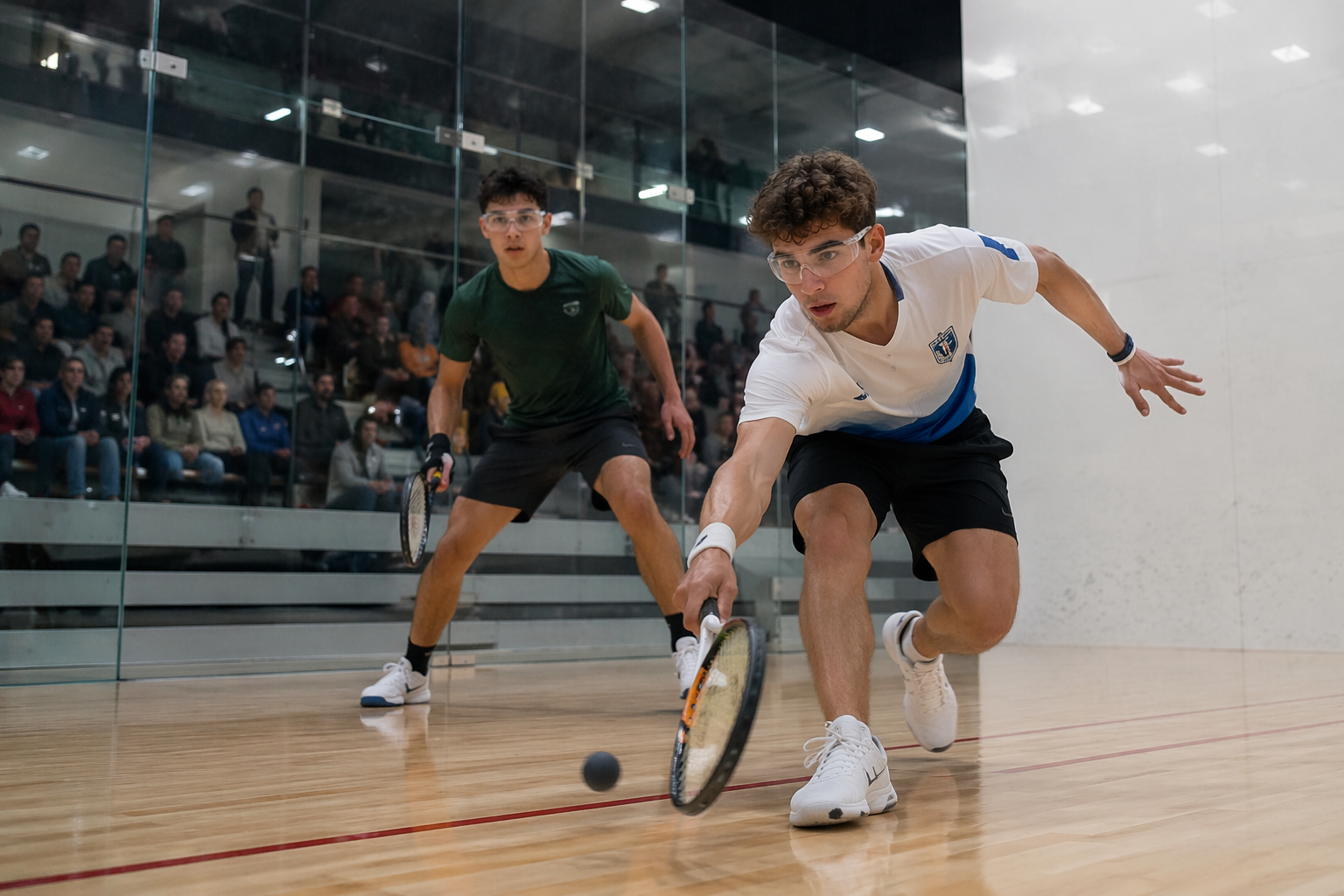
The IRF rules require players to compete in at least three matches in each category unless a bye or forfeit counts as played. That is a small line in the rulebook with a big developmental effect: a country does not get much value from sending a single hot hand and hoping for a clean bracket. It has to build depth, because the event is set up to reward repeated competition, not one lucky draw.
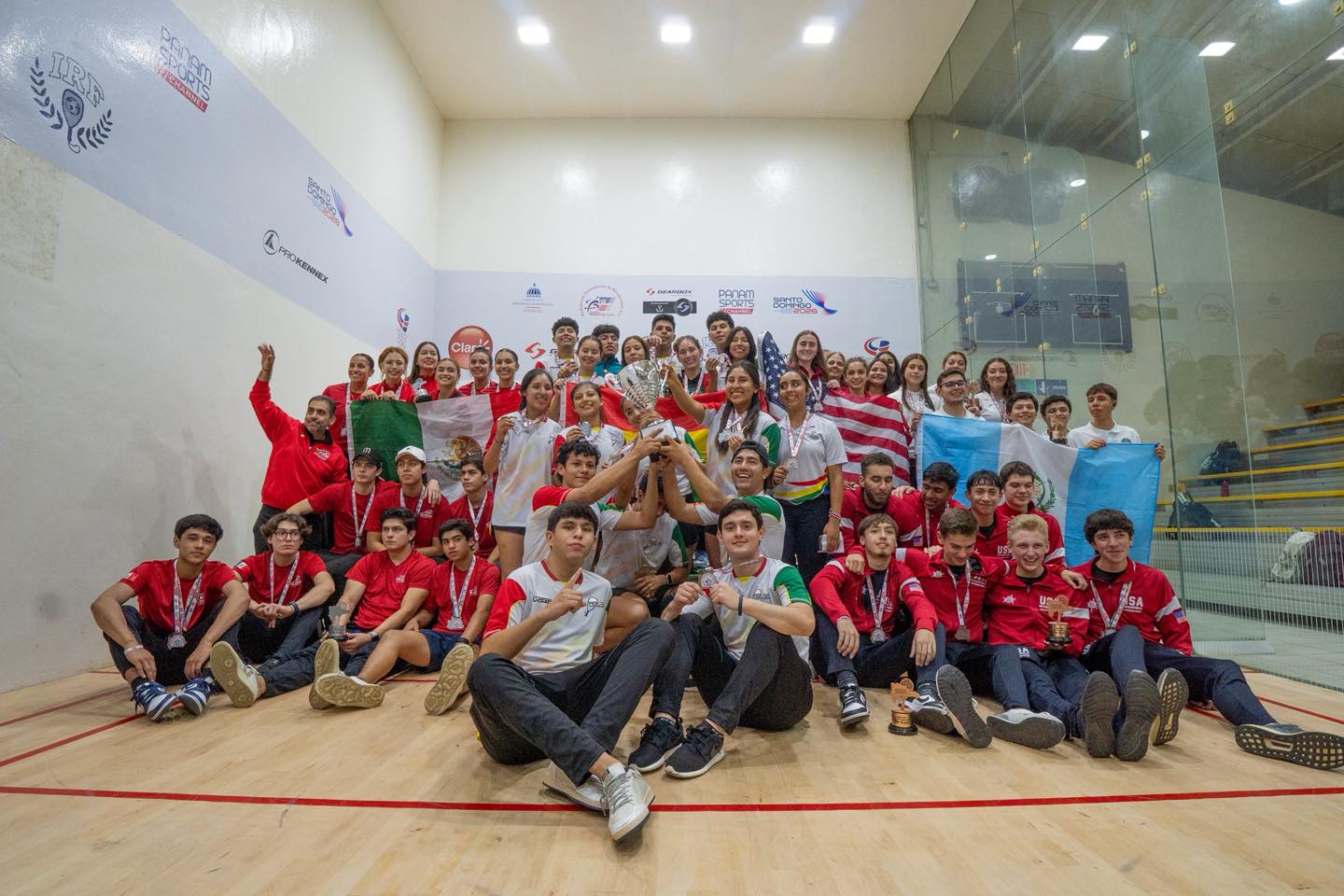
The medal format reinforces that same logic. Singles and doubles award gold, silver, and bronze, with two bronze medals handed out to the semifinalists. Country teams also play for trophies, with the top four places recognized, and the winning country keeps the team cup for the year and must bring it back to the next Junior Worlds. That creates a visible handoff from one edition to the next, and it gives federations a reason to think in cycles, not in isolated trips.
The numbers show where the strongest junior pipelines are right now
The field in Santo Domingo was not symbolic or lightly attended. Panam Sports put the 2025 championship at 253 athletes from 15 countries, while the 2024 event in Guatemala City drew 254 athletes from 13 countries. Those are solid, continent-spanning fields for a junior event, and they show a sport with enough volume to separate the countries that merely participate from the ones that produce.
The 2025 entries also told the competitive story inside the tournament. Bolivia sent 55 athletes, Mexico 43, and the United States 33. Those numbers matter because they show where the deepest junior systems currently sit, and they explain why team results in this event often reflect national development strength more than one-off individual brilliance.
The archive behind the event tells the same story of continuity. Recent editions have been staged in Santo Domingo, Guatemala City, Tarija, San José, San Luis Potosí, Minneapolis, Los Angeles, Cochabamba, and Tempe. The record stretches back at least to 2006, which gives the championship a real institutional memory. National federations treat that kind of continuity as a benchmark because it lets them compare one junior class against the next, one cycle against another.
The junior stage has already produced senior-level proof
Michelle Gould is one of the clearest examples of why federations invest in this pipeline. Her IRF Hall of Fame biography says she won her first national title at age 12 and made the adult national team at 13. That is not a vague story about youth success someday leading somewhere. It is direct evidence that racquetball can identify elite talent early, then push it into adult competition before most sports would even consider the transition.
That is what the junior world event is built to do. It gives federations a place to find players early, measure them against international peers, and move them into national-team consideration while they are still in age-group development. For a sport with a relatively compact global footprint, that kind of fast identification is not optional. It is the engine.
The event also sits inside a larger international calendar
Junior Worlds do not exist in isolation from the rest of the sport’s competitive structure. The IRF also places racquetball in major multi-sport events including the World Games, the Pan American Games, the Central American Games, the South American Games, the Bolivarian Games, and the Central American and Caribbean Games. The 2025 World Championships in San Antonio also served as a qualifying event for The World Games Chengdu 2025, which shows how junior and senior pathways both feed into the same international ecosystem.
The Santo Domingo championship had a support base to match that role. Panam Sports said the event would be broadcast on the Panam Sports Channel, giving the junior field a public stage beyond the venue. The IRF’s wrap-up also credited the Dominican Racquetball Federation, the Dominican Republic Ministry of Sport, Claro Dominicana, the Dominican Olympic Committee, Centro Caribe Sports, Gearbox Racquetball, ProKennex, and more than 30 IRF staff working across 10 days. That is what a serious development event looks like when a sport treats its youth bracket as a national-team incubator, not a placeholder.
The World Junior Championships work because they force the next generation to play in a system that already feels like elite sport: travel, pressure, quotas, team points, and real consequences. In racquetball, that is where the future is being sorted out.