IRF court specs define racquetball’s exact playing environment
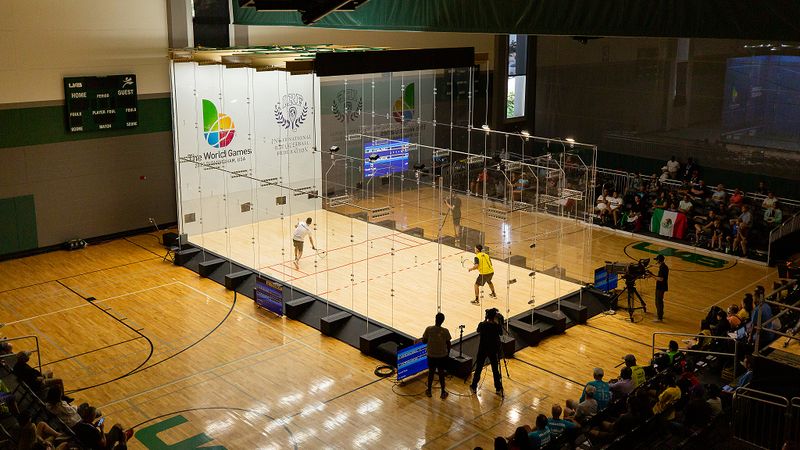
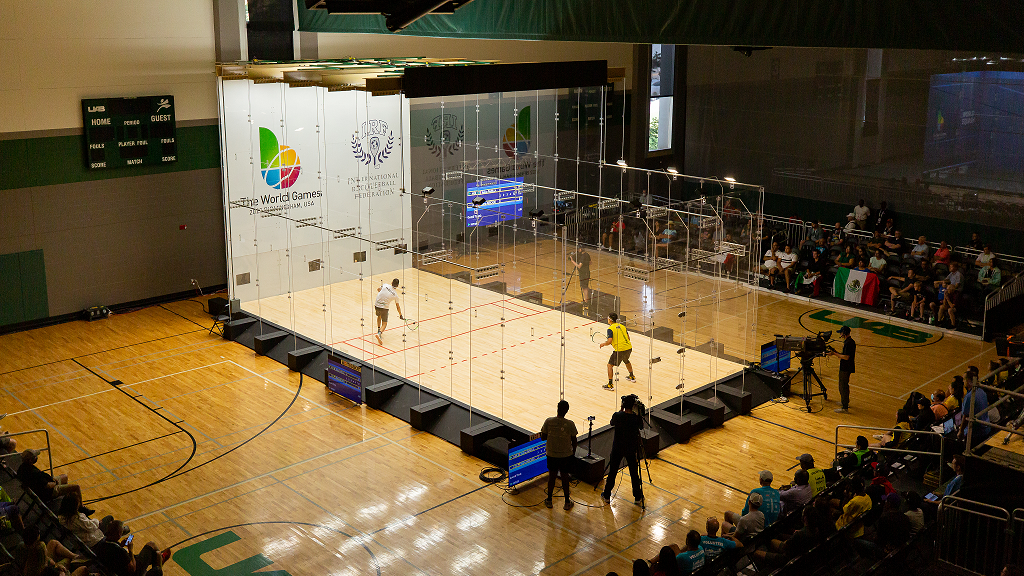
A standard indoor racquetball court measures 20 feet wide, 40 feet long, and 20 feet high. The International Racquetball Federation treats that box as a controlled playing environment, and its specifications are written to keep that space comparable from club to club and from country to country.
Why the measurements are only the beginning
The IRF court-specifications document exists to ensure comparability of recommended courts, guide manufacturers and builders, and give an IRF official a basis to inspect and certify compliance. That language turns a court into a certifiable object: not just “close enough” to regulation, but exact enough that players can trust the same geometry everywhere.
Rebound geometry shapes every shot. If the front wall responds differently, if the side walls deaden the ball, or if the floor changes how the ball skips and settles, the rally changes with it. Racquetball rewards players who can judge pace, spin, and depth instantly, so even small deviations in construction can alter safety and strategy.
What the specs actually cover
The IRF’s specifications go well beyond dimensions. The document’s sections include dimensions and tolerances, court markings, walls, the door, the floor, lighting, and environment.
Each of those elements affects live play in a different way:
• Dimensions and tolerances determine whether the court preserves the standard playing box or quietly drifts out of it.
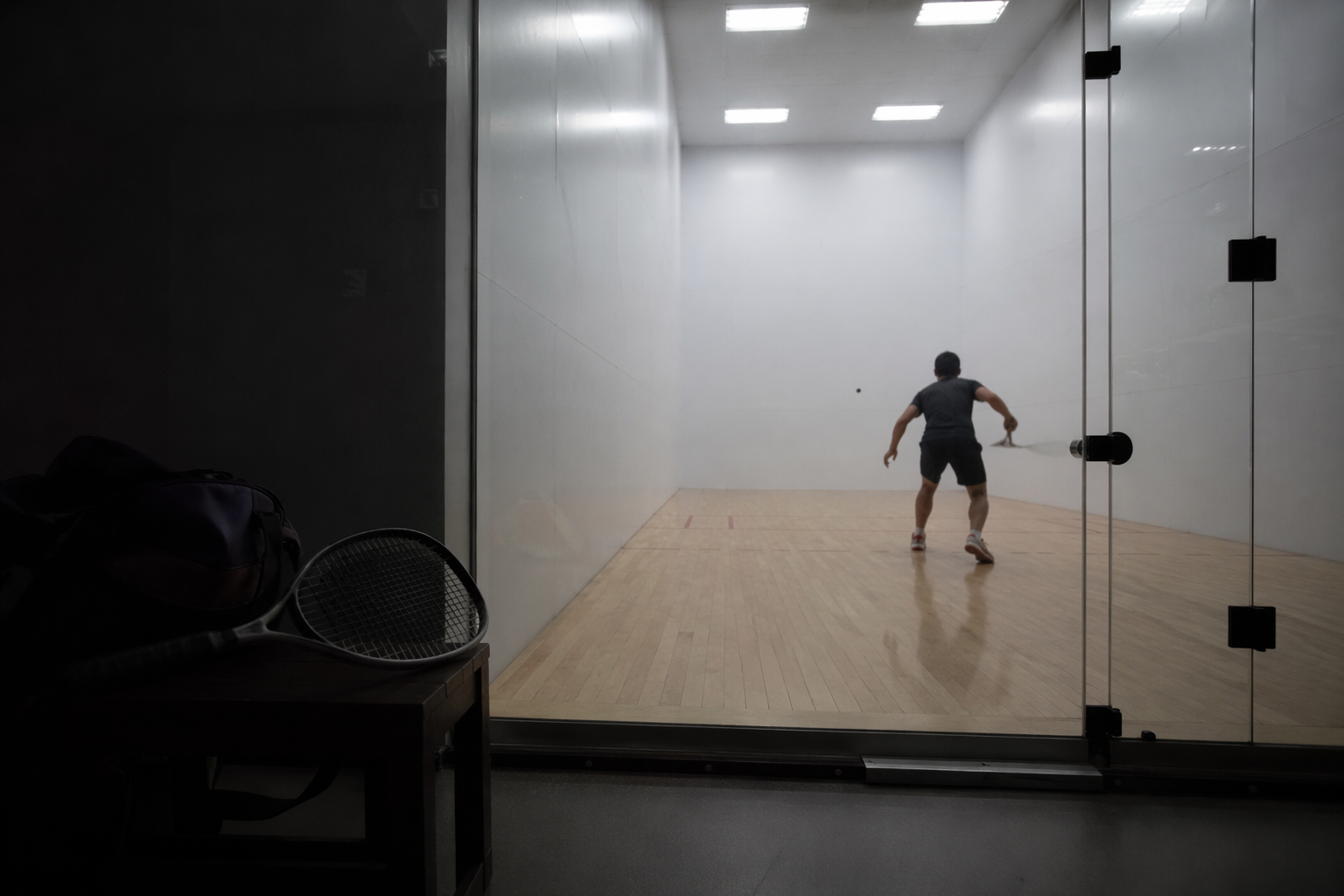
• Court markings have to be placed precisely so players and officials can read the court correctly during a rally.
• Wall surfaces shape rebound speed and consistency, which directly changes shot selection and reaction time.
• The door must fit the court design without creating unsafe or inconsistent dead space.
• The floor has to support predictable bounce and footing, since slip, skid, or uneven response can change both safety and shot execution.
• Lighting affects tracking, especially on fast drives and quick changes of direction.
• Environment matters because the playing space has to function as a coherent indoor system, not just a room with walls.
Why older and improvised courts fall short
Racquetball is especially vulnerable to improvised construction because the sport depends on the walls returning the ball in a repeatable way. Older facilities often show their age first in wall response, floor consistency, and lighting, and those flaws can make the same shot behave differently from one end of the court to the other.
The older the venue, the more likely it is that minor deviations have accumulated: a floor finish that no longer plays evenly, lights that create shadows or glare, or markings that no longer read cleanly at speed. In a sport where players react in fractions of a second, those issues change what can be attacked, what can be defended, and how safe the court feels for full-speed play.
A standards document with a long paper trail
The IRF court-specifications PDF carries copyright dating to January 13, 1983, with revisions in 1988, 1997, 2013, and 2014.
USA Racquetball has its own parallel construction history. Its approved standard court-construction document was approved January 19, 1983 and revised April 11, 2007. Even the rulebook remains active; its most recent version includes seven rule changes passed by the USA Racquetball Board of Directors in July 2023.
Indoor standard, outdoor variation
The official indoor court is the governing model, but racquetball is not locked inside it. The sport is generally played indoors, while outdoor racquetball also exists, and outdoor courts generally do not have ceilings or backwalls.

That difference matters because the indoor court’s ceiling and backwall are part of the sport’s geometry. Remove them and you alter shot selection, defensive positioning, and the entire rhythm of the rally. USA Racquetball’s separate outdoor rules reflect that architectural shift: outdoor play is still racquetball, but it is played in a different physical problem set.
Certification is part of the competition structure
The IRF’s emphasis on inspection and certification means court specs are not merely technical paperwork. They are part of how official play is validated. For a host, that affects whether a facility is truly sanction-ready; for a builder, it affects how a project is designed from the start; and for a player, it affects whether a match will feel like the standard game or something improvised.
The sport’s future still runs through the court
In an April 29, 2022 letter, USA Racquetball and the IRF jointly stated that they wanted racquetball included in the LA 2028 Sports Programme.
In 2026, USA Racquetball announced that Glass Court Swim & Fitness in Lombard, Illinois, returned eight courts to Chicagoland.