IRT and LPRT keep racquetball’s pro tour alive worldwide

Racquetball’s pro game survives by dividing the labor. The International Racquetball Tour carries the men’s side with a global calendar, a stable set of headline players, and a streaming product built for die-hard fans, while the Ladies Professional Racquetball Tour supplies the women’s rankings, open access to Tier 1 competition, and the personal, courtside experience that keeps the sport feeling immediate.
The men’s tour supplies the headline names and the global map
The IRT describes itself as the leading professional racquetball organization for men’s competition, and its 2026 calendar already stretches beyond the United States with stops in Costa Rica and Mexico. That matters because the men’s circuit is not just a domestic ladder, it is one of the places where racquetball still looks international in real time.
The current player group shows that mix clearly. Kane Waselenchuk remains the biggest name, but the tour also features Conrrado Moscoso, Andres Acuna, Jake Bredenbeck, Rodrigo Montoya, and Jhonatan Flores, with first appearances ranging from 2000 to 2022. That spread gives the circuit a rare blend of staying power and turnover: veteran relevance at the top, newer international talent underneath, and enough continuity for fans to follow rivalries across seasons.
The IRT’s structure also solves a visibility problem that has haunted smaller pro sports. When live matches are not available, the tour’s archive, second-court stream at select tournaments, and behind-the-scenes content keep the action present rather than lost to time.
The IRT Club turns matches into a year-round product
The IRT Club is built as an all-access pass, and the pitch is unusually concrete. For $15 per month, subscribers get live-streamed matches, behind-the-scenes content, partner discounts, a second-court stream at select tournaments, and the full IRT archive. That archive is more than a convenience feature, because it preserves past tournaments, iconic rivalries, and legendary performances in a sport that cannot afford to let its biggest moments disappear after the final rally.
That subscription model is part of the tour’s survival logic. Racquetball does not live on national television scale or permanent mainstream attention, so the men’s tour has to create its own continuity. The IRT Club does that by turning a scattered schedule into something fans can revisit, study, and share, which matters for both the core audience and the next generation of players trying to understand what elite racquetball looks like.
The women’s tour adds credibility, access, and competitive meaning
The LPRT describes itself as the official governing body of women’s professional racquetball, and it frames the women’s tour as event-driven rather than ornamental. Its players travel city to city, represent more than a dozen countries, and include students, mothers, coaches, lawyers, doctors, and television personalities. That range is not just colorful background. It shows a circuit that depends on breadth, not a single star type, and it helps explain why the women’s tour has remained central to the sport’s identity.
The LPRT also says all female racquetball players may compete in Tier 1 or higher events without restriction. That open structure gives the tour a broader funnel than many niche sports can manage, because it keeps the pathway into elite play more visible and less closed off. For fans, it creates the possibility of surprise entrants and shifting fields. For the sport, it keeps the ladder from narrowing too early.
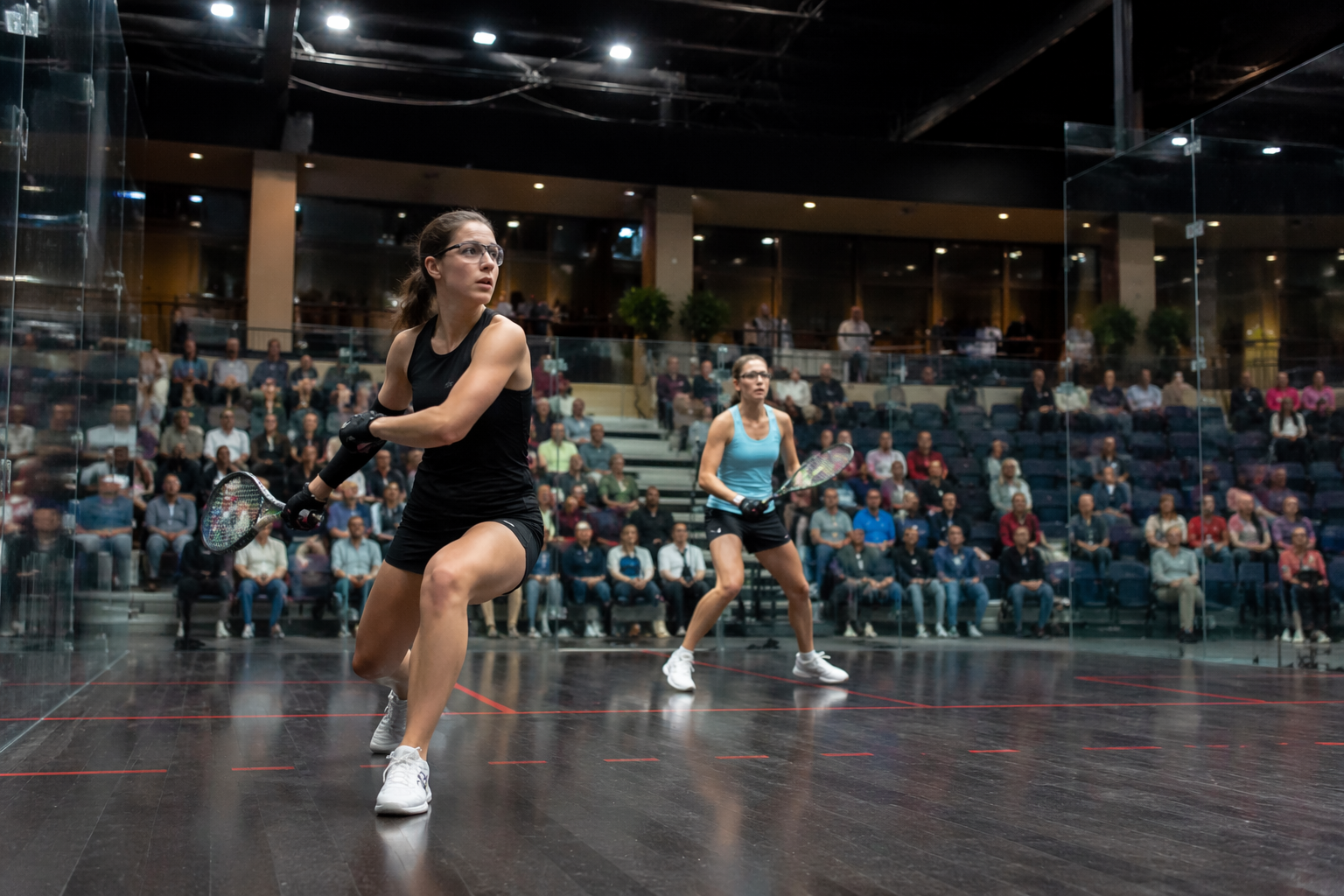
The women’s circuit also offers the kind of event experience that makes racquetball feel close-up and lived-in. Courtside views, VIP events, and chances to meet the pros turn tournaments into personal encounters rather than distant broadcasts. In a sport built around indoor intensity and short sightlines, that access is not a bonus feature. It is part of the product.
The rankings show a global women’s field with real movement
The current LPRT singles rankings place Maria Jose Vargas at No. 1, Paola Longoria at No. 2, and Montse Mejia at No. 3, followed by Valeria Centellas and Natalia Mendez among the top names. The list tells you as much about the sport’s geography as its hierarchy. The women’s field remains highly international, and that global spread is one reason the tour continues to matter beyond one market or one dominant country.
Longoria’s numbers underline the women’s tour’s historical depth and current relevance. She finished the 2024-2025 season with her 14th season-ending No. 1 ranking and was named Athlete of the Year. Her March 2025 Boston Open win was her 122nd tour victory, a milestone that places her among the defining figures in the sport’s professional era.
History shows why the archive is not optional
Racquetball’s present pro structure makes more sense when placed against its record book. USA Racquetball’s history shows the first NRC pro stop took place September 27-30, 1973, in Houston, Texas, and that the World Professional Racquetball Tour governed the 1988-89 season. The same archive notes that the 12th Annual Long Island Open in 1989 drew 967 players in 39 categories, a scale that reminds you how wide the sport once reached.
The organization’s magazine archive, dating back to 1972 and 1973, gives the sport something many small professional leagues lack: memory. That record-keeping matters because the current tours are not just staging matches, they are preserving lineage. A sport with this footprint needs proof that its competitive history did not start with the last streaming link.
Why each tour needs the other
The IRT and LPRT fill different gaps, and that is exactly why they function as a minimum viable ecosystem. The men’s tour brings marquee players, global stops like Costa Rica and Mexico, and a content library that keeps matches alive after the event ends. The women’s tour brings official governance, open pathways into Tier 1 play, rankings that carry weight every week, and the kind of courtside access that keeps fans close to the action.
If either side weakens, racquetball loses more than balance. It would lose some of its international reach, some of its archive, some of its credibility, and a chunk of the year-round attention that separates a living pro sport from a memory. The tours do not simply coexist. They keep the sport visible enough for fans, sponsors, and future players to believe it still has a pulse.
Sources
- [1]irttour.com
- [2]lprtour.com
- [3]usaracquetball.com