Izell Reese powers NFL FLAG growth as flag football heads to Olympics
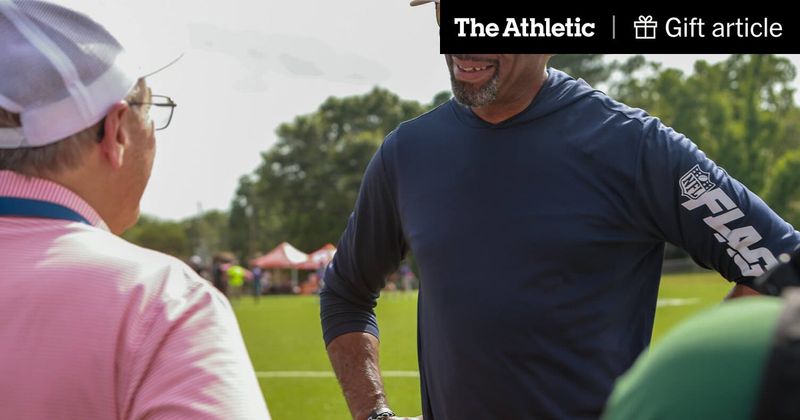
Izell Reese has built NFL FLAG into something bigger than a youth league. As founder and CEO of RCX Sports, the former Cowboys and Bills defensive back now runs the official operating partner of NFL FLAG, shaping league operations, event management, and community outreach while the sport’s path to Los Angeles 2028 opens wider.
Reese’s playbook is built for scale
Reese launched RCX Sports in 2019, and the company’s job is not symbolic. It sits inside the machinery of the sport, supporting local leagues, tournament play, and growth for younger players, with a clear emphasis on girls’ participation. That matters because flag football’s rise is no longer just about pickup games and school recess. It now depends on consistent branding, reliable coaching, better event production, and a system that can turn scattered participation into a recognizable pipeline.
His background helps explain the style. Reese came out of the Cowboys’ high-pressure culture and spent seven NFL seasons with Dallas, Denver, and Buffalo, which means he understands how elite teams package standards, identity, and repetition. That is the same logic now showing up in NFL FLAG: a national brand with local access, structured events, and a youth experience designed to feel more like a real sports ecosystem than a one-off camp.
LA28 gives the sport a deadline and a destination

Flag football’s Olympic debut at Los Angeles 2028 changed the conversation from growth to legitimacy. The IOC Executive Board approved the Olympic qualification system on February 1, 2026, and the route to LA28 guarantees the United States automatic qualification in both the men’s and women’s events as the host nation. That gives American players a home-field advantage before a snap is even taken in Olympic play.
The U.S. arrives at that stage with real credentials, not just reputation. Olympics.com describes the United States as the pre-eminent nation in flag football, noting that Team USA has won the last four men’s world titles and took gold at the 2022 World Games behind quarterback Darrell “Housh” Doucette. That record gives Reese’s growth push a built-in standard: he is not trying to invent interest from scratch, but to organize a sport where the U.S. is already expected to contend for gold.
The numbers show a sport moving out of the margins
The growth curve is hard to ignore. The NFL said about 4.1 million youth now play flag football in the United States, a jump of more than 50% since 2020. The same league said flag football is now offered at the high school level in 39 states, and the number of young women playing on high school teams increased by nearly 60% from 2024 to 2025. Those are not niche indicators. They show a sport spreading through schools, clubs, and local recreation systems at the same time.
NFL FLAG’s own footprint reinforces that scale. In 2025, 827,322 players ages 5 through 17 took part in NFL FLAG leagues, a 35% increase from two years earlier. In 2024, the regional tournament circuit drew more than 800 teams representing all 32 NFL clubs, and that pathway led to the first televised NFL FLAG championship at the Pro Football Hall of Fame, with coverage on ESPN, NFL+, and Disney+. The sport is now operating on the logic of major properties: regional qualifiers, national finals, and broadcast windows that create stars and storylines.

The business case is getting broader, faster
The commercial interest around flag football is expanding beyond youth registration counts. The NFL’s 2026 push into a professional flag football league drew investment names that carry weight far beyond football, including Billie Jean King, Ilana Kloss, Alex Morgan, and Serena Williams. That kind of backing signals that flag football is being treated as a growth asset across sports, media, and women’s athletics, not just as a feeder for traditional football.
Reese’s own public comments on collegiate growth point in the same direction. As women’s flag football advances at the college level, he has said, “Women’s flag football is experiencing extraordinary growth at the collegiate level, and this recommendation is another major step toward achieving NCAA championship status.” That framing matters because it shows how the sport’s future is being built on multiple tracks at once: youth leagues, high school programs, college opportunities, and eventually the Olympic stage.
The larger cultural shift is that flag football is no longer selling itself as a softer version of tackle football. It is becoming its own system, with its own access points, its own event pipeline, and a growing role for girls and young women. Reese is helping translate NFL culture into infrastructure, and that is why NFL FLAG now looks less like a branded side project and more like the sport’s most important development engine.