Joe Sobek ball marks racquetball's leap from idea to sport
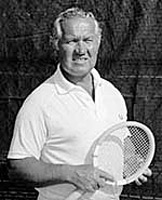
Racquetball did not begin with a polished commercial product. It began with Joseph Sobek trying to solve a very simple problem: how to make an indoor game feel consistent enough to play, teach, and repeat. The ball that followed, the Joe Sobek ball, was developed soon after he invented the sport, used by players in the first years of racquetball in the 1960s, and rare enough now that the US Racquetball Museum says there cannot be more than a dozen in good condition.
The ball that made the game repeatable
Sobek invented the modern game in Greenwich, Connecticut, after growing tired of the indoor sports available to him. He was already a professional tennis and handball player, and in 1950 he had 25 prototype racquets made to promote the new sport at the Greenwich YMCA. The game was first called paddle rackets, which is a useful reminder that racquetball did not arrive as a finished product. It was assembled, tested, and adjusted until the equipment and the court started speaking the same language.
That is why the ball matters so much. In a sport built on wall rebound, court pace, and touch, the ball is not a side detail. It controls how fast a rally breathes, how sharply angles open up, and how much confidence players have in what a shot will do after it hits the front wall. Sobek’s ball gave early racquetball something every young sport needs but rarely gets right away: a common standard. Without that, every court would have felt like a different game.
From prototypes to standardized gear
USA Racquetball’s history page lays out the equipment arc clearly. After many prototypes, the Joe Sobek ball was produced, and the racquet itself kept evolving, moving from a wood frame with a leather wrap grip to aluminum alloy, then fiberglass, then graphite composite. The milestones matter because they show racquetball’s early identity was built through hardware, not marketing. The sport became more playable and more repeatable every time the equipment became more reliable.
The timeline is specific. Aluminum alloy frames arrived in 1971. Fiberglass frames followed in 1972. Graphite frames came in 1979, and oversize frames landed in 1984. Those changes are easy to treat as equipment trivia, but they were part of the same leap the Sobek ball represented. Racquetball was moving from hand-crafted experimentation into a sport with recognizable, standardized gear that players could expect to feel the same from one match to the next.
That standardization is the bridge the Sobek ball built. It connected the first generation of paddle-racket experimentation to the later era of sanctioned play, official suppliers, and mass adoption. The ball was not just a prototype that happened to survive. It was the first essential piece of racquetball equipment that made the game feel real enough to spread.
Why Seamco mattered
The next step in that evolution came when the International Racquetball Association settled on Seamco. The US Racquetball Museum’s historical timeline says Seamco 444 became the official ball of the IRA in 1976. That decision did more than put a brand name on the ball. It unified competition. Once the sport had an official ball, players were no longer guessing whether the bounce on one court would match the bounce on another. That kind of consistency is what lets a sport travel.

The museum’s documents page points to the practical side of that transition. Its files include notes about ball breakage and the first contracts with Seamco, which tells you the shift to mass production was not cosmetic. Early racquetball had real equipment problems to solve, and the move away from the Sobek ball was not a rejection of it. It was the moment the sport needed a ball it could supply, regulate, and break down by the thousands without losing its identity.
The timing lines up with racquetball’s early growth. The first racquetball magazine appeared in November 1972. The first pro tournament followed in 1974. That same year, membership for sanctioned tournaments was set at $3 per year, and the number of amateur players in the United States jumped to an estimated 3 million. Then in 1976, with the game already expanding, the IRA made Seamco 444 its official ball. In 1979, the IRA renamed itself the American Amateur Racquetball Association, and the International Amateur Racquetball Federation formed with 14 countries. The sequence is the story: inventor’s ball, official ball, organized sport, international structure.
The rarest piece of racquetball history
The US Racquetball Museum calls the Sobek ball the “Holy Grail” of racquetball memorabilia, and the label fits because of scarcity as much as symbolism. There cannot be more than a dozen in good shape, which is why surviving examples carry so much weight. One of the first Sobek balls, along with Sobek’s original paddle racket, was recently donated by Joe Sobek’s daughter to the museum, a reminder that family-held artifacts have been crucial in preserving the sport’s earliest history.
That rarity also reflects how the ball was used. It was not designed to sit behind glass. It was used by all players during the first years of racquetball in the 1960s, which means the survivors had to outlast heavy play, breakage, and the sport’s rapid move toward better equipment. In that sense, the Sobek ball is less a relic than a stress test that passed history by surviving at all.
Why the origin still shapes the sport
Racquetball’s later growth made the early equipment story even more important. The museum says the sport reached about 10 million U.S. players and 14 million players in more than 90 countries during its late-1970s to early-1990s boom. That scale only happened because the game had enough structure for players to recognize what counted as racquetball from one gym to the next. The ball helped create that structure before the big numbers ever arrived.
The larger lesson is simple: racquetball has always been a gear-first sport, and the Sobek ball sits at the center of that identity. It turned an indoor concept into something playable, then helped push it toward standardization, sanctioned competition, and commercial supply. Every clean rally today still depends on the same idea Sobek was chasing in Greenwich, a ball that bounces the same way enough times to let the sport become itself.