JUCO coaching changes rise to 56, outpacing NCAA divisions

Junior-college basketball logged 56 coaching changes in HoopDirt’s 2026 tracker, a sharp rise from 39 the year before and a climb that moved against the rest of the college game. The count had already reached 34 by a May 14 update, showing how quickly the JUCO carousel kept turning as the offseason unfolded.
HoopDirt’s tracker covers head-coaching changes across NCAA Division I, Division II, Division III, NAIA and JUCO, and it adds moves only when they are official or confirmed. In that May 14 snapshot, Division I sat at 52 changes, Division II at 38, Division III at 34 and NAIA at 23. JUCO was still on the move after that point, finishing well above every other level in the tracker.
The spike matters because the NJCAA is built differently from the four-year game. The association launched competitive sport divisions in the early 1990s as several sports grew in popularity, and men’s basketball now has separate Division I, Division II and Division III championships and rankings. That layered setup creates more opportunities, but it also means more programs are constantly cycling through rebuilds, hires and roster resets.

The coaching turnover also fits the broader college-basketball shakeup driven by NIL and the transfer portal. Recruiting has become more fluid, roster management more fragile and job security more tied to how quickly a staff can replace players who move on. At the junior-college level, that pressure is amplified because so many programs are built around short timelines, quick development and rapid movement to the next level.

NJCAA basketball has been trying to steady that environment through its “Same Game, Same Rules” campaign, while eligibility reform has remained part of the conversation. On June 24, 2026, the NJCAA said the NCAA approved eligibility reforms for two-year college students, another sign that junior-college basketball is being forced to adapt while the market around it keeps shifting.
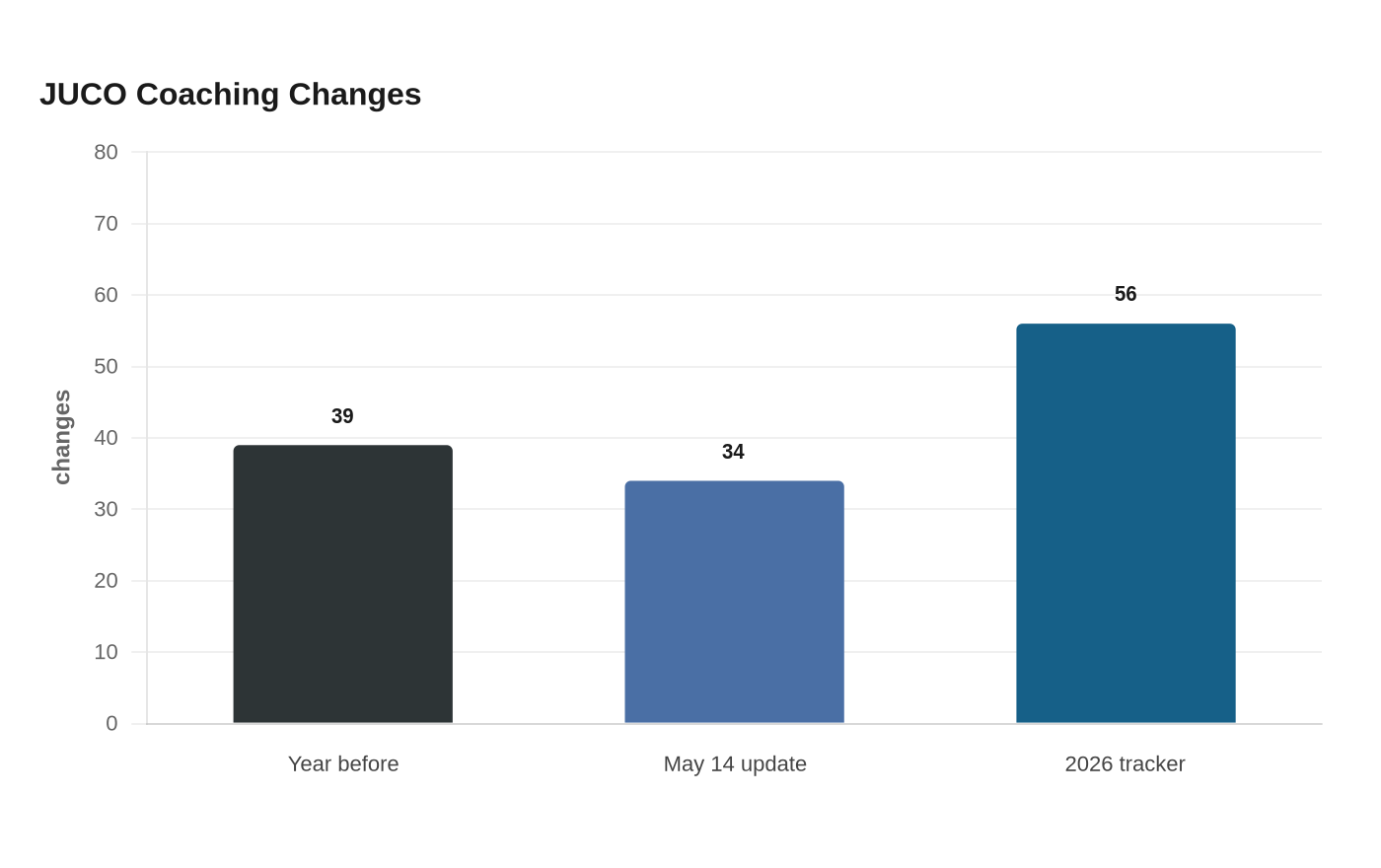
The bigger read from the 56-change total is not just churn for its own sake. It points to a junior-college coaching market shaped by upward mobility, roster volatility and the pressure to keep programs competitive in a transfer era that does not slow down for anyone.
Sources
- [1]x.com
- [2]hoopdirt.com
- [3]njcaa.org
- [4]hoopshq.com
- [5]etd.ohiolink.edu