Keele University hosts British Quadball Cup, where UK history began
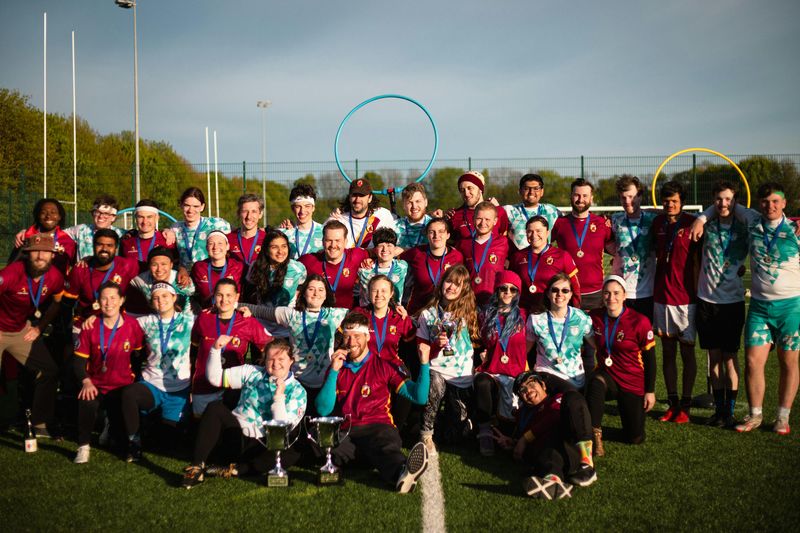
Keele University’s Sports Centre hosted the 10th British Quadball Cup on May 10-11, 2025, bringing Britain’s national championship back to the place QuadballUK identifies as the site of the first competitive quadball match played in the UK in 2011. The choice gave the tournament more than a venue. It tied the modern British scene to its starting point, at a time when the sport is still defining its scale, its rules and its public identity.
The setting fit the occasion. Keele University, founded in 1949 on a 620-acre campus in Staffordshire, has a Sports Centre with two sports halls that can be hired for tournaments and includes spectator galleries. That makes it a practical home for a championship, not just a symbolic one. QuadballUK’s event listing placed the British Quadball Cup 2025 at Keele University, Keele, ST5 5BG, and its recap later described the tournament at the Sports Centre, underlining how firmly the campus has become part of the sport’s national map.
Keele’s place in quadball history is older than the cup itself. University of Leicester Quadball Club’s history page says the Leicester Thestrals, formerly the Leicester Lovegoods, were involved in the first official match in the United Kingdom against the Keele Squirrels. QuadballUK says the organisation itself began in 2011 as a Facebook group built to help UK quidditch teams and players communicate and organise matches. The group later changed its rules framework, switching from the USQuadball rule set to the International Quadball Association version at the start of the 2017-2018 season, a sign of how the sport moved from early experimentation toward a more standardised competitive structure.
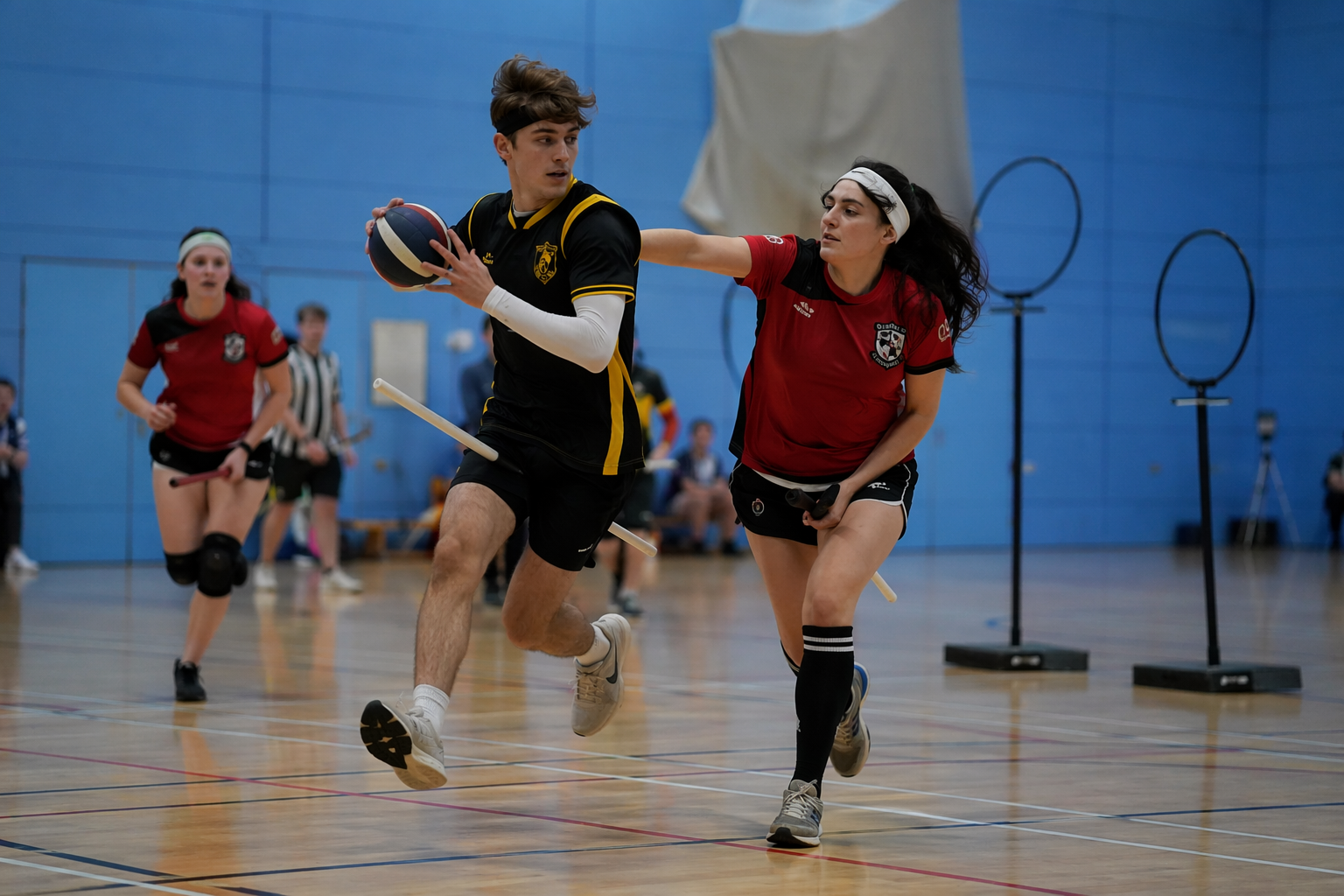
The 2025 championship also sat inside a much larger moment of change. QuadballUK’s 2024 annual report said the sport had shrunk to its smallest size since 2015, with community recruitment extremely limited and more than £25,000 in unpaid team and player fees outstanding from the 2023-24 season. Against that backdrop, Keele’s recurrence matters because it offers continuity in a system that has had to rebuild momentum. QuadballUK’s 2026 British University Quadball Cup recap said four university teams, with members representing eight universities, converged on Keele for the competition after the season was reformatted, showing the campus still drawing the sport’s next wave of players.
Keele endures because it is both origin and operating venue. The first match, the first national championship decade later, and the university competition in 2026 all point to the same truth: in a niche sport, legitimacy is built not only by trophies and rulebooks, but by places that keep proving they belong on the calendar.
Sources
- [1]quadballuk.org
- [2]keele.ac.uk