Kenneth Dobyns' championship career tracks ultimate's rise to dynasty sport
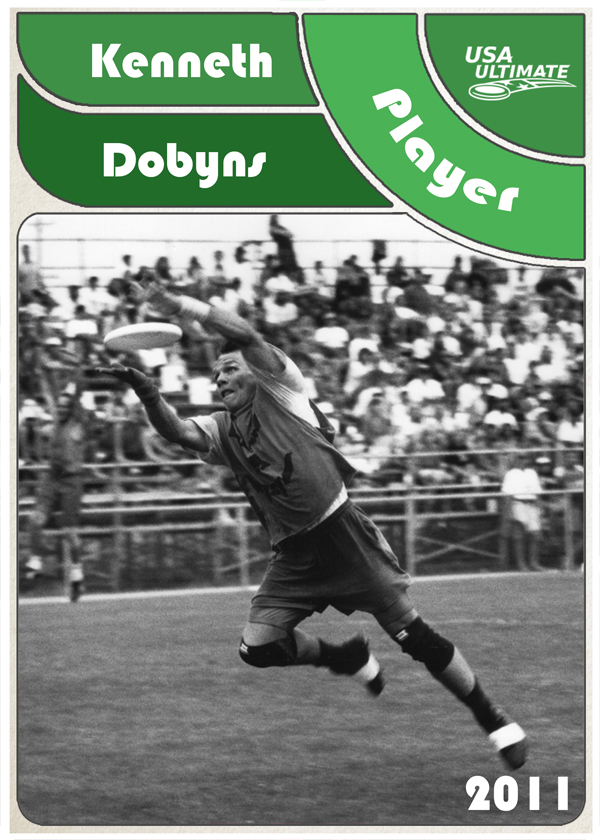
Kenneth Dobyns turns ultimate history into a championship map. The Ultimate Hall of Fame credits the Pawling, New York native with 7 U.S. Club Championships and 5 World Championships, a record that stretches from a runner-up finish in 1985 through a final world title in 2000. That span captures the moment club ultimate stopped looking like a college pastime and started behaving like a serious high-performance sport built on repeat excellence.
A résumé that defines an era
Dobyns is listed as a Class of 2011 inductee, and the Hall of Fame profile gives the kind of hard markers that make his career so useful for understanding ultimate’s rise. His U.S. club titles came in 1987, 1989, 1990, 1991, 1992, 1993, and 1999, while his world championship teams came in 1988, 1990, 1991, 1993, and 2000. That is not the profile of a short peak or a single breakout season; it is the résumé of a player who stayed central across multiple championship cycles.
The dates matter because they show how long elite teams could hold their edge in a sport that was changing quickly. From the late 1980s into 2000, ultimate got faster, more specialized, and more system-driven, and Dobyns was part of teams that kept winning through all of it. In any sport, that kind of staying power suggests more than talent. It points to a player who could fit, adapt, and help sustain a championship standard as the game evolved.
What the title run says about dynasty ultimate
Ultimate’s biggest titles are not won on talent alone. Club championships reward roster depth, chemistry, and the ability to perform over multiple weekends, while world titles add another layer by testing whether the same standard can travel beyond the domestic scene. Dobyns’ record shows how dynasty-level ultimate depends on continuity, because the same athlete kept showing up in title-winning groups across more than a decade.
That is why his career matters as a blueprint. The teams around him had to keep identifying talent, preserve a demanding culture, and maintain the same expectations even as opponents became more athletic and more organized. Later elite programs copied that template: build a core, keep standards high, and make the roster strong enough to survive the pressure of repeated championship runs.
The 1985 runner-up finish makes the arc even more instructive. It shows the climb before the run, then the sustained stretch of wins that followed from 1987 through 1993 and resurfaced again in 1999. For ultimate historians, that combination is the clue that separates a great player from a dynasty-builder. The sport’s defining figures are often the ones who keep returning to the final day, not just those who peak once.
How the Hall of Fame frame elevates his legacy

The Ultimate Hall of Fame exists to recognize the people who helped define the sport’s competitive history, and Dobyns sits squarely in that framework. His Class of 2011 induction places him among the players whose careers are used to explain what elite ultimate became before the sport’s modern expansion. In that sense, his profile is not just a record of trophies; it is a document of how ultimate chose to remember its own standard-bearers.
The Hall of Fame record also helps separate exceptional from merely accomplished. Seven U.S. club titles and five world titles are rare in any sport, but in ultimate they signal something even more specific: long-term relevance across shifting eras of play. A player who could win from 1987 all the way to 2000 belonged to more than one championship generation, and that is part of why his name still works as a benchmark.
The Dobyns family and the broader ultimate ecosystem
Kenneth Dobyns also sits in a Hall of Fame ecosystem that includes Brian Dobyns, a Class of 2019 inductee. Brian’s record shows 1 U.S. Club Championship in 1999, 1 U.S. Masters Championship in 1991, and 2 World Championships in 1990 and 2000, which makes Kenneth’s totals look even more extreme by comparison. The contrast is useful because it shows how ultimate honors players across categories, but still reserves a different kind of stature for a career built on repeated open-division dominance.
Brian Dobyns’ career also reflects the sport’s deeper culture of building, not just playing. A 2020 profile noted that he had been an earlier organizer in New York and North Carolina and later coached successfully in five different divisions. That matters in a sport where continuity often comes from people who keep teams, regions, and standards connected across years.
Why Dobyns still matters to the game
Dobyns is more than a nostalgia figure because his title trail explains how elite club ultimate matured into a dynasty sport. The numbers are the proof: 7 U.S. club championships, 5 world championships, a runner-up finish before the run began, and a Hall of Fame induction that formally places him among the sport’s foundational competitors. His career shows that greatness in ultimate is not just about flash or athleticism; it is about preserving a winning standard long enough for it to become a model.