Kevin Booth's outdoor racquetball legacy spans four decades
Kevin Booth’s Hall of Fame case lands because it tracks the arc of outdoor racquetball itself. His name connects Orange County’s original outdoor courts to the modern game, and his results stretch from the mid-1980s through a final Outdoor Nationals title in 2012, when he was 49. That kind of span is rare in any sport; in outdoor racquetball, it is a blueprint for how players survived changes in pace, style and competition without losing their edge.
A career tied to the sport’s original California footprint
Booth grew up in Orange County and came into racquetball as a teenager, but the deeper turn came just after he graduated high school in 1981. That is when he met Mike Genevay, the brother of three-time champion Dave Genevay, and was introduced to the top level of play at Orange Coast College. USA Racquetball describes Orange Coast College as the mecca of the early outdoor racquetball scene in Southern California, and that is not just a flattering label. The first Outdoor Nationals were held there in 1974, in Orange County, which makes Booth’s route through the campus feel like a direct line into the sport’s founding geography.
That context matters because Booth was never just another talented player passing through. His career was built in the same Southern California ecosystem that helped define outdoor racquetball’s standards, and he remained visible there long enough to bridge eras that might otherwise feel disconnected. Huntington Beach saw him as one of the fiercest outdoor players of his time, while later generations knew him as a veteran who still understood the geometry and pressure of the outdoor game better than many of the younger hitters.
What his results say about outdoor longevity
Booth began competing at Outdoor Nationals by the mid-1980s, and from there the record books start to fill in the shape of his career. He won five Outdoor Nationals doubles titles, with partners that included Tim Ring, Mike Peters and Greg Solis. He also reached the singles semifinals four times, a mark that shows he was not just riding good doubles chemistry or leaning on a single partner to carry him through the draw.
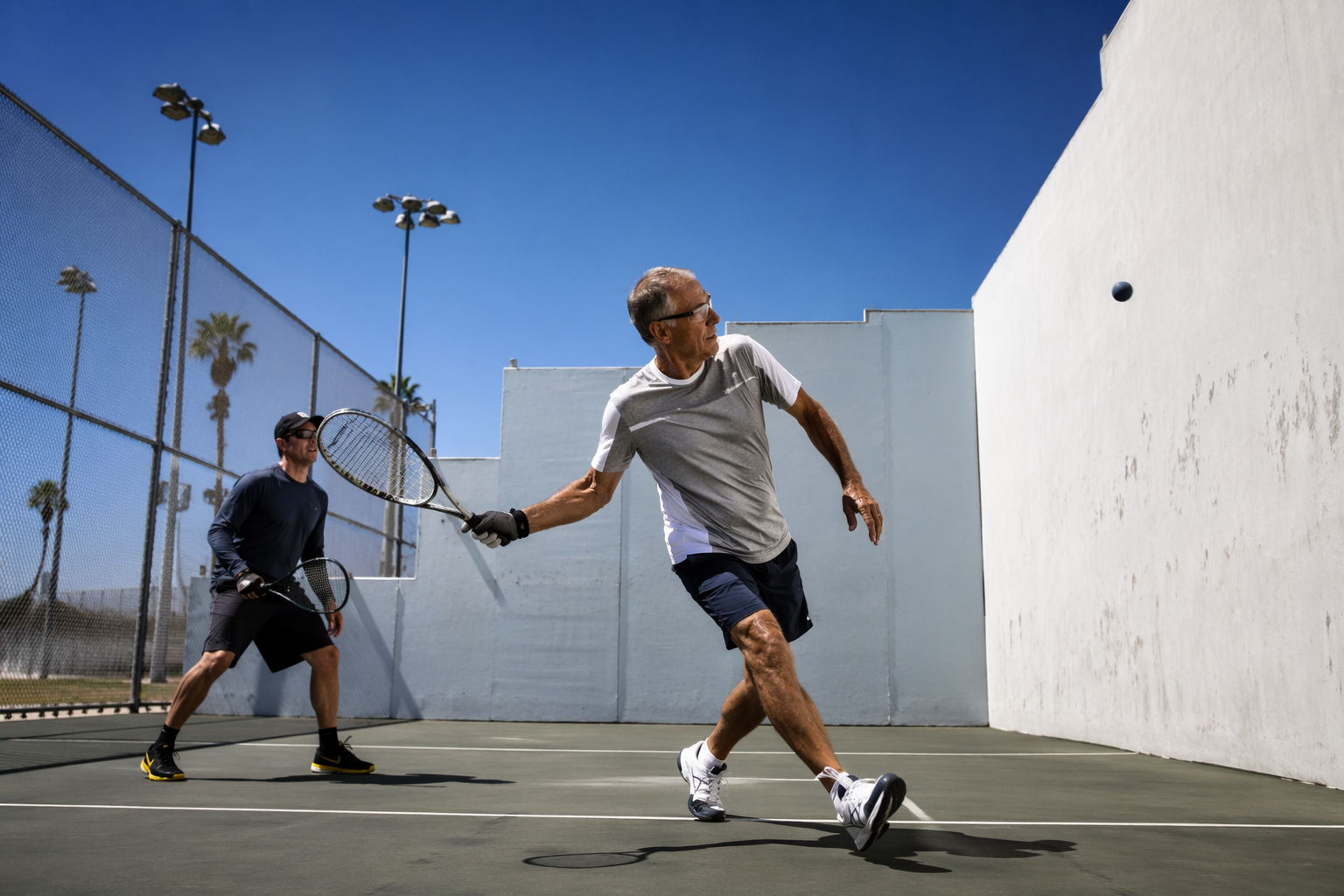
The clearest sign of his staying power came in 2012. That was his final Outdoor Nationals title, and he won it at age 49. In the same year, he also won the CPRT 40+ pro title, a reminder that his game had already crossed into the senior ranks without losing its bite. USA Racquetball’s Outdoor Champions record book lists Booth and Greg Solis as the Men’s Pro Doubles champions in 2012, while the CPRT Pro Doubles record book shows Booth and Mike Peters as champions in 2008 and 2009. Read together, those results show a player who kept returning to the top of outdoor draws across multiple stages of his career.
The style that traveled across generations
Booth’s relevance was not built on size or power alone. The Hall of Fame profile frames him as an all-court player from the left side, someone who leaned on shot variety, tactics and confidence rather than brute force. That style matters in outdoor racquetball because the discipline rewards judgment as much as shot speed. Wind, angles and court position can expose a player who depends on one dimension of offense, and Booth’s record suggests he solved those problems for years.
That is why his career reads like a bridge between generations. He played the legends of the 1980s, the stars of the 1990s and the modern generation, yet the same core approach kept working. The competitive memory embedded in that kind of career is part of what outdoor racquetball risks losing when players do not stay connected across eras. Booth stayed connected by winning in doubles with different partners, by reaching late rounds in singles and by continuing to adapt as the field changed around him.
Why the Hall of Fame recognition fits the sport’s identity
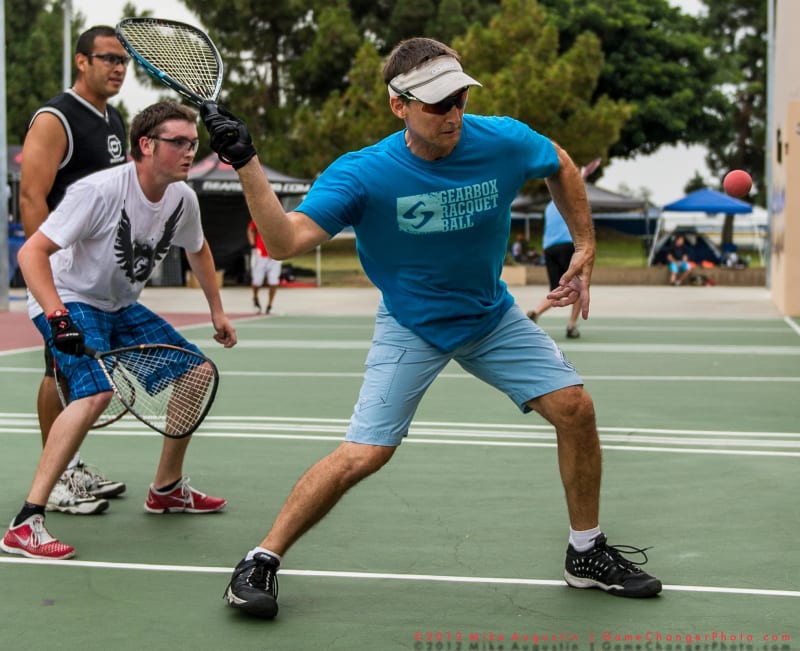
The World Outdoor Racquetball Hall of Fame announcement on June 23, 2026 placed Booth and Greg Freeze into the Class of 2026, a two-player class that underscores Orange County’s role in the sport’s history and in its present memory. Booth’s induction is not just a reward for old titles. It acknowledges a player whose career helped define what outdoor excellence looked like from the 1980s into the 2010s.
That distinction matters in outdoor racquetball because the sport has always depended on players who protected its standards while the calendar kept moving. Booth did that through repeated runs in singles, a deep doubles résumé and the durability to remain relevant across more than one competitive generation. In a sport where local scene, court craft and title history are tightly linked, he became one of the people who kept the lineage intact.
From racquetball to pickleball, with the same teaching instincts
Booth’s competitive life did not stop with racquetball. He later became a pickleball success story, collecting national senior golds and professional titles before retiring and co-founding Evolve Pickleball in Lake Forest, California. Current Evolve Pickleball listings publicly associate Kevin and Shelly Booth with the operation and identify Kevin Booth as an IPTPA Level 2 Certified Teaching Professional. That detail fits the rest of his resume: the same player who once navigated outdoor racquetball’s toughest draws now works from the instruction side of a fast-growing sport.
Even that later chapter reflects the same underlying trait that powered his outdoor career: adaptation. Booth moved from Orange Coast College’s outdoor racquetball culture into a new racquet sport without abandoning the habits that made him hard to beat. For outdoor racquetball, his Hall of Fame case preserves the evidence of how the game was played at its best, and who carried those standards forward when the eras changed.
Sources
- [1]usaracquetball.com
- [2]lf2.org