Kickball rules shape strategy, from bouncies to overthrows
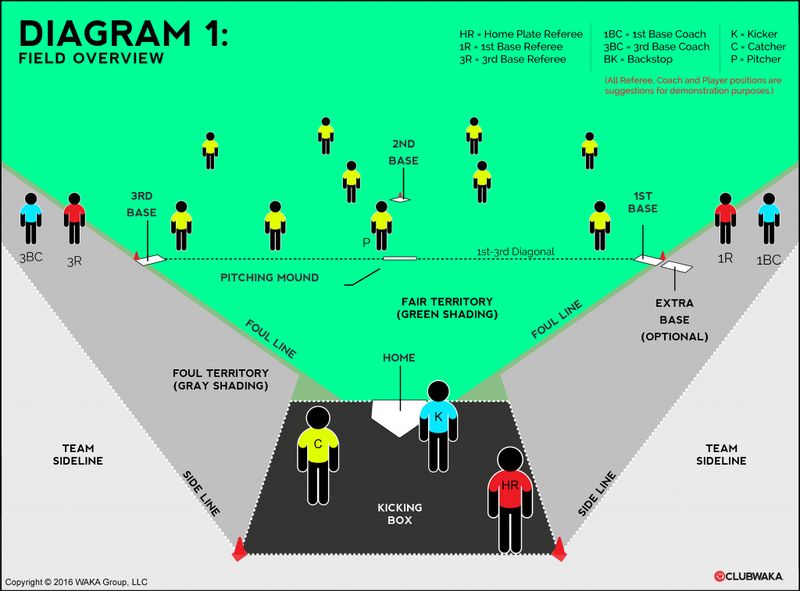
Kickball looks easy until the first low-bouncing pitch forces a decision before the ball even reaches home plate. WAKA’s game uses two teams, 10 fielders, and two base coaches, and it rewards placement, timing, and clean defense more than casual players expect.
The pitch creates the first tactical problem
The biggest misconception about kickball is that the offense should simply crush the ball. In WAKA, bouncies are allowed, but the pitch must bounce at least twice before home plate, and the strike zone is a three-dimensional irregular pentagon based on home plate and one foot high. That rule set rewards kickers who can meet a low, awkward pitch with control, because a ball that stays down is harder to square cleanly and easier to mishit into a fielder’s lane.
That changes how teams attack. Smart kickers are not always hunting distance; they are looking for space, late contact, and awkward angles that force infield movement.
Baserunning is real, and it stays real
In Playworks, the field uses a regulation layout of 60 feet by 60 feet between the bases, and the kicking order is fixed for the game. That combination matters because lineups are not fluid experiments once the game starts. The same people keep coming up in the same sequence, which puts a premium on where a team puts its contact hitters, its fastest runners, and the players most likely to make clean decisions under pressure.
The no ghost men rule reinforces that discipline. Teams cannot invent runners to speed through an inning, so every advance has to be earned by a real kick, a real sprint, and a real judgment call. In practical terms, that means the offense cannot hide a slow runner with imaginary traffic, and the defense gets a clearer read on who is actually moving around the bases.

Defense lives and dies on overthrows
WAKA’s overthrow rule is one of the clearest examples of the rulebook shaping behavior. One overthrow awards one base, which means a rushed throw can flip a harmless play into immediate pressure. In a casual game, defenders often throw first and think later; in organized kickball, that instinct can be expensive.
Clean transfers and accurate relays become as important as arm strength. A defender who fields the ball cleanly but tosses it wildly can gift the offense an advance without the kick ever clearing the infield. That is why smart teams play for sure outs, keep their feet set on throws, and value the cutoff as much as the final throw to a base.
Force outs, tag outs, and tag-up give the fielders options
Kickball’s baserunning rules create choices that do not exist in a simple recess game. In Playworks, a caught fly ball is an out and tag-up applies, while a runner forced to advance can be retired by the defense touching the base. If there is no force, the runner must be tagged. That distinction shapes every infield play, because the defense has to decide whether the easiest out is at the bag or on the runner.
The smartest teams do not chase unnecessary tags when the force is there. They take the out at the base, clear the lead runner, and move on. When the force disappears, though, the defense has to stay calm enough to tag the runner rather than panic and throw away the inning.
No headshots and soft contact change the tone of the game
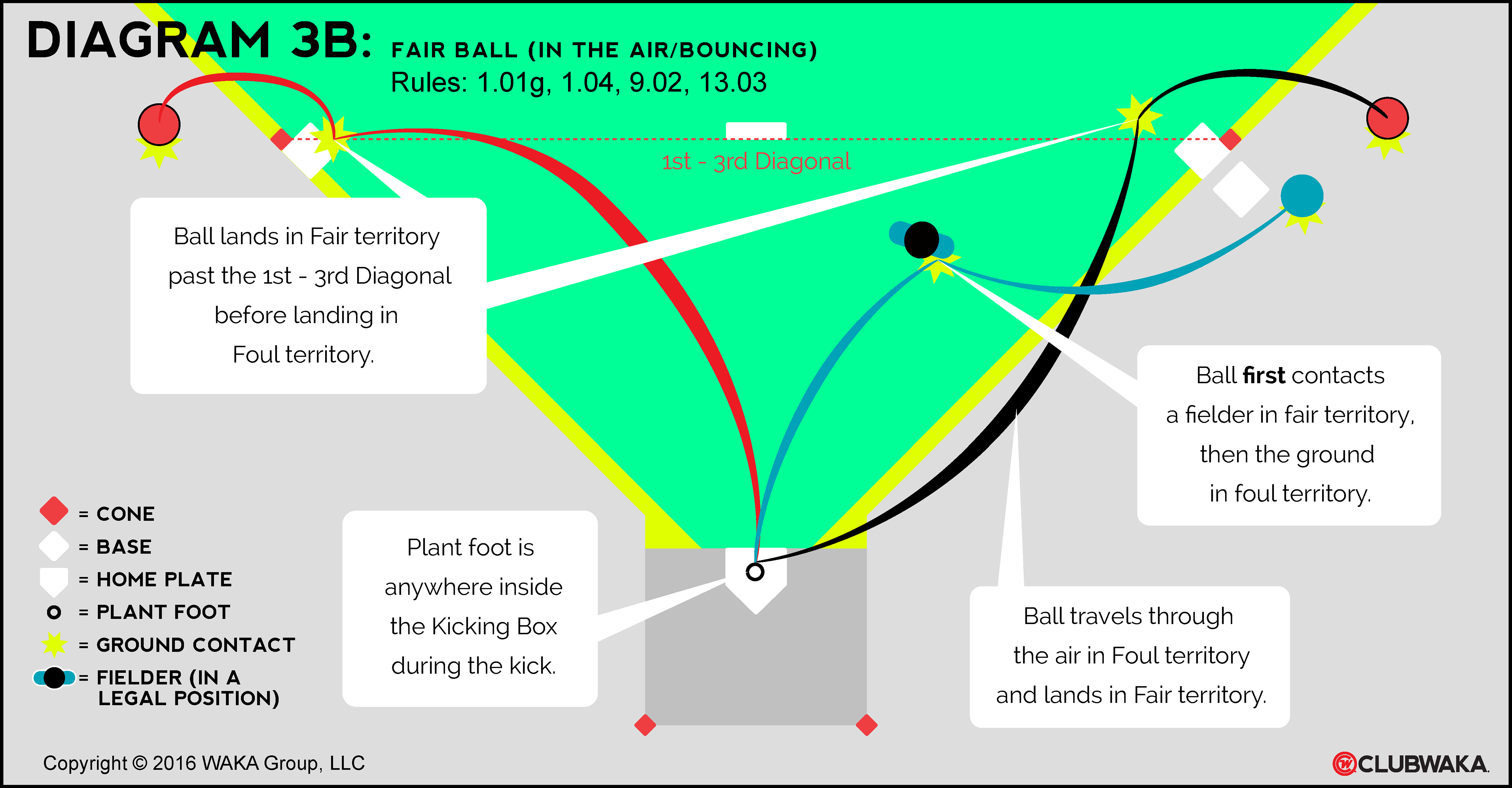
WAKA’s ban on headshots is more than a safety note; it alters how the field is played. Throws have to be controlled, and defenders cannot rely on reckless velocity to win a play. Paired with Playworks’ emphasis on soft tagging and staying on your feet, the rulebook pushes kickball toward a version of competition that still rewards aggression but keeps the contact manageable.
The ball, the field, and the inning limit all shape pace
WAKA’s game uses a red ball that is 10 inches in diameter and properly inflated to 1.5 psi, a size and softness that help explain why kickball lives in the space between baseball and dodgeball. It is large enough to control and catch, but lively enough to reward timing.
The standard game runs with seven innings if time allows, while Playworks’ game-of-the-week version switches sides after three outs or nine runs. That structure encourages teams to squeeze value out of every possession, because there are not endless chances to recover from a mistake. A blooped kick into open space, a runner stretching an overthrow, or a defender choosing between a force and a tag can swing an entire game.
From codified play to adult league culture
WAKA began in 1998 with a mission to grow and spread the game across the United States, and it now presents itself as the game’s governing body. Its FAQ traces the earliest known rules and diagrams for a game very close to modern kickball to Emmet D. Angell’s 1910 book Play; Nicholas C. Seuss described the game in 1917, seven years later. CLUBWAKA’s adult leagues are co-ed, 21+ and usually run once a week for about eight weeks.
Sources
- [1]kickball.com
- [2]playworks.org
- [3]clubwaka.com