Kickball’s many cousins reveal a broader family of baserunning games
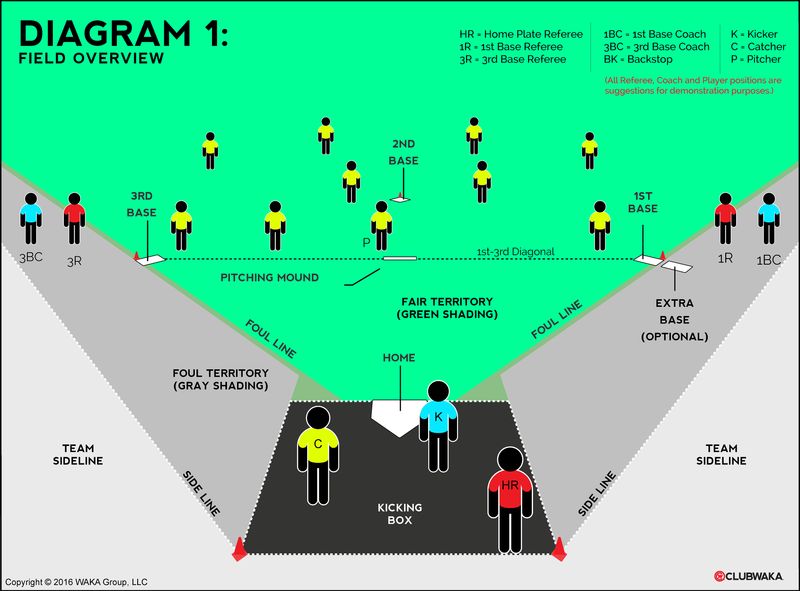
Kickball only looks simple until you place it in the right family tree. Protoball treats it as one branch of a much larger class of baserunning games, a catalog of 338 baseball-like forms built around runners, scoring, and shared DNA more than a single origin story. That lens changes the sport immediately: kickball is not an oddball offshoot, it is a recognizable cousin with its own rules, its own history, and its own place beside baseball, softball, stickball, and wiffleball.
A family tree, not a lone game
Protoball’s kickball family is defined by a clean but telling formula: safe-haven games with running among bases, pitching, and two distinct teams, but no batting. There are 23 games in that family, which is the real clue that kickball has always lived among variants rather than in one fixed rulebook. The sport’s structure puts it in the same broad conversation as baseball and softball, but the family label also makes room for local improvisation, schoolyard adjustments, and the kinds of rule changes that happen when a game spreads through parks, classrooms, and rec leagues.
That matters because kickball’s appeal comes from how much of baseball it preserves and how much it simplifies. The base-path logic is familiar enough that any baseball fan can read it instantly, but the kicking mechanic changes the rhythm of every play. Timing off the foot is not timing off the bat, and that changes fielding angles, runner decisions, and the way a defense has to shape itself before the ball even leaves the pitcher’s area.
What kickball keeps, and what it strips away
Kickball still lives on the same scoreboard vocabulary as its cousins. Teams still chase outs, runners still try to advance safely, and scoring still turns on how well you move through the bases. That is why it feels like baseball the moment you watch it, even though there is no swing and no batting order in the traditional sense.
What kickball removes is just as important. By dropping batting, it strips away the hardest equipment skill in the baseball family and replaces it with a more open fielding game. The result is a sport that is easier to enter and harder to fake: anyone can kick, but good kickball still rewards judgment, placement, and clean defensive reads. It is closer to baseball than to a pure playground chase game, yet the change from bat to foot is enough to give it a different tactical identity.
That balance is why kickball fits so neatly next to softball, stickball, and wiffleball in the broader baserunning lineage. Each of those games borrows the bones of baseball and then bends them for a different setting, a different tool, or a different level of formality. Kickball’s version is unusually direct: same field logic, same team tension, same run-scoring objective, but a completely different point of contact.
The origin story is older, and messier, than the myth
The clean story says Nicholas C. Seuss, a Cincinnati playgrounds director, invented kickball around 1917. The messier record is better, and more interesting. A Dayton Herald notice dated January 29, 1907, already described “Prof. Suess” of the North Cincinnati Turners bringing a new kickball-type game to Cincinnati, which pushes the game’s development earlier than the familiar origin tale.
By 1917, the game had appeared in The Playground Book under the name “kick base ball,” with rules printed for Cincinnati playground use through the Cincinnati Board of Education and the Cincinnati Board of Park Commissioners. That version was not yet the kickball most people know today. There was no pitching, fielders had no fixed positions, and multiple baserunners could occupy the same base, which tells you how fluid the game still was before later versions hardened into a more recognizable form.
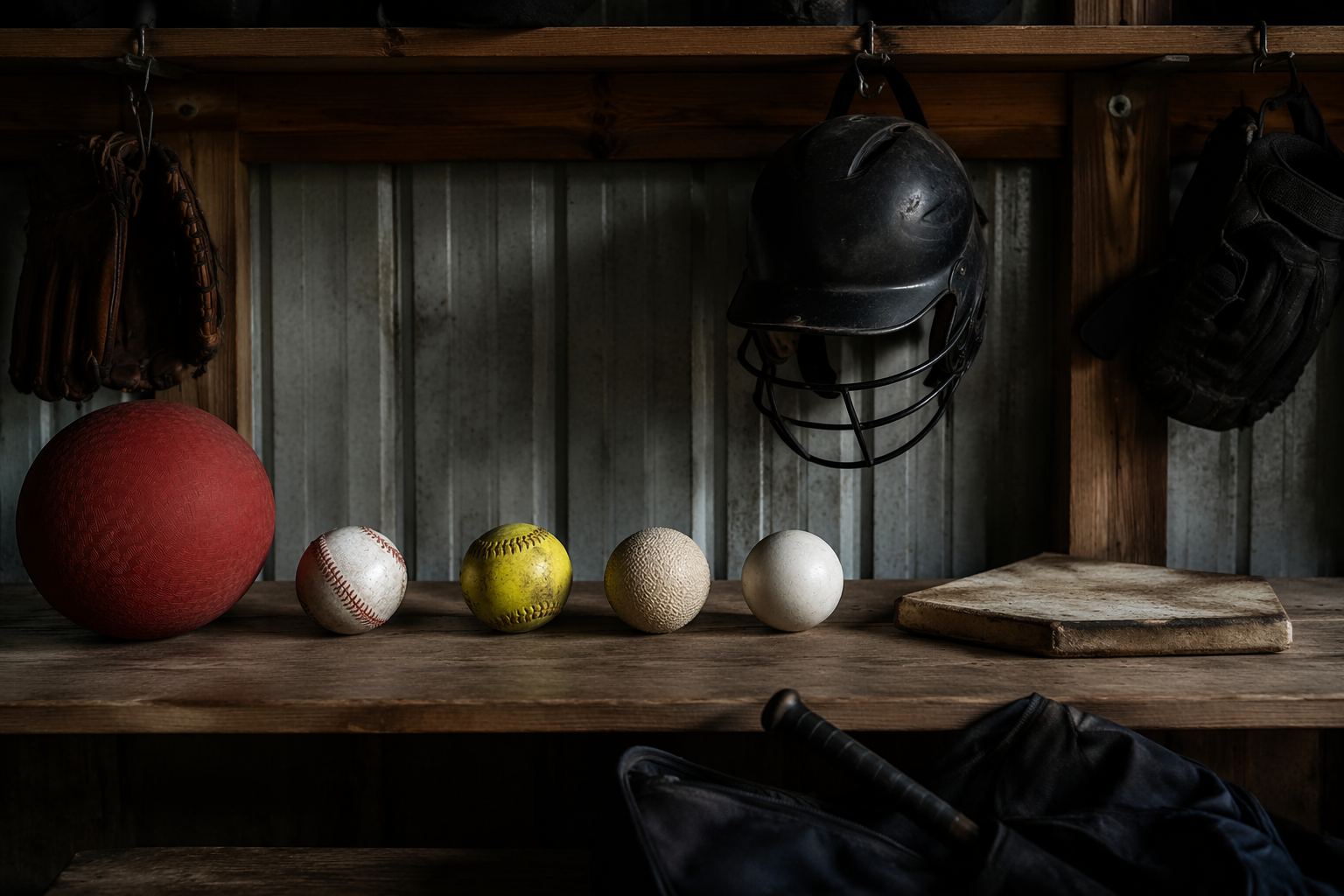
That history puts kickball in the same category as many sports that stabilized by repetition, not revelation. The game did not arrive fully formed. It moved through school manuals, civic recreation, and local rule sets until the basic outline became familiar enough to survive under one name, then under several.
Cousins, ancestors, and the value of a messy lineage
Protoball’s larger catalog helps explain why that messiness is normal. Baseball-like games rarely emerge from a single pristine moment. They spread, split, and rename themselves, which is why the same game can show up in one place as a schoolyard activity, in another as a municipal recreation drill, and in another as a modern league sport. Kickball is especially good at revealing that process because its rule shape is so legible and its changes are so easy to see.
That is where lesser-known relatives like lang ball become useful. SABR’s work on kickball describes the sport as a baseball derivative and notes that historians still debate its early development, which is exactly the kind of uncertainty you expect in a family of improvised games. The point is not to crown one inventor and end the story. The point is to see how the game kept reappearing in different forms until it became recognizable enough to last.
From civic recreation to organized adult leagues
Kickball’s modern life is not just nostalgia. The World Kickball Association says it began in 1998 with a mission to grow and spread the game across the United States, and its own FAQ says there is no professional kickball league. That absence has not stopped the sport from developing a serious recreational structure. ClubWAKA runs seasonal kickball across the United States, operates in more than 30 U.S. cities, and stages a yearly championship called the Founders Cup in Las Vegas every October.
That combination tells you why kickball has stayed visible. It is easy to learn, but it is not too loose to organize. The game can live in a schoolyard with flexible local rules and still support standardized adult leagues with regular seasons and a championship event. That flexibility is a feature, not a flaw, because it lets kickball absorb different communities without losing the core shape that makes it look like baseball’s kin.
Why kickball still matters in the baserunning family
Kickball matters because it is recognizable without being generic. The sport keeps the essential drama of baserunning, the tension of forcing defenders to react, and the clean satisfaction of moving runners home. It also preserves the broader history of baseball-like games that were built, borrowed, and rewritten in schools, parks, and city programs long before any modern league tried to formalize them.
Put kickball back in that lineage and it stops looking like a playground variant. It becomes what it has always been: a durable, adaptable member of the baserunning game family, one that still makes sense wherever people want the feel of baseball without the bat.
Sources
- [1]protoball.org
- [2]sabr.org
- [3]books.google.com
- [4]kickball.com
- [5]clubwaka.com
- [6]prlog.org